

4 Zecchini – Malta
Malta
Context
Material
References
KM: #Click to copy to clipboard166
Numista: #476293
Value
Bullion value: $2281.82
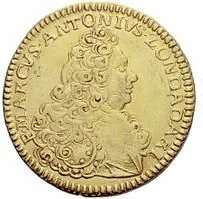
Obverse
Description:
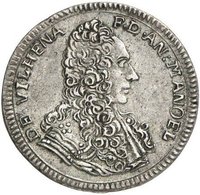
Grand Master Zondadari in right-facing portrait, encircled by lettering.
Inscription:
F. MARCVS . ANTONIVS . ZONDADARI
Script: Latin
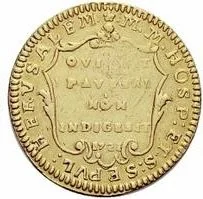
Reverse
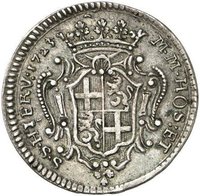
Description:
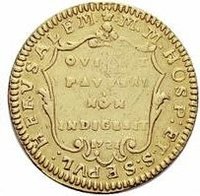
Latin quote on a shield encircled by text.
Inscription:
M . M . HOSP : ET . S:SEPVL : HERVSALEM .
QVI DAT
PAVPERI
NON
INDIGEBIT
1721
QVI DAT
PAVPERI
NON
INDIGEBIT
1721
Script: Latin
Edge
Mintings
| Year | Mint Mark | Mintage | Quality | Collection |
|---|---|---|---|---|
| 1721 | — | — |
Historical background
In 1721, Malta’s currency situation was a complex and problematic reflection of its position as a bustling Mediterranean crossroads under the rule of the Knights of St. John. The official currency was the Maltese scudo, divided into 12 tari, each of 20 grani. However, the reality of commerce was dominated by a chaotic multiplicity of foreign coins. Spanish pieces of eight, Venetian sequins, French louis d'or, and Turkish piastres all circulated freely, their values fluctuating based on weight, metal content, and the unpredictable arrivals of merchant vessels and corsairing fleets. This created a perpetual headache for merchants and the treasury, requiring constant official proclamations to fix exchange rates.
The Knights’ government struggled to manage this system. A chronic shortage of small change for everyday transactions plagued the islands, often forcing people to cut larger silver coins into pieces. Attempts to introduce a stable local coinage were undermined by the fact that precious metal tended to be exported to pay for essential grain imports, leading to a recurring scarcity of sound money. Furthermore, the economy was vulnerable to the influx of debased and counterfeit foreign coins, which eroded trust and complicated tax collection.
Consequently, the currency environment in 1721 was one of administrative frustration and practical adaptation. While the Knights issued periodic bandi (edicts) to dictate official exchange rates and forbid certain coins, the market often operated by its own rules. This instability was a significant impediment to economic planning and a source of grievance for both the local population and international traders, highlighting the challenges of governing a small, import-dependent island hub within the wider turbulent Mediterranean economy.
The Knights’ government struggled to manage this system. A chronic shortage of small change for everyday transactions plagued the islands, often forcing people to cut larger silver coins into pieces. Attempts to introduce a stable local coinage were undermined by the fact that precious metal tended to be exported to pay for essential grain imports, leading to a recurring scarcity of sound money. Furthermore, the economy was vulnerable to the influx of debased and counterfeit foreign coins, which eroded trust and complicated tax collection.
Consequently, the currency environment in 1721 was one of administrative frustration and practical adaptation. While the Knights issued periodic bandi (edicts) to dictate official exchange rates and forbid certain coins, the market often operated by its own rules. This instability was a significant impediment to economic planning and a source of grievance for both the local population and international traders, highlighting the challenges of governing a small, import-dependent island hub within the wider turbulent Mediterranean economy.
✨ Legendary