

1 Giulio – Papal States
Vatican City
Context
Year: 1761
Country: Vatican City 
Issuer: Papal States
Ruler: Clement XIII
Currency:
(1534—1835)
Demonetized: Yes
Material
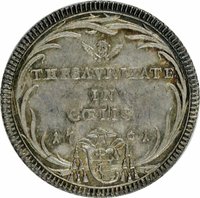
References
KM: #Click to copy to clipboard1000
Numista: #47078
Value
Bullion value: $7.06
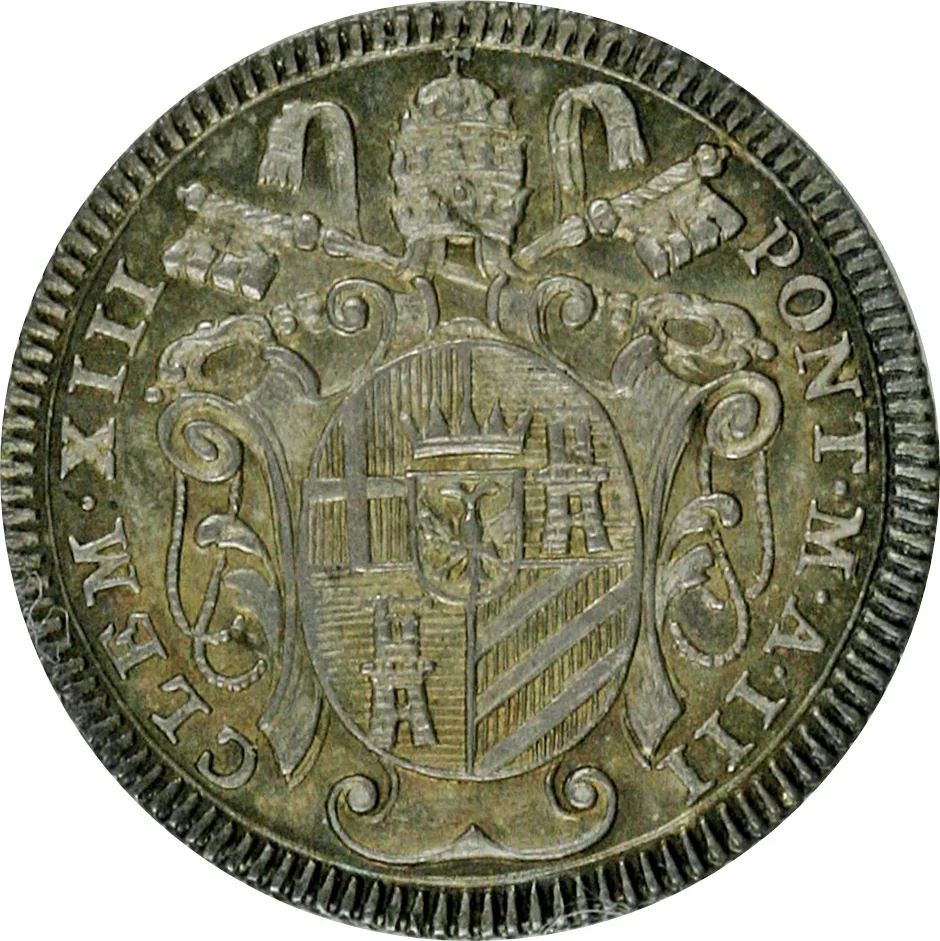
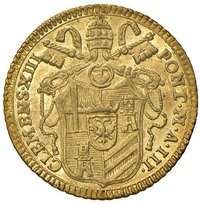
Obverse
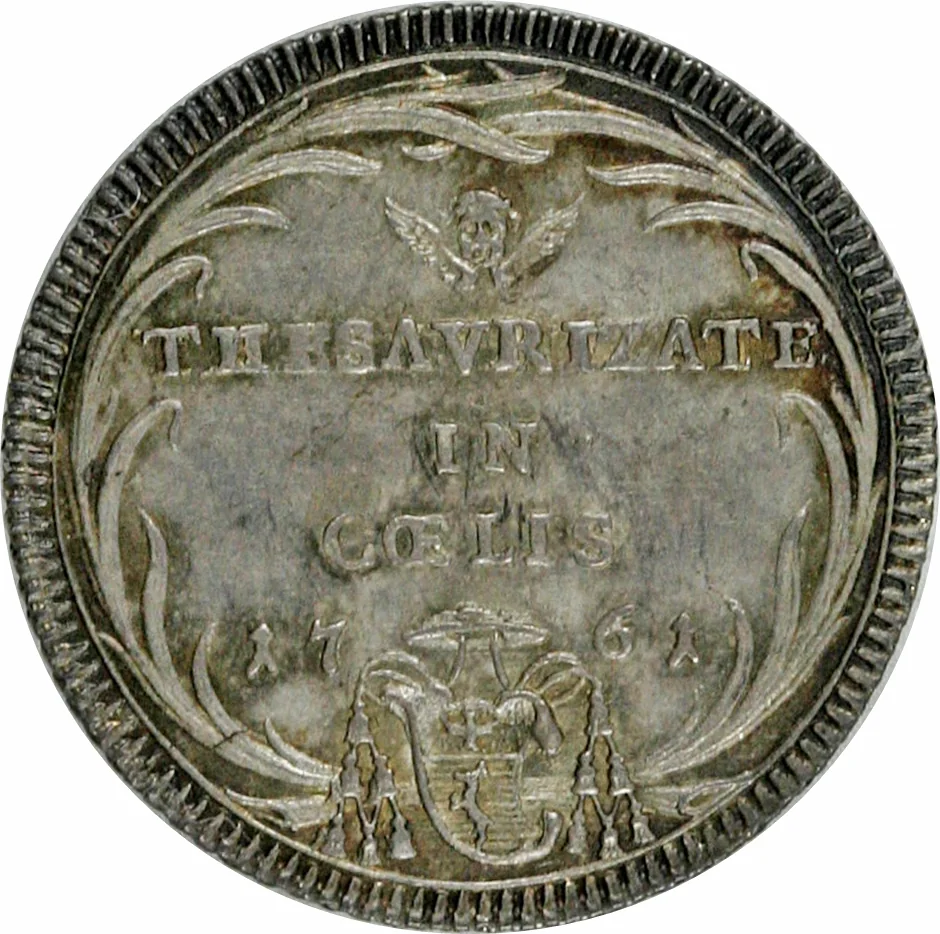
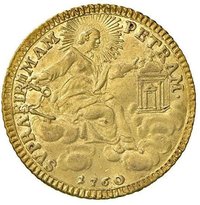
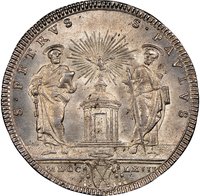
Reverse
Edge
Oblique reeding
Mints
| Name | Mark |
|---|---|
| Rome | — |
Mintings
| Year | Mint Mark | Mintage | Quality | Collection |
|---|---|---|---|---|
| 1761 | — | — |
Historical background
In 1761, the Papal States’ currency system was a complex and fragmented reflection of its political and economic condition. The state lacked a unified, modern monetary system, instead operating on a bimetallic standard of gold scudi and silver giulii and baiocchi, with a plethora of local coinages minted in cities like Bologna and Ravenna. This fragmentation was exacerbated by the widespread circulation of foreign coins, particularly from other Italian states and major European powers, which complicated trade and exchange. The value and purity of coins could vary, and the papal treasury, often strained by the costs of administration, art patronage, and military needs, struggled with periodic debasement to raise short-term revenue.
Economically, the Papal States were largely agrarian and administratively inefficient, with internal trade hindered by internal tariffs and a reliance on customs duties (dogane) for income. The monetary confusion of 1761 existed within this broader context of fiscal challenge. Pope Clement XIII, reigning during this period, faced constant budgetary pressure, balancing the spiritual and temporal demands of his office. While not a year of major monetary reform, the situation in 1761 was characteristic of an ancien régime economy where coinage served both as a tool of sovereign authority and a symptom of financial weakness.
This unstable and heterogeneous currency environment posed significant problems for merchants and the populace, requiring money changers (banchieri) to constantly assess and exchange a bewildering variety of coins. It underscored the Papal States' struggle to maintain a cohesive economic policy within its territories. The situation would persist until the Napoleonic invasions, which swept away the old monetary order, and even beyond, as the restored Papal States in the 19th century continued to grapple with creating a uniform currency until their final annexation by Italy in 1870.
Economically, the Papal States were largely agrarian and administratively inefficient, with internal trade hindered by internal tariffs and a reliance on customs duties (dogane) for income. The monetary confusion of 1761 existed within this broader context of fiscal challenge. Pope Clement XIII, reigning during this period, faced constant budgetary pressure, balancing the spiritual and temporal demands of his office. While not a year of major monetary reform, the situation in 1761 was characteristic of an ancien régime economy where coinage served both as a tool of sovereign authority and a symptom of financial weakness.
This unstable and heterogeneous currency environment posed significant problems for merchants and the populace, requiring money changers (banchieri) to constantly assess and exchange a bewildering variety of coins. It underscored the Papal States' struggle to maintain a cohesive economic policy within its territories. The situation would persist until the Napoleonic invasions, which swept away the old monetary order, and even beyond, as the restored Papal States in the 19th century continued to grapple with creating a uniform currency until their final annexation by Italy in 1870.
✨ Legendary