

1 Mariengroschen – Brunswick-Lüneburg-Calenberg-Hannover
Germany

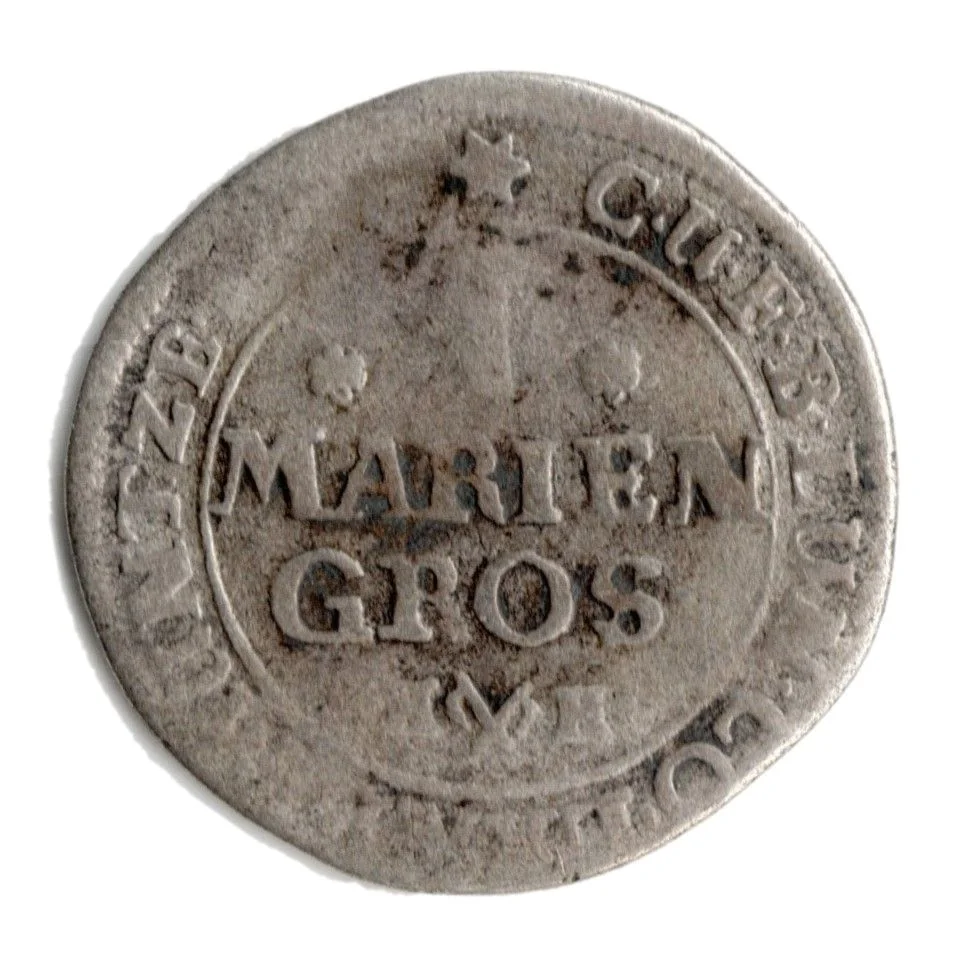
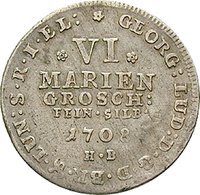
Obverse
Description:
Three-line inscription, mintmaster initials below, legend ends with date.
Inscription:
* C. U. F. B. LUN. CO. LAND MUNTZE. 17..
* I *
MARIEN
GROS
* I *
MARIEN
GROS
Script: Latin
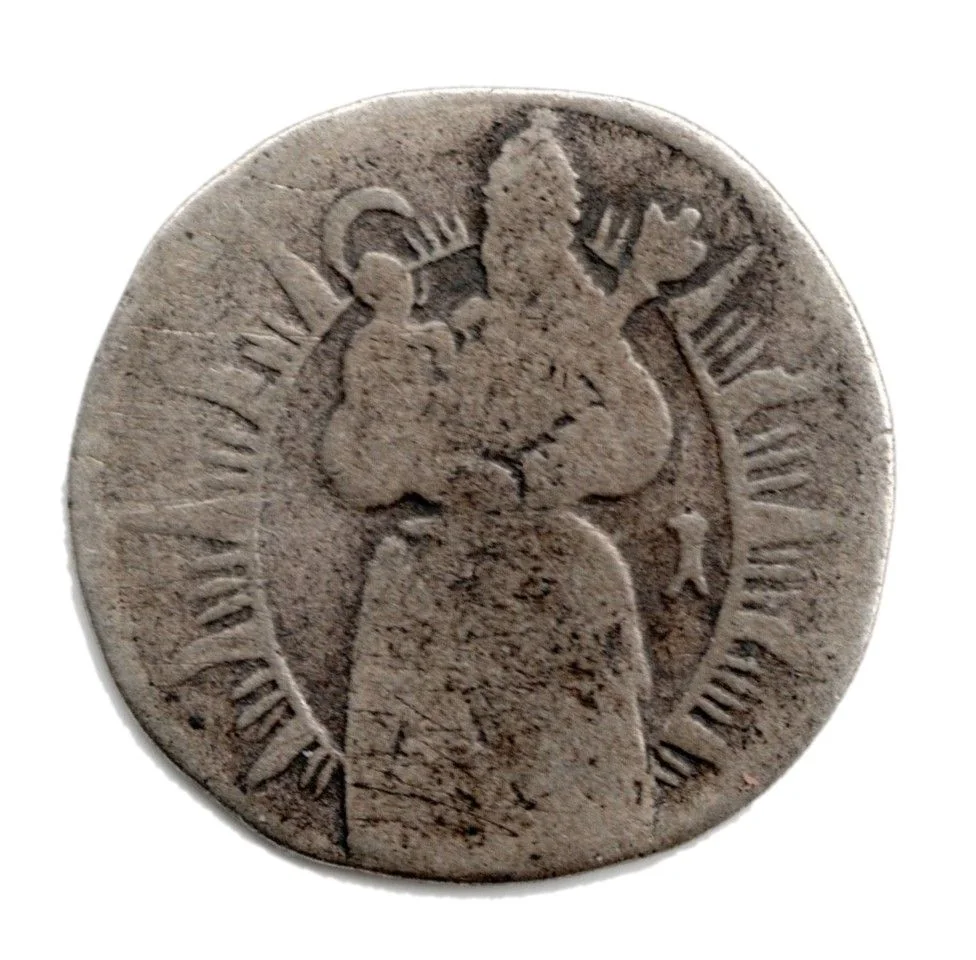
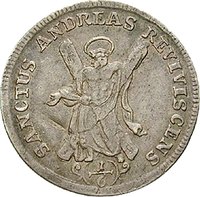
Reverse
Description:
Madonna and Child in full-length with radiant halo.
Script: Latin
Edge
Mints
| Name | Mark |
|---|---|
| Zellerfeld | — |
Mintings
| Year | Mint Mark | Mintage | Quality | Collection |
|---|---|---|---|---|
| 1708 | — | — | ||
| 1709 | — | — | ||
| 1710 | — | — | ||
| 1712 | — | — | ||
| 1713 | — | — | ||
| 1714 | — | — | ||
| 1715 | — | — |
Historical background
In 1708, the currency situation in the Duchy of Brunswick-Lüneburg, specifically the Principality of Calenberg (with its capital in Hanover), was characterized by significant instability and complexity, a legacy of the Thirty Years' War and ongoing regional fragmentation. The Holy Roman Empire was a mosaic of over 300 territories, each often exercising the right to mint coinage. Within the Welf domains, multiple branches of the family ruled separate principalities, leading to a proliferation of different coinage systems and a lack of a unified monetary policy. This period saw a chronic shortage of high-value, full-weight specie (Reichsthaler), while everyday commerce was flooded with debased, small-denomination coins from numerous local and foreign mints, causing confusion and eroding public trust.
The core of the problem was the widespread debasement of the Gute Groschen, the standard small silver coin. The official Reichsthaler was supposed to contain a set amount of fine silver, divided into 24 Gute Groschen. However, to finance local expenditures, especially military costs related to the War of the Spanish Succession (in which Elector George Louis, the ruler of Calenberg-Hannover, was deeply involved as a British ally), authorities often reduced the silver content in minted coins. This created a disconnect between the nominal and intrinsic value, driving full-weight coins out of circulation according to Gresham's Law. The result was inflationary pressure, hardship for common people on fixed wages, and disrupted trade.
Efforts to create order were ongoing but challenging. The Duchy was subject to imperial currency regulations, like the Reichsmünzordnung, but these were weakly enforced. More impactful were regional agreements, such as the Zinnaische Münzfuß (1667) and the later Leipziger Münzfuß (1690), which set standards for the Reichsthaler's silver content. In 1708, the Hanoverian government was likely grappling with adhering to these standards while facing fiscal pressures. The situation would only find lasting stability later in the 18th century, particularly after the personal union with Great Britain in 1714 brought greater resources and a push for monetary reform to facilitate larger-scale commerce and state finance.
The core of the problem was the widespread debasement of the Gute Groschen, the standard small silver coin. The official Reichsthaler was supposed to contain a set amount of fine silver, divided into 24 Gute Groschen. However, to finance local expenditures, especially military costs related to the War of the Spanish Succession (in which Elector George Louis, the ruler of Calenberg-Hannover, was deeply involved as a British ally), authorities often reduced the silver content in minted coins. This created a disconnect between the nominal and intrinsic value, driving full-weight coins out of circulation according to Gresham's Law. The result was inflationary pressure, hardship for common people on fixed wages, and disrupted trade.
Efforts to create order were ongoing but challenging. The Duchy was subject to imperial currency regulations, like the Reichsmünzordnung, but these were weakly enforced. More impactful were regional agreements, such as the Zinnaische Münzfuß (1667) and the later Leipziger Münzfuß (1690), which set standards for the Reichsthaler's silver content. In 1708, the Hanoverian government was likely grappling with adhering to these standards while facing fiscal pressures. The situation would only find lasting stability later in the 18th century, particularly after the personal union with Great Britain in 1714 brought greater resources and a push for monetary reform to facilitate larger-scale commerce and state finance.
✨ Legendary