

1 Duarius – Hungary
Hungary
Context

Material
Diameter: 14.25 mm
Weight: 0.52 g
Shape: Irregular round
Composition: Billon
Alignment: Medal alignment
flip
References
KM: #Click to copy to clipboard243
Numista: #46904
Obverse
Description:
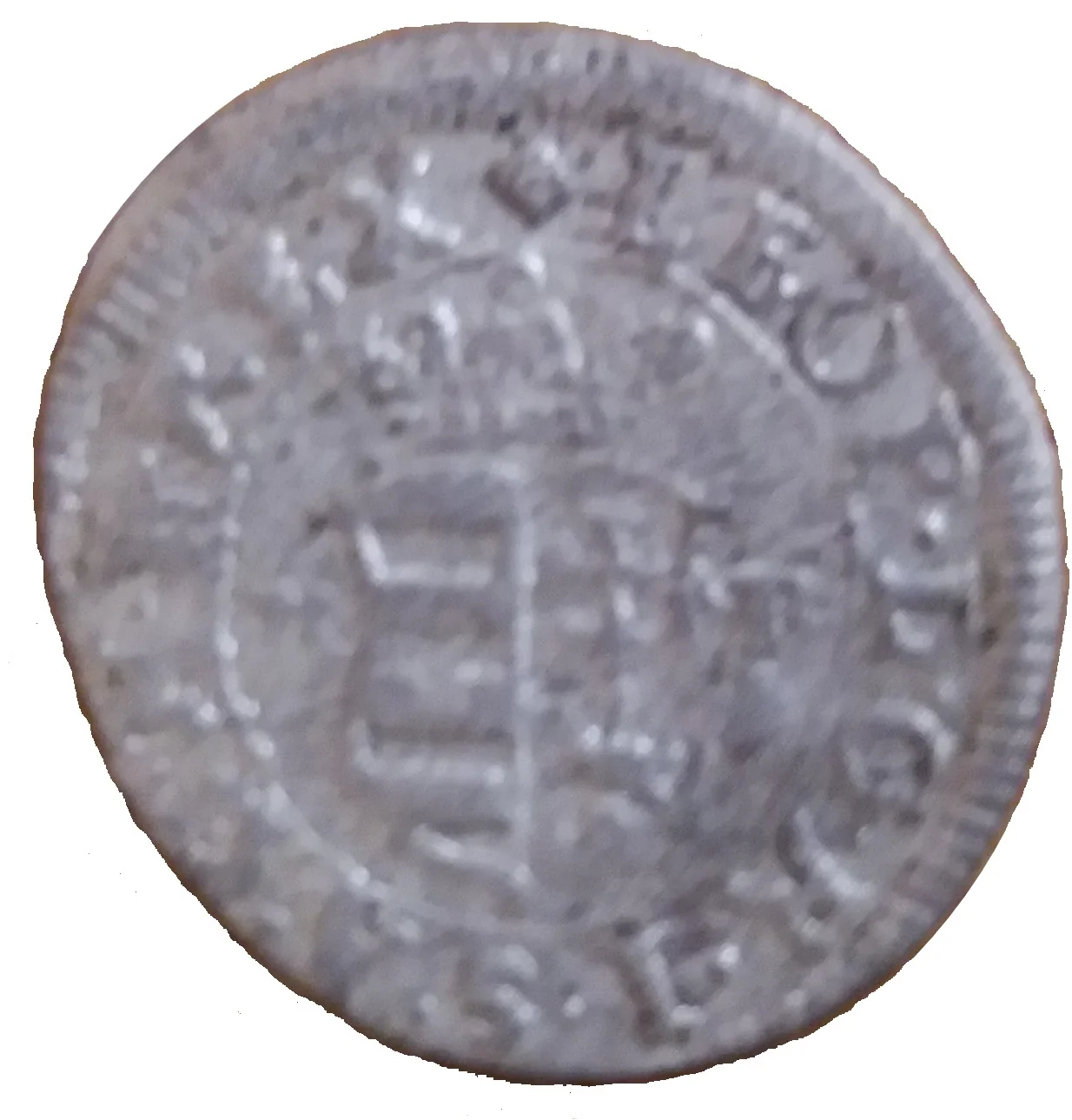
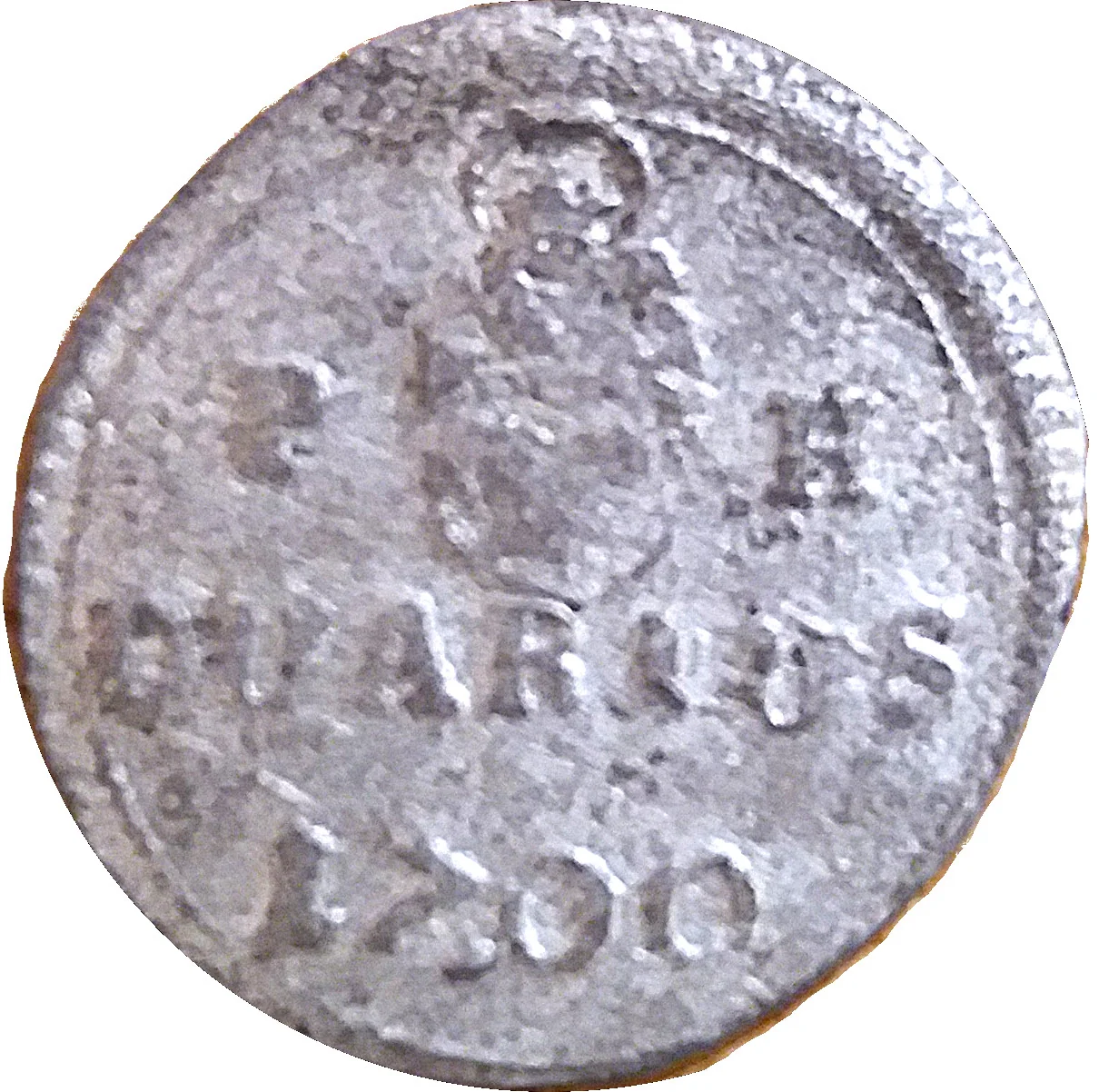
Crowned double coat of arms encircles "K-B" within a pearl ring.
Inscription:
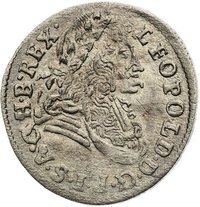
LEOP · D · G · R · I · S · A · G · HV · BO · REX +
K B
K B
Script: Latin
Reverse
Edge
Plain
Mints
| Name | Mark |
|---|---|
| Kremnica | KB |
Historical background
Following the 1699 Treaty of Karlowitz, which ended the Ottoman-Habsburg war and secured Hungary's liberation from Ottoman rule, the Kingdom of Hungary found itself in a state of severe economic and monetary disarray. A century and a half of partition and warfare had devastated the country's economy, leaving its currency system fragmented and debased. Within the newly reconquered territories, a chaotic mix of Ottoman, Habsburg, and various European coins circulated, while the older Royal Hungary had long used depreciated copper-based denars. The Habsburg government in Vienna, viewing Hungary primarily as a reconquered province, showed little immediate concern for stabilizing its distinct monetary affairs, focusing instead on extracting resources for the imperial treasury and ongoing military campaigns.
The primary currency in use was the so-called krajcár (kreuzer), a small silver coin that had been heavily debased over the 17th century, now containing very little precious metal. Larger transactions relied on the silver tallér (thaler) of various German and Dutch origins, and the gold forint (florin), but these were scarce. The critical problem was a severe shortage of high-quality, full-weight coinage for everyday commerce, which stifled trade and economic recovery. Furthermore, the Habsburgs' practice of reminting captured Ottoman silver into lower-quality coinage for use in Hungary exacerbated inflation and undermined trust in the currency.
Consequently, the period around 1699 was one of monetary transition and uncertainty. While the treaty brought political stability, it did not bring immediate monetary reform. The Hungarian estates repeatedly petitioned Vienna for a proper mint to be established in the kingdom and for a stable, unified currency. This pressure would eventually lead to the important monetary reform of 1715, which introduced a new silver-based forint and tallér, but in 1699, the situation remained characterized by scarcity, confusion, and a debased circulating medium that reflected the kingdom's war-torn state.
The primary currency in use was the so-called krajcár (kreuzer), a small silver coin that had been heavily debased over the 17th century, now containing very little precious metal. Larger transactions relied on the silver tallér (thaler) of various German and Dutch origins, and the gold forint (florin), but these were scarce. The critical problem was a severe shortage of high-quality, full-weight coinage for everyday commerce, which stifled trade and economic recovery. Furthermore, the Habsburgs' practice of reminting captured Ottoman silver into lower-quality coinage for use in Hungary exacerbated inflation and undermined trust in the currency.
Consequently, the period around 1699 was one of monetary transition and uncertainty. While the treaty brought political stability, it did not bring immediate monetary reform. The Hungarian estates repeatedly petitioned Vienna for a proper mint to be established in the kingdom and for a stable, unified currency. This pressure would eventually lead to the important monetary reform of 1715, which introduced a new silver-based forint and tallér, but in 1699, the situation remained characterized by scarcity, confusion, and a debased circulating medium that reflected the kingdom's war-torn state.
💎 Extremely Rare