

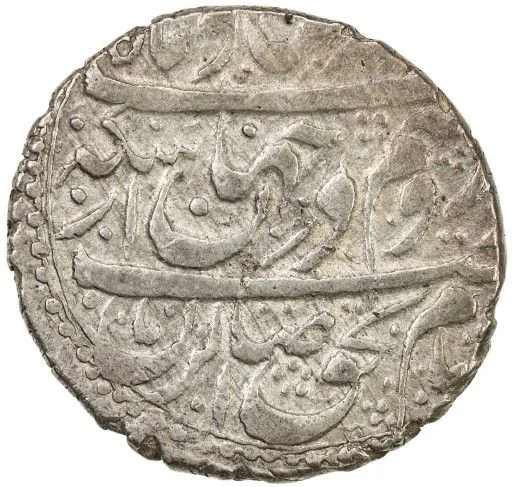
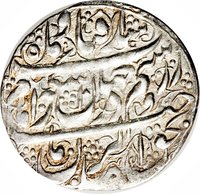
Obverse
Inscription:
شد آفتاب و ماه زر و سیم در جهان
از سکه امام بحق صاحب الزمان
۱۱۷۷
از سکه امام بحق صاحب الزمان
۱۱۷۷
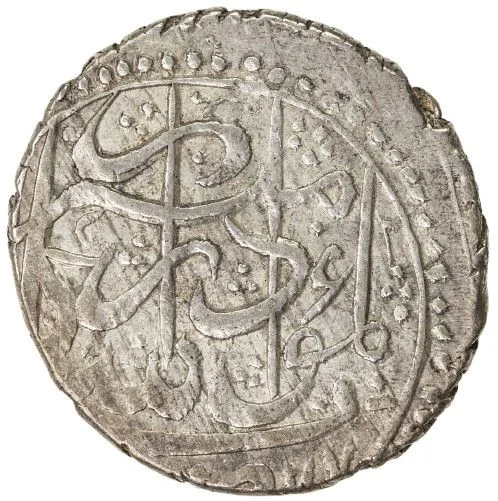
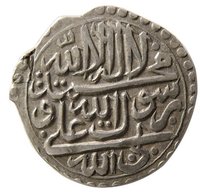
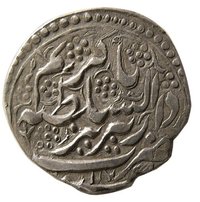
Reverse
Inscription:
یا کریم
ضرب کاشان
ضرب کاشان
Edge
Plain
Mints
| Name | Mark |
|---|---|
| Kashan | کاشان |
Mintings
| Year | Mint Mark | Mintage | Quality | Collection |
|---|---|---|---|---|
| — | — | — | ||
| 1762 | — | — | ||
| 1763 | — | — | ||
| 1764 | — | — | ||
| 1766 | — | — | ||
| 1767 | — | — | ||
| 1774 | — | — |
Historical background
In 1762, Iran was under the rule of the Zand dynasty, founded by Karim Khan Zand, who had established his capital in Shiraz. The period was one of relative stability and recovery following decades of civil war and fragmentation after the collapse of the Safavid Empire in 1722. Karim Khan, who notably refused the title of Shah, ruling instead as Vakil al-Raʿāyā (Representative of the People), focused on domestic prosperity, justice, and economic rehabilitation. His policies aimed at reviving trade, agriculture, and crafts, which directly influenced the monetary system. The currency situation, therefore, reflected this era of consolidation and attempted centralization after a long period of turmoil.
The monetary system was based on silver, with the principal coin being the toman (a unit of account) and the rial (a silver coin). The most commonly minted and circulated silver coin was the abbasi, alongside smaller denominations like the shahi and dinars. However, the currency landscape was complex and not fully unified. While Karim Khan’s mints in Shiraz, Isfahan, and Tabriz produced coins bearing his name, the legacy of previous dynasties—including Afsharid coins from Nader Shah's reign and even older Safavid issues—remained in circulation. Furthermore, foreign trade coins, particularly the Dutch levendaalder and the Spanish-American silver dollar (real de a ocho), circulated in port cities like Bushehr, adding another layer to the monetary environment.
Despite Karim Khan’s stabilizing efforts, challenges persisted. The supply of precious metals, especially silver, was inconsistent, relying heavily on foreign trade balances and the influx of New World silver via European traders. This could lead to fluctuations in the weight and purity of newly minted coins. Additionally, while central control was stronger than in the preceding decades, some regional khans and tribal leaders still occasionally issued their own crude coinage, leading to minor fragmentation. Overall, the currency situation in 1762 was one of managed recovery, characterized by a multi-source silver-based system operating within a pacified realm, but still vulnerable to the broader economic forces of trade and bullion supply.
The monetary system was based on silver, with the principal coin being the toman (a unit of account) and the rial (a silver coin). The most commonly minted and circulated silver coin was the abbasi, alongside smaller denominations like the shahi and dinars. However, the currency landscape was complex and not fully unified. While Karim Khan’s mints in Shiraz, Isfahan, and Tabriz produced coins bearing his name, the legacy of previous dynasties—including Afsharid coins from Nader Shah's reign and even older Safavid issues—remained in circulation. Furthermore, foreign trade coins, particularly the Dutch levendaalder and the Spanish-American silver dollar (real de a ocho), circulated in port cities like Bushehr, adding another layer to the monetary environment.
Despite Karim Khan’s stabilizing efforts, challenges persisted. The supply of precious metals, especially silver, was inconsistent, relying heavily on foreign trade balances and the influx of New World silver via European traders. This could lead to fluctuations in the weight and purity of newly minted coins. Additionally, while central control was stronger than in the preceding decades, some regional khans and tribal leaders still occasionally issued their own crude coinage, leading to minor fragmentation. Overall, the currency situation in 1762 was one of managed recovery, characterized by a multi-source silver-based system operating within a pacified realm, but still vulnerable to the broader economic forces of trade and bullion supply.
✨ Legendary