

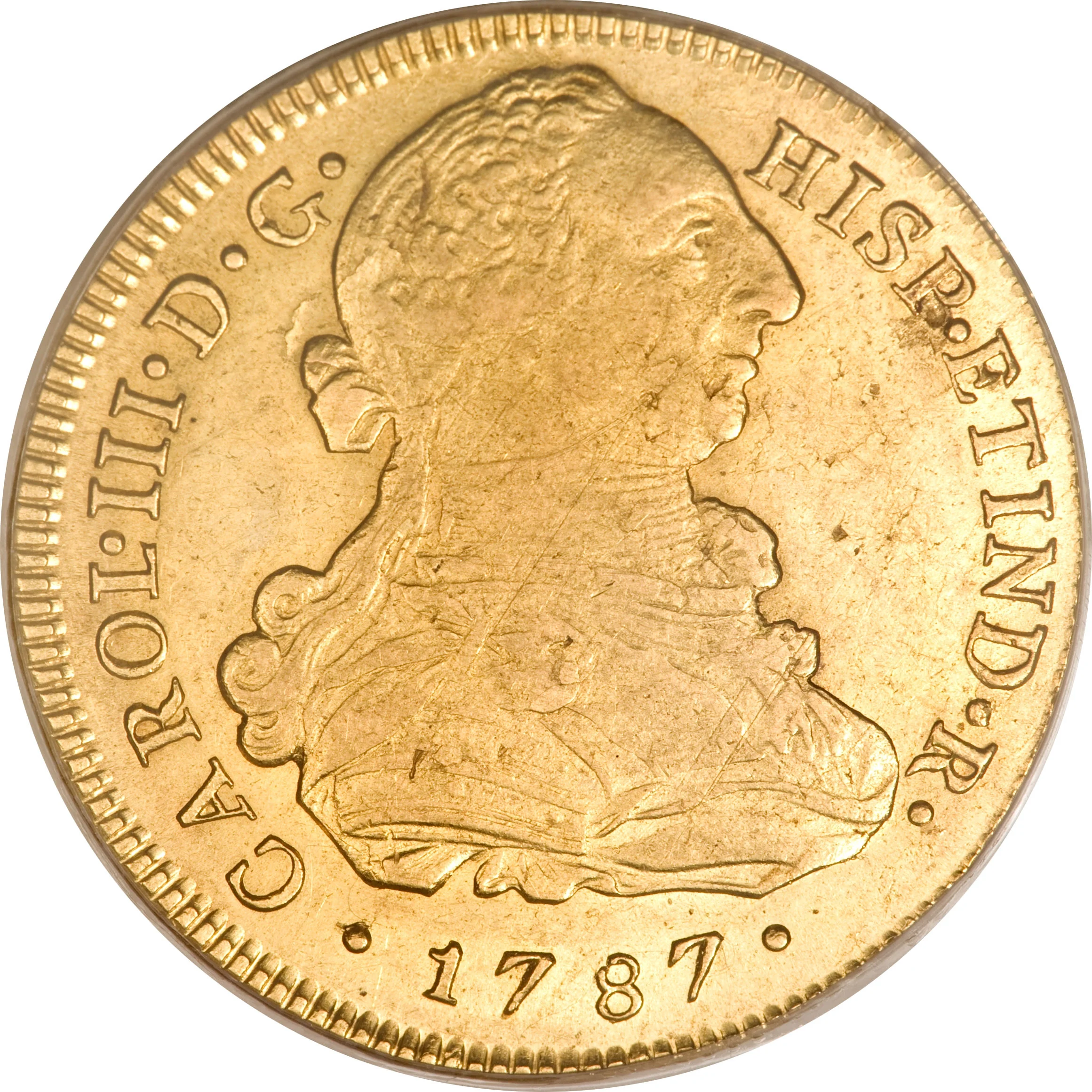
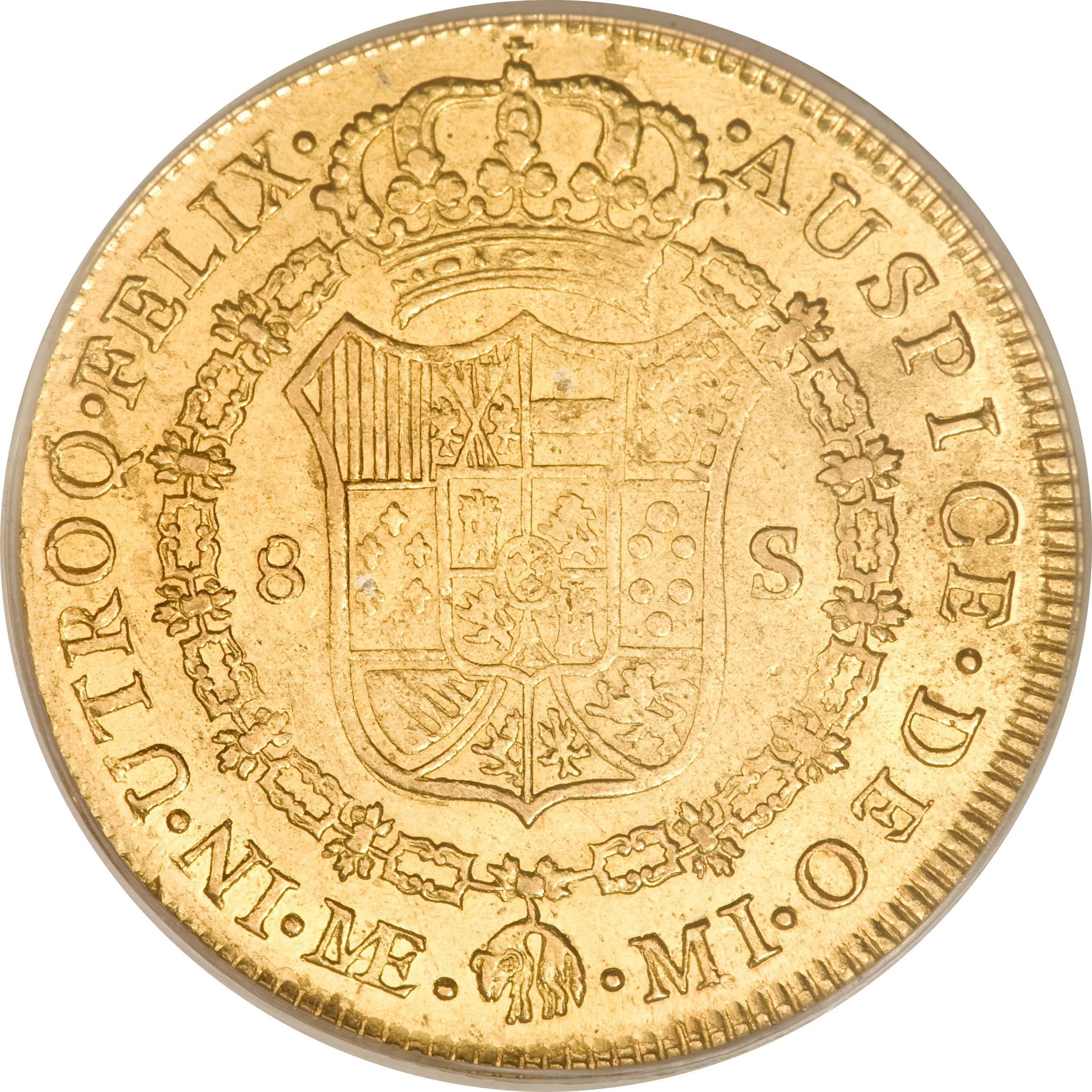
Peru
Context
Material
References
KM: #Click to copy to clipboard82a
Numista: #46617
Value
Bullion value: $3951.50
Mintings
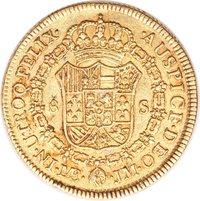
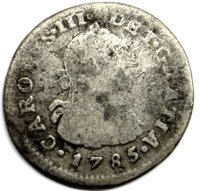
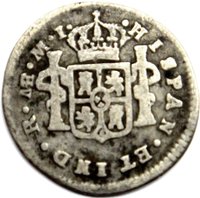
| Year | Mint Mark | Mintage | Quality | Collection |
|---|---|---|---|---|
| 1784 | JP | — | ||
| 1785 | MI | — | ||
| 1786 | MI | — | ||
| 1787 | IJ | — | ||
| 1787 | MI | — | ||
| 1788 | IJ | — | ||
| 1789 | IJ | — |
Historical background
In 1784, the currency situation in the Viceroyalty of Peru was characterized by severe scarcity and administrative confusion, a legacy of both broader imperial reforms and local upheaval. The Spanish Crown, under the Bourbon Reforms, had been centralizing economic control and redirecting South American silver trade away from the traditional Lima-based route through Panama and towards Buenos Aires on the Atlantic. This diminished Lima's economic dominance and reduced the flow of official currency within its jurisdiction. Furthermore, the great indigenous rebellion of Túpac Amaru II (1780-1783) had just been brutally suppressed, but it had devastated the Andean highlands, disrupting silver production from the critical mines of Potosí and Cerro de Pasco, which were the lifeblood of the coinage system.
The primary circulating currency was the silver real and the peso (8 reales), minted at the Lima mint (Casa de Moneda). However, the shortage of official coinage led to a proliferation of crude, cut, and counterfeit coins, causing widespread distrust in everyday transactions. To address the crisis, the viceregal authorities, under Teodoro de Croix, were actively implementing measures from the "Real Ordenanza de Intendentes" of 1782. This included attempts to standardize currency and crack down on fraud, but these efforts were hampered by the vast geography, poor communications, and a deep-rooted informal economy.
Consequently, the Peruvian economy in 1784 operated with a dual monetary reality. In major cities and for official trade, the scarce Spanish-milled dollars (pesos fuertes) were preferred, while in regional and local markets, a chaotic mix of clipped coins, provincial tokens, and even barter was commonplace. This instability reflected a transitional period where imperial restructuring and internal trauma had severely strained the colonial financial system, creating a pressing challenge for royal authorities seeking to reassert control and economic order in the wake of rebellion.
The primary circulating currency was the silver real and the peso (8 reales), minted at the Lima mint (Casa de Moneda). However, the shortage of official coinage led to a proliferation of crude, cut, and counterfeit coins, causing widespread distrust in everyday transactions. To address the crisis, the viceregal authorities, under Teodoro de Croix, were actively implementing measures from the "Real Ordenanza de Intendentes" of 1782. This included attempts to standardize currency and crack down on fraud, but these efforts were hampered by the vast geography, poor communications, and a deep-rooted informal economy.
Consequently, the Peruvian economy in 1784 operated with a dual monetary reality. In major cities and for official trade, the scarce Spanish-milled dollars (pesos fuertes) were preferred, while in regional and local markets, a chaotic mix of clipped coins, provincial tokens, and even barter was commonplace. This instability reflected a transitional period where imperial restructuring and internal trauma had severely strained the colonial financial system, creating a pressing challenge for royal authorities seeking to reassert control and economic order in the wake of rebellion.
✨ Legendary