

1 Giulio – Papal States
Circulating commemorative coins
Commemoration: Jubilee 1625
Vatican City
Context
Year: 1625
Country: Vatican City 
Issuer: Papal States
Ruler: Urban VIII
Currency:
(1534—1835)
Demonetized: Yes
Material
Diameter: 25 mm
Weight: 3.1 g
Silver weight: 2.84 g
Shape: Irregular round
Composition: 91.7% Silver
Standard: Gold tenth ounce
Magnetic: No
References
KM: #Click to copy to clipboard143
Numista: #463108
Value
Bullion value: $8.14
Obverse
Description:
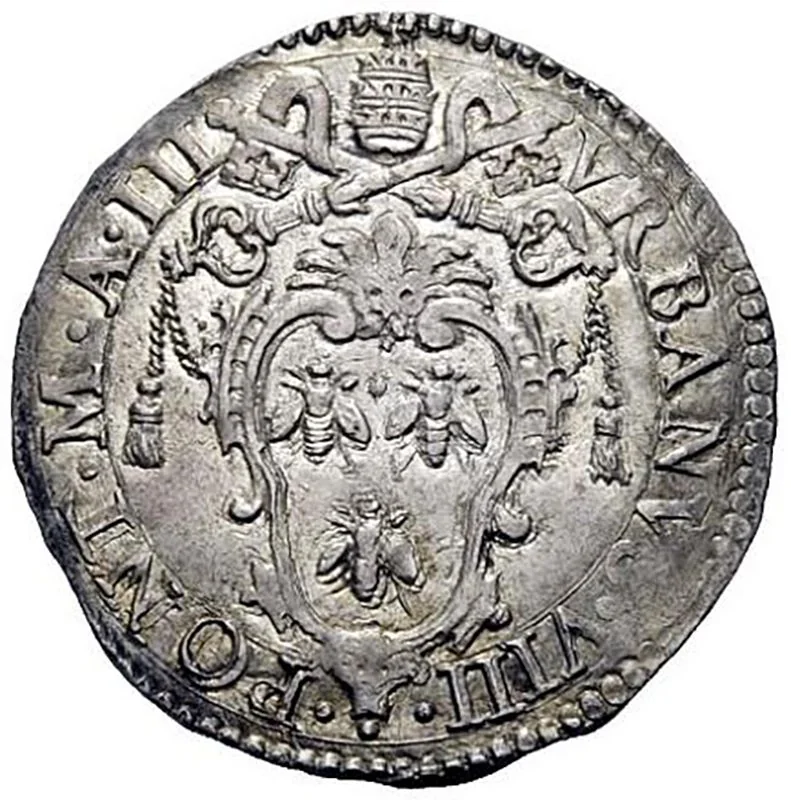
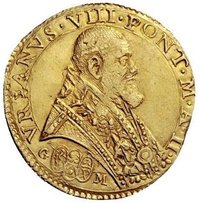
Urban VIII's coat of arms.
Inscription:
VRBANVS • VIII • • PONT • M • A • III
Reverse
Description:
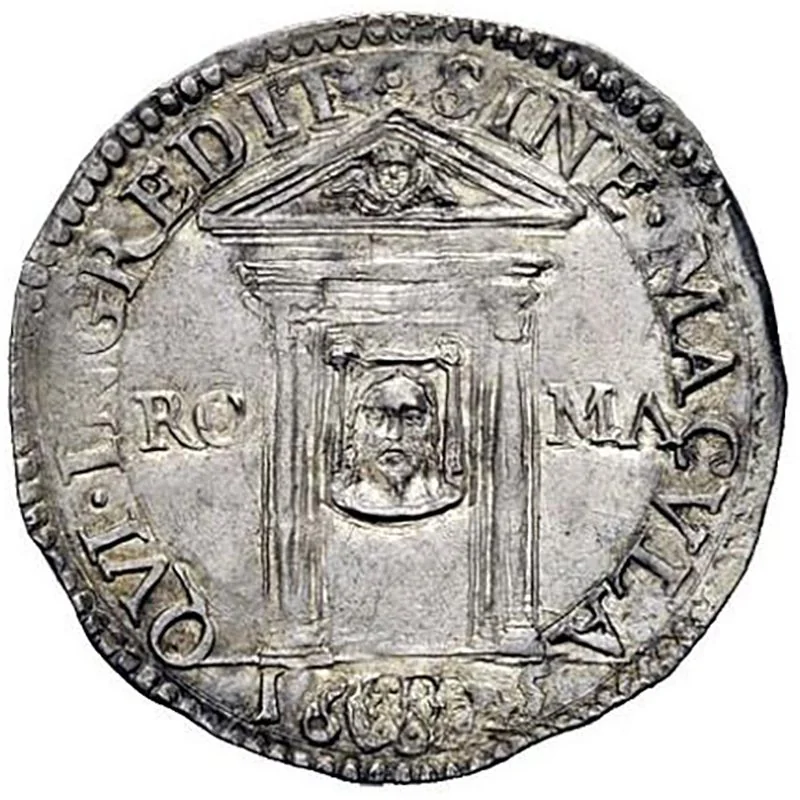
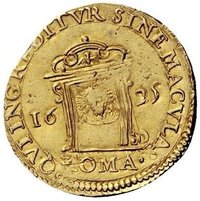
Holy Door, Veronica's Veil. "ROMA" flanking door. Dated 1625 below.
Inscription:
QVI٠INGREDIT٠SINE٠MACVLA٠
RO MA
RO MA
Edge
Mints
| Name | Mark |
|---|---|
| Rome | — |
Mintings
| Year | Mint Mark | Mintage | Quality | Collection |
|---|---|---|---|---|
| 1625 | — | — |
Historical background
In 1625, the Papal States, a collection of territories in central Italy under the direct temporal rule of the Pope, operated within a complex and often chaotic monetary system. The state lacked a unified, strong currency of its own that could dominate commerce. Instead, its economy relied heavily on a circulation of diverse foreign coins, particularly the large silver scudo from Spain and the ducatone from the Duchy of Milan, alongside a plethora of older papal issues and coins from other Italian states. This created a constant challenge of exchange rates and valuation, complicating both daily trade and state finances.
The primary papal mint in Rome produced coins, most notably the silver giulio and the gold scudo d'oro, but these often suffered from inconsistent quality and debasement. Financial pressures, including the immense costs of monumental urban projects like the completion of St. Peter's Basilica and the ongoing demands of the Counter-Reformation and European wars, frequently tempted the Apostolic Chamber to reduce the silver content in its coinage. This practice of debasement, while providing short-term revenue, eroded public trust in papal currency and fueled inflation, as merchants adjusted prices to account for weaker coin.
Consequently, monetary policy under Pope Urban VIII (elected 1623) was largely reactive and defensive. The focus was less on establishing a stable standard and more on managing the inflow of foreign specie and attempting to control the damage from past debasements. Edicts were periodically issued to fix legal exchange rates between the myriad coins in circulation, but these were difficult to enforce. The situation reflected the broader political reality: the Papal States were a middling Italian power struggling to maintain fiscal sovereignty in a European economy increasingly dominated by the vast silver flows from the New World into Spain.
The primary papal mint in Rome produced coins, most notably the silver giulio and the gold scudo d'oro, but these often suffered from inconsistent quality and debasement. Financial pressures, including the immense costs of monumental urban projects like the completion of St. Peter's Basilica and the ongoing demands of the Counter-Reformation and European wars, frequently tempted the Apostolic Chamber to reduce the silver content in its coinage. This practice of debasement, while providing short-term revenue, eroded public trust in papal currency and fueled inflation, as merchants adjusted prices to account for weaker coin.
Consequently, monetary policy under Pope Urban VIII (elected 1623) was largely reactive and defensive. The focus was less on establishing a stable standard and more on managing the inflow of foreign specie and attempting to control the damage from past debasements. Edicts were periodically issued to fix legal exchange rates between the myriad coins in circulation, but these were difficult to enforce. The situation reflected the broader political reality: the Papal States were a middling Italian power struggling to maintain fiscal sovereignty in a European economy increasingly dominated by the vast silver flows from the New World into Spain.
✨ Legendary