

½ thaler – Anhalt-Köthen
Add to wishlist
Germany
Context
References
KM: #
Numista: #459334
Value
Bullion value: $37.28
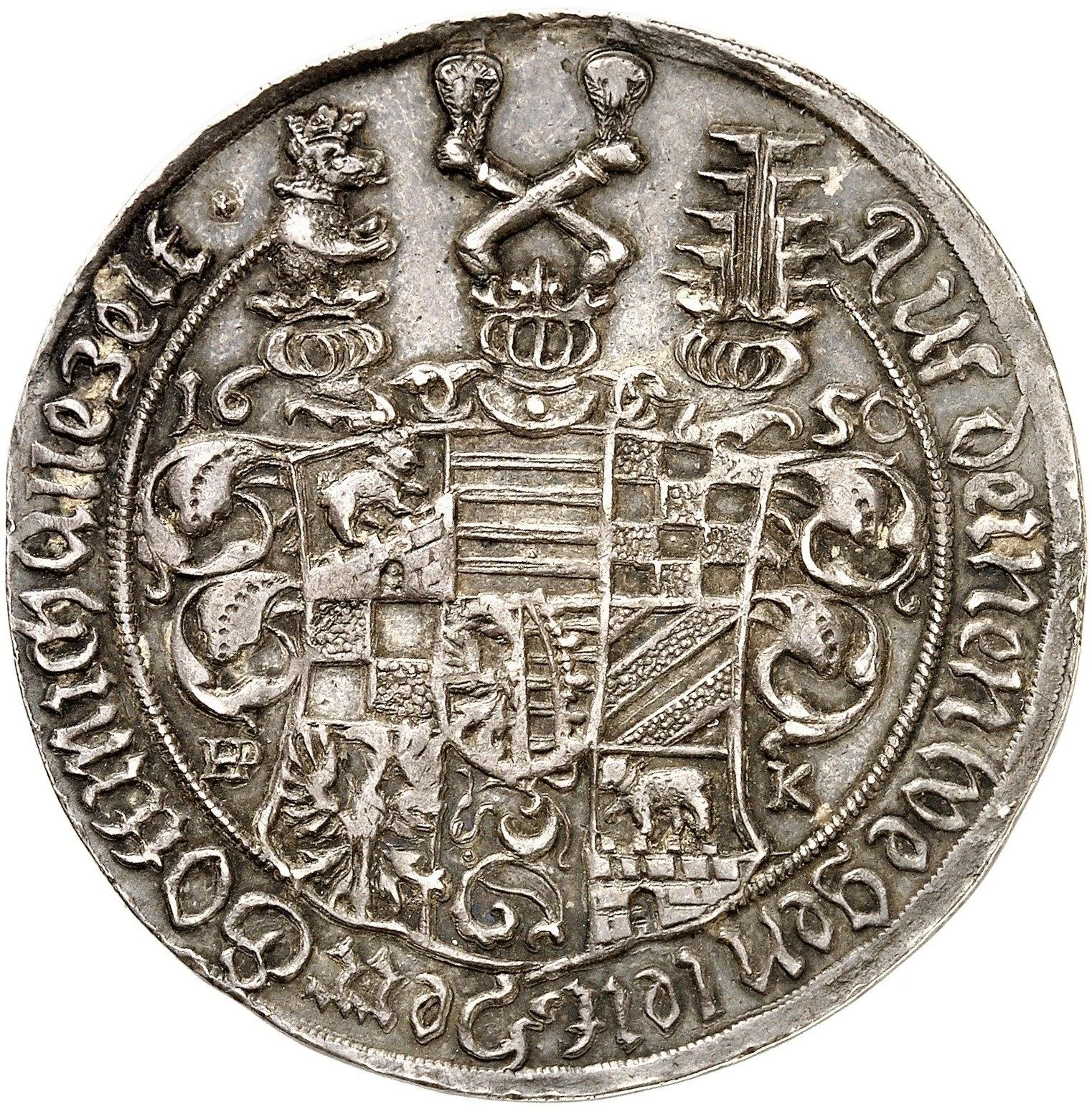
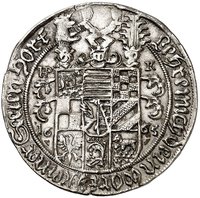
Obverse
Description:
Helmeted, ninefold ornate arms.
Script: Latin (Fraktur blackletter)
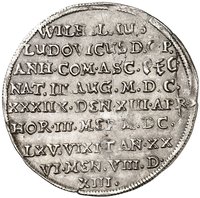
Reverse
Description:
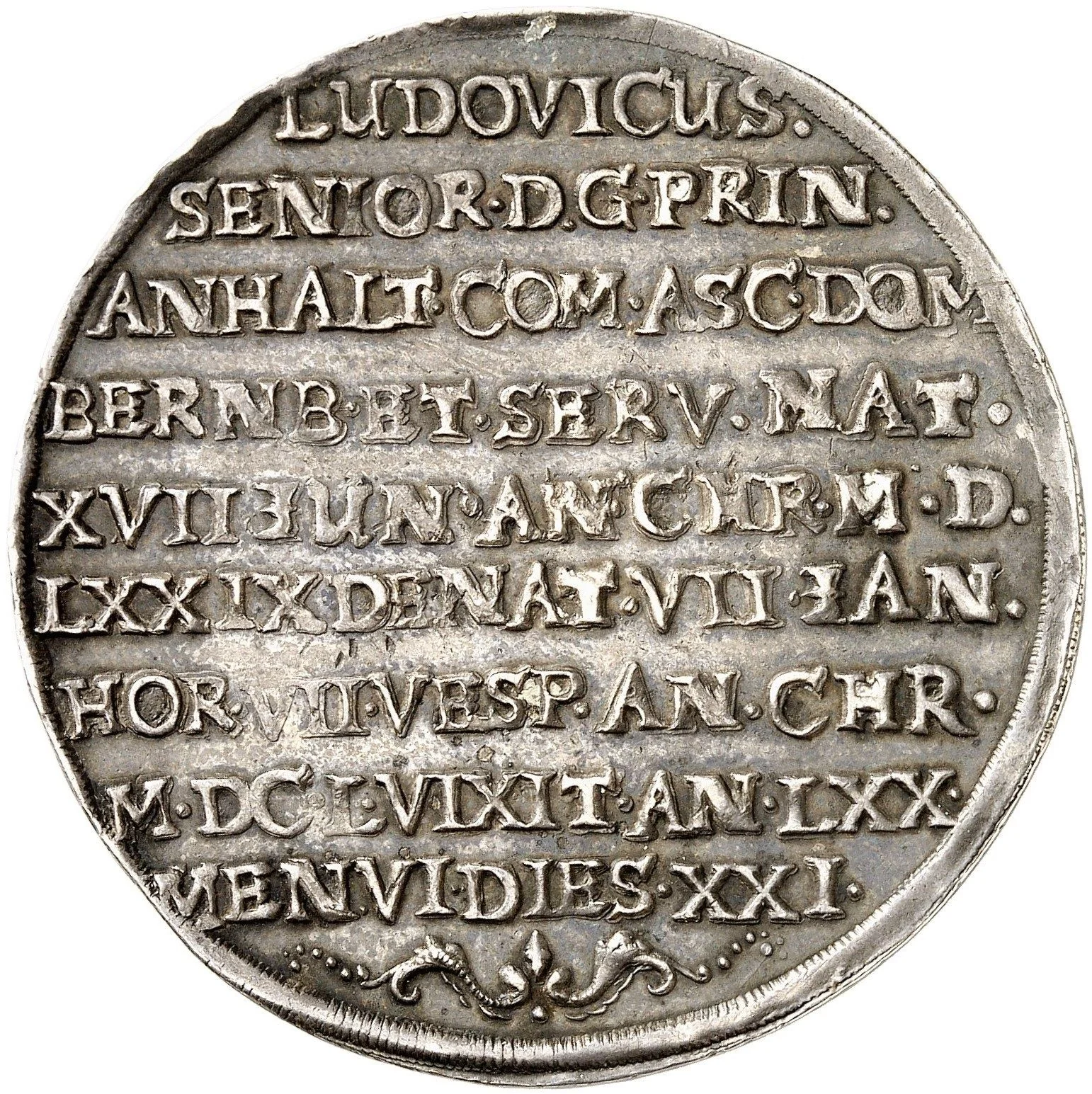
Nine-line inscription.
Inscription:
LUDOVICUS
SENIOR D G PRIN
ANHALT COM ASC DOM
BERNB ET SERV MAT
XVII JUN AN ChR M D
LXXIX DEN AT VII JAN
HOR VII VESP AN CHR
M DC L VIXIT AN LXX
MEN VI DIES XXI
SENIOR D G PRIN
ANHALT COM ASC DOM
BERNB ET SERV MAT
XVII JUN AN ChR M D
LXXIX DEN AT VII JAN
HOR VII VESP AN CHR
M DC L VIXIT AN LXX
MEN VI DIES XXI
Script: Latin
Edge
Mints
| Name | Mark |
|---|---|
| Köthen | — |
Mintings
| Year | Mint Mark | Mintage | Quality | Collection |
|---|---|---|---|---|
| 1650 | — | — |
Historical background
In 1650, the currency situation in the small central German principality of Anhalt-Köthen was one of profound instability and complexity, a direct legacy of the devastating Thirty Years' War (1618-1648). The war had shattered the regional economy, disrupted trade, and left a chaotic monetary landscape filled with debased and foreign coins. Like other German states, Anhalt-Köthen faced the challenge of numerous circulating currencies, including Imperial Reichsthaler, regional Guldengroschen, and a flood of lower-quality Kippermünzen (emergency coinage) struck by various authorities to fund the war, all with fluctuating and unreliable values.
Prince Louis I of Anhalt-Köthen, who ruled until 1650, and his successor, William Louis, grappled with the need to reassert monetary sovereignty and stability. The principality lacked the economic power to impose a single, strong currency, so its monetary policy was largely reactive and defensive. The primary concern was to manage the inflow of inferior foreign coinage and to periodically issue its own municipal or regional coinage (Landmünzen) for local use, often with a lower silver content than the Imperial standard, in an attempt to control the money supply and derive seigniorage income for the depleted state coffers.
Therefore, the currency situation was characterized by a fragile and multi-layered system. Transactions relied on a cumbersome system of constant evaluation of coin weights and metallic content, with official exchange rates (Kurant) often diverging from market reality. This environment hindered economic recovery, encouraged hoarding of good coin, and placed a burden on merchants and peasants alike. The situation in Anhalt-Köthen mirrored the broader Holy Roman Empire's struggle for monetary order, which would only begin to be addressed with the Imperial Coinage Ordinance (Reichsmünzordnung) of 1667.
Prince Louis I of Anhalt-Köthen, who ruled until 1650, and his successor, William Louis, grappled with the need to reassert monetary sovereignty and stability. The principality lacked the economic power to impose a single, strong currency, so its monetary policy was largely reactive and defensive. The primary concern was to manage the inflow of inferior foreign coinage and to periodically issue its own municipal or regional coinage (Landmünzen) for local use, often with a lower silver content than the Imperial standard, in an attempt to control the money supply and derive seigniorage income for the depleted state coffers.
Therefore, the currency situation was characterized by a fragile and multi-layered system. Transactions relied on a cumbersome system of constant evaluation of coin weights and metallic content, with official exchange rates (Kurant) often diverging from market reality. This environment hindered economic recovery, encouraged hoarding of good coin, and placed a burden on merchants and peasants alike. The situation in Anhalt-Köthen mirrored the broader Holy Roman Empire's struggle for monetary order, which would only begin to be addressed with the Imperial Coinage Ordinance (Reichsmünzordnung) of 1667.
✨ Legendary