

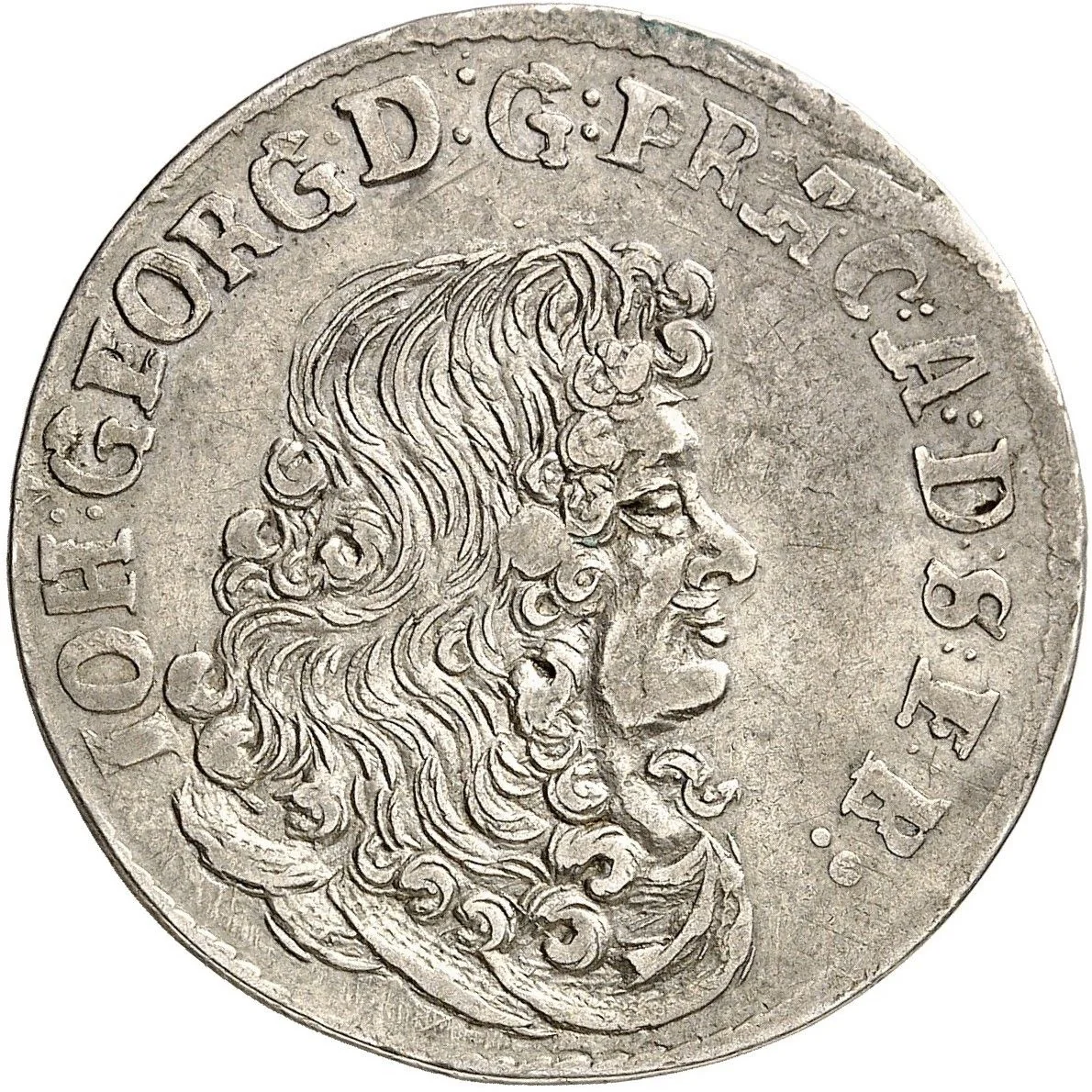
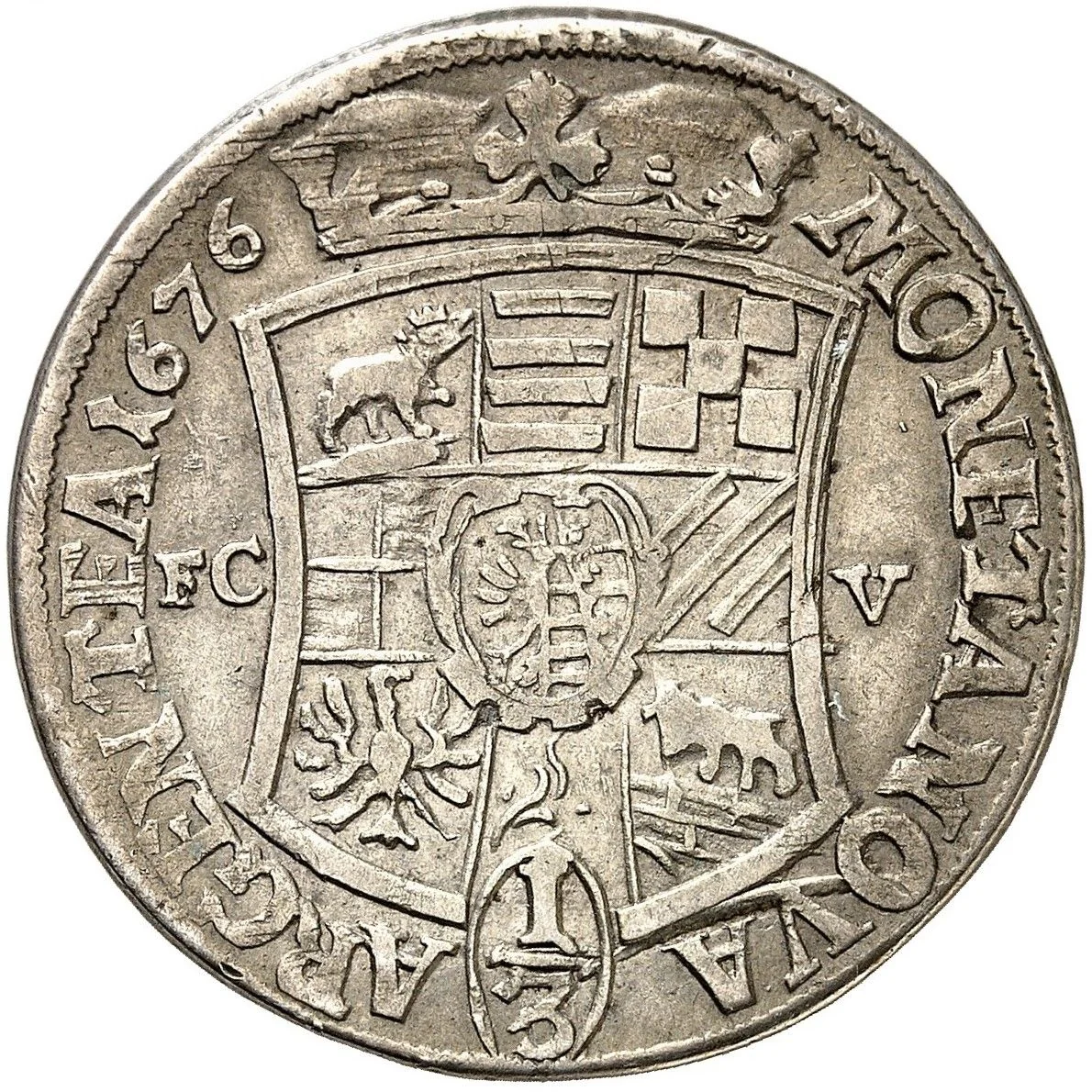
⅓ Thaler – Anhalt-Dessau
Germany
Context
Years: 1674–1676
Country: Germany 
Issuer: Anhalt-Dessau
Ruler: John George II
Currency:
Demonetized: Yes
References
KM: #Click to copy to clipboard4
Numista: #457703
Value
Bullion value: $26.25
Obverse
Reverse
Edge
Mintings
| Year | Mint Mark | Mintage | Quality | Collection |
|---|---|---|---|---|
| 1674 | — | — | ||
| 1676 | — | — |
Historical background
In 1674, the currency situation in the Principality of Anhalt-Dessau was characterized by significant instability and complexity, a common challenge across the fragmented states of the Holy Roman Empire. The principality did not mint its own high-value coins (like thalers) but issued lower-denomination Scheidemünzen (small change), such as groschens and pfennigs, for local use. The real problem stemmed from the circulation of a multitude of foreign coins, primarily large silver thalers from neighboring Saxony, Brandenburg, and Brunswick, alongside various gold guilders. This created a chaotic monetary environment with fluctuating exchange rates and values.
This instability was exacerbated by the ongoing Franco-Dutch War (1672–1678), in which Anhalt-Dessau's powerful neighbor, Brandenburg-Prussia, was a key participant. The war placed immense financial strain on the entire region, leading to currency debasement as states sought to fund their military expenditures. While Anhalt-Dessau itself was not a major belligerent, it was inevitably affected by the regional economic turbulence, including inflationary pressures and the influx of even more debased coinage from warring territories, which eroded public trust in the money in circulation.
Consequently, Prince John George II of Anhalt-Dessau faced the difficult task of maintaining a functional local economy amidst this imperial monetary disorder. His administration likely had to issue frequent ordinances to regulate the acceptance and value of the myriad coins, attempting to fix exchange rates and combat the inflow of inferior money. The situation in 1674 was thus one of precarious balance, where the principality’s economic stability depended on managing external monetary forces largely beyond its control, a microcosm of the challenges faced by small German states in the 17th century.
This instability was exacerbated by the ongoing Franco-Dutch War (1672–1678), in which Anhalt-Dessau's powerful neighbor, Brandenburg-Prussia, was a key participant. The war placed immense financial strain on the entire region, leading to currency debasement as states sought to fund their military expenditures. While Anhalt-Dessau itself was not a major belligerent, it was inevitably affected by the regional economic turbulence, including inflationary pressures and the influx of even more debased coinage from warring territories, which eroded public trust in the money in circulation.
Consequently, Prince John George II of Anhalt-Dessau faced the difficult task of maintaining a functional local economy amidst this imperial monetary disorder. His administration likely had to issue frequent ordinances to regulate the acceptance and value of the myriad coins, attempting to fix exchange rates and combat the inflow of inferior money. The situation in 1674 was thus one of precarious balance, where the principality’s economic stability depended on managing external monetary forces largely beyond its control, a microcosm of the challenges faced by small German states in the 17th century.
✨ Legendary