

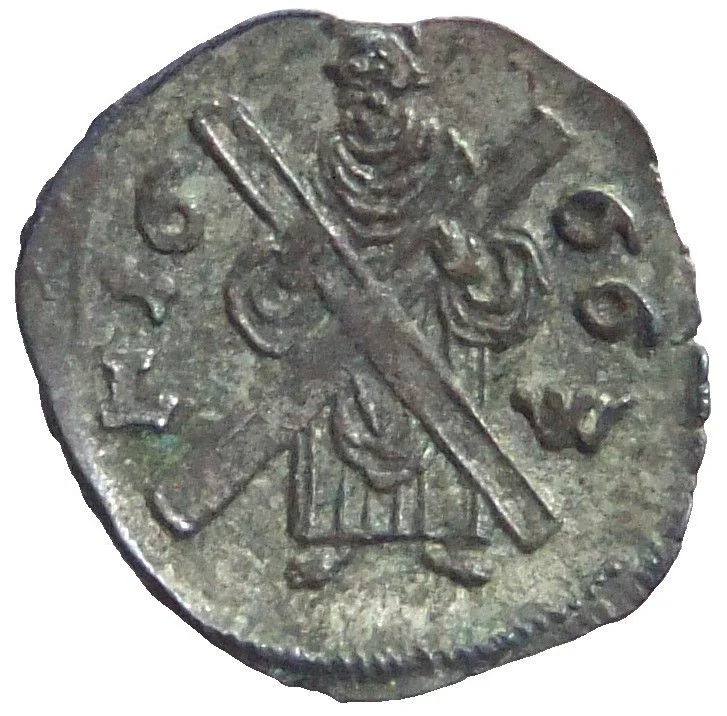
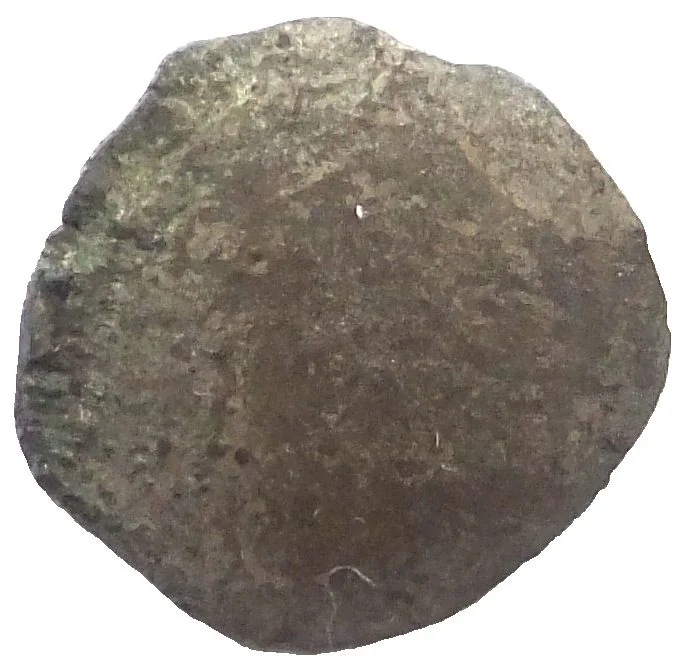
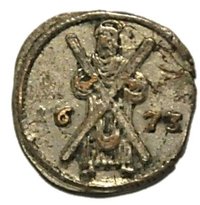
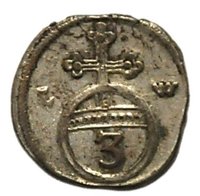
1 Pfennig – Brunswick-Lüneburg-Calenberg
Germany
Context
Years: 1666–1667
Country: Germany 
Issuer: Brunswick-Lüneburg-Calenberg
Ruler: John Frederick
Currency:
Demonetized: Yes
Material
Diameter: 13 mm
Weight: 0.33 g
Silver weight: 0.33 g
Shape: Irregular round
Composition: Silver
Magnetic: No
References
KM: #Click to copy to clipboard92
Numista: #456359
Value
Bullion value: $0.94
Mints
| Name | Mark |
|---|---|
| Clausthal | — |
Mintings
| Year | Mint Mark | Mintage | Quality | Collection |
|---|---|---|---|---|
| 1666 | — | — | ||
| 1667 | — | — |
Historical background
In 1666, the Duchy of Brunswick-Lüneburg, specifically the Principality of Calenberg under Duke Johann Friedrich, was entangled in the severe monetary crisis plaguing the Holy Roman Empire known as the Kipper- und Wipperzeit. This period, which peaked in the early 1620s but whose consequences reverberated for decades, was characterized by the deliberate debasement of coinage. Various minting authorities, including territorial princes and cities, would issue coins with reduced precious metal content while mandating their acceptance at face value, leading to inflation, a collapse in trust, and a chaotic circulation of hundreds of different, often worthless, coins.
The situation in Calenberg was part of a wider political struggle. Johann Friedrich, a convert to Catholicism ruling a largely Protestant territory, faced financial pressures from maintaining his court and ambitions. While the worst excesses of coin-clipping had passed, the monetary system remained fragmented and unstable. The region was caught between the competing interests of different Brunswick-Lüneburg lines and the influence of larger external powers, making a unilateral currency reform difficult. Trade was hampered as merchants struggled to assess the true value of numerous coin types, and the populace suffered from the effective devaluation of their wealth.
Consequently, 1666 fell within a protracted era of seeking stability. Efforts were being made toward establishing more reliable Reichstaler standards, but progress was slow and regional. The monetary disarray underscored the weak central authority of the Empire and the fiscal autonomy of its princes, a reality Johann Friedrich navigated. The currency situation thus reflected not just economic distress but also the complex political landscape of a Germany still recovering from the Thirty Years' War, where coinage was a tool of princely policy and a source of chronic economic uncertainty.
The situation in Calenberg was part of a wider political struggle. Johann Friedrich, a convert to Catholicism ruling a largely Protestant territory, faced financial pressures from maintaining his court and ambitions. While the worst excesses of coin-clipping had passed, the monetary system remained fragmented and unstable. The region was caught between the competing interests of different Brunswick-Lüneburg lines and the influence of larger external powers, making a unilateral currency reform difficult. Trade was hampered as merchants struggled to assess the true value of numerous coin types, and the populace suffered from the effective devaluation of their wealth.
Consequently, 1666 fell within a protracted era of seeking stability. Efforts were being made toward establishing more reliable Reichstaler standards, but progress was slow and regional. The monetary disarray underscored the weak central authority of the Empire and the fiscal autonomy of its princes, a reality Johann Friedrich navigated. The currency situation thus reflected not just economic distress but also the complex political landscape of a Germany still recovering from the Thirty Years' War, where coinage was a tool of princely policy and a source of chronic economic uncertainty.
✨ Legendary