

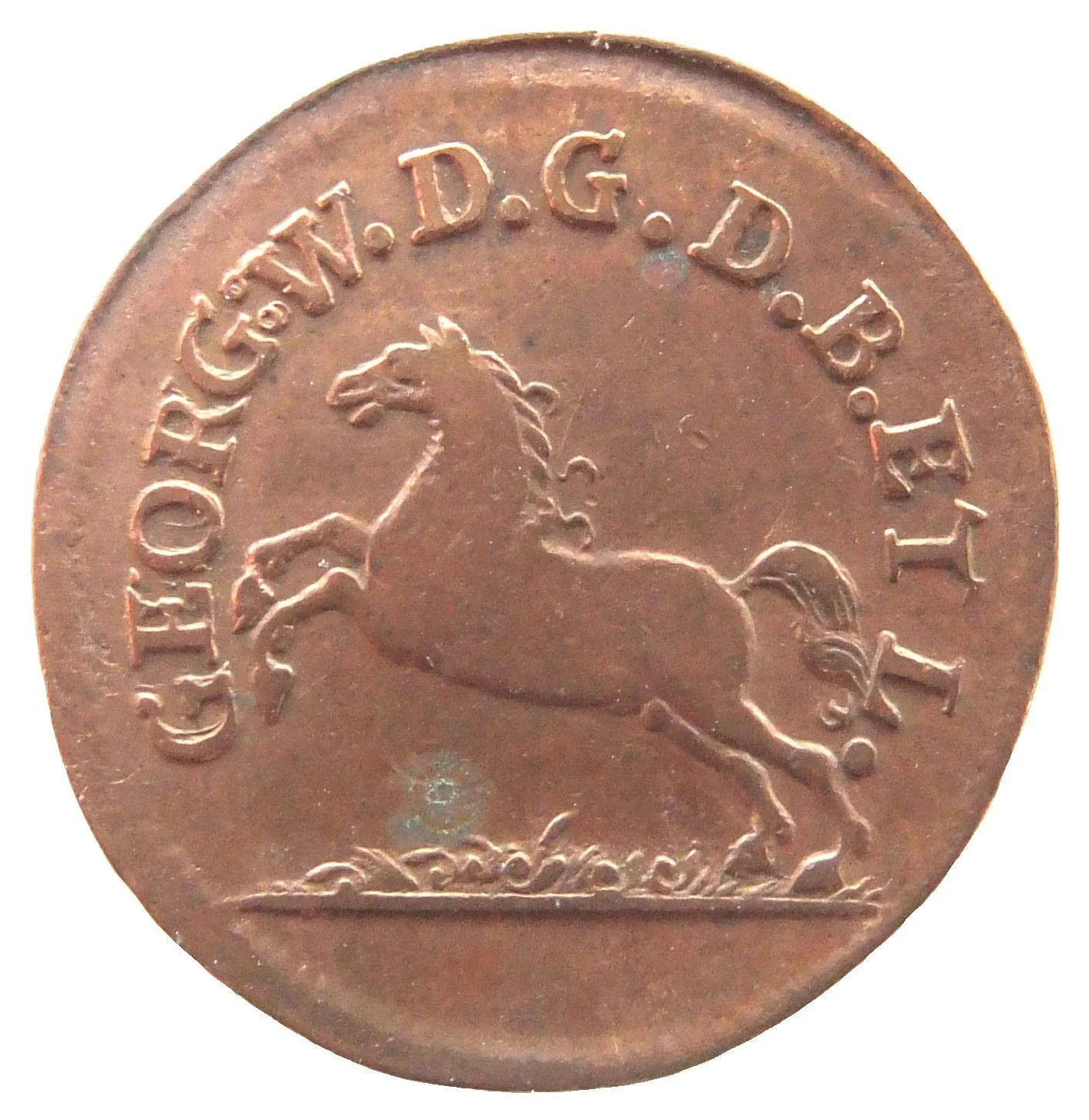
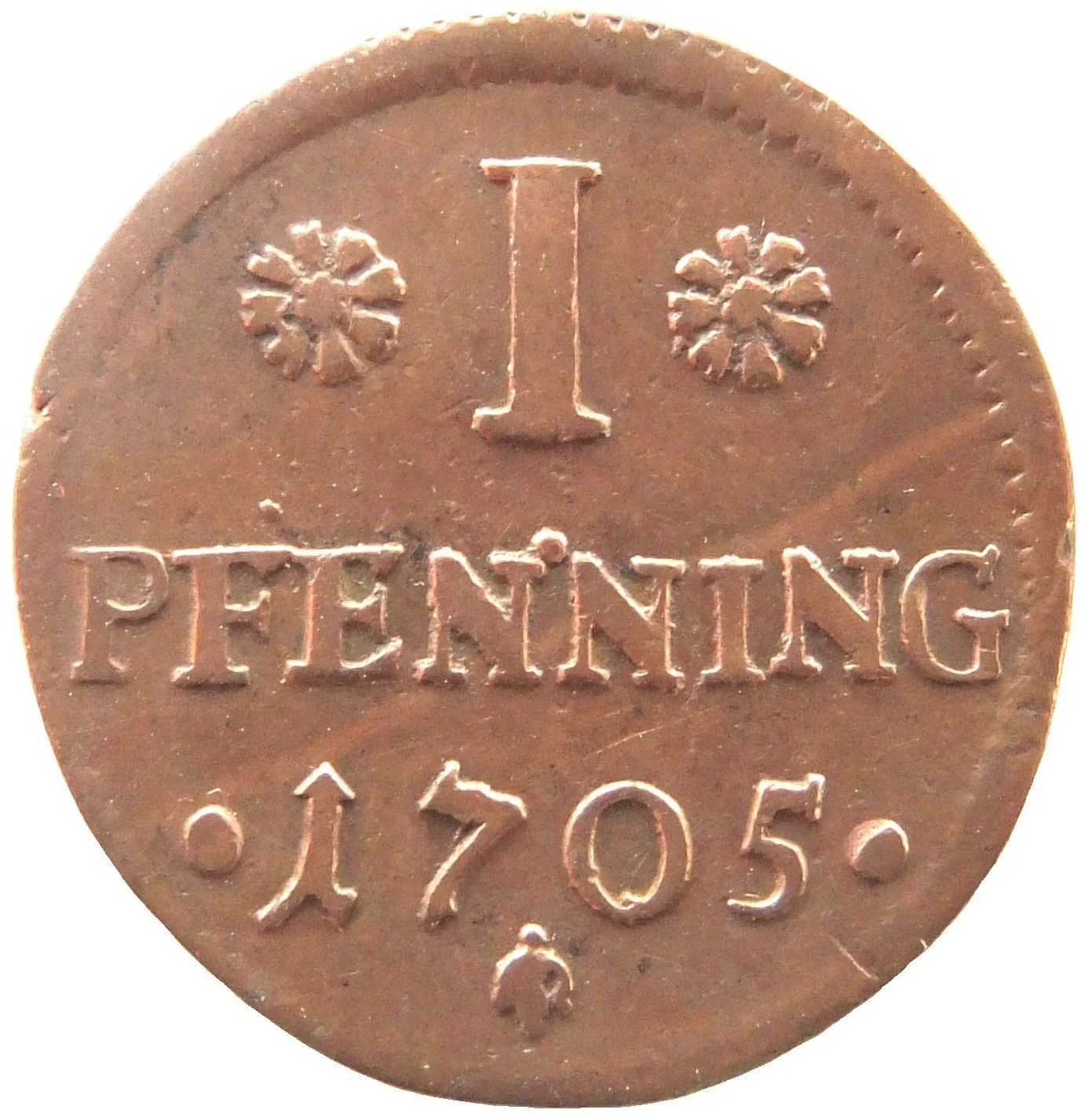
1 Pfennig – Brunswick-Lüneburg-Celle
Germany
Context
Year: 1705
Country: Germany 
Issuer: Brunswick-Lüneburg-Celle
Ruler: George William
Currency:
Demonetized: Yes
References
KM: #Click to copy to clipboard366
Numista: #456157
Obverse
Reverse
Edge
Mints
| Name | Mark |
|---|---|
| Celle | — |
Mintings
| Year | Mint Mark | Mintage | Quality | Collection |
|---|---|---|---|---|
| 1705 | — | — |
Historical background
In 1705, the Duchy of Brunswick-Lüneburg, specifically the Principality of Celle under Duke George William, was entangled in the complex monetary chaos of the Holy Roman Empire. The region operated within a fragmented system where numerous states issued their own coins, leading to a proliferation of varying standards and widespread debasement. The primary accounting unit was the Reichsthaler, but everyday transactions were conducted in a confusing array of smaller coins like Gute Groschen and Mariengroschen, whose actual metal content and value were unstable and often disputed.
This instability was exacerbated by the immense costs of the War of the Spanish Succession (1701-1714), in which Celle was a committed ally of the Habsburg Emperor. To finance military expenditures, not only Celle but neighboring states frequently engaged in Kipper- und Wipperzeit practices, issuing lightweight coins with face values far exceeding their intrinsic silver content. This led to severe inflation, a collapse in public trust, and Gresham's Law in action, where "bad" debased money drove "good" full-weight money out of circulation, either into hoards or across borders.
Consequently, the monetary situation in Brunswick-Lüneburg-Celle in 1705 was one of profound disorder, characterized by a chronic shortage of reliable specie, rampant counterfeiting, and erratic exchange rates between the multitude of circulating coins. This environment crippled local commerce and complicated the duke's urgent need to pay and supply his troops, creating a pressing but nearly intractable economic crisis amidst the larger European war.
This instability was exacerbated by the immense costs of the War of the Spanish Succession (1701-1714), in which Celle was a committed ally of the Habsburg Emperor. To finance military expenditures, not only Celle but neighboring states frequently engaged in Kipper- und Wipperzeit practices, issuing lightweight coins with face values far exceeding their intrinsic silver content. This led to severe inflation, a collapse in public trust, and Gresham's Law in action, where "bad" debased money drove "good" full-weight money out of circulation, either into hoards or across borders.
Consequently, the monetary situation in Brunswick-Lüneburg-Celle in 1705 was one of profound disorder, characterized by a chronic shortage of reliable specie, rampant counterfeiting, and erratic exchange rates between the multitude of circulating coins. This environment crippled local commerce and complicated the duke's urgent need to pay and supply his troops, creating a pressing but nearly intractable economic crisis amidst the larger European war.
✨ Legendary