

1 Rupee – Hyderabad-Narayanpett Feudatory
India
Context
Year: 1784
Country: India 
Issuer: Hyderabad-Narayanpett Feudatory
Ruler: Ahmad Shah Bahadur
Currency:
Demonetized: Yes
Material
References
KM: #Click to copy to clipboardUnlisted
Numista: #451888
Value
Bullion value: $32.11
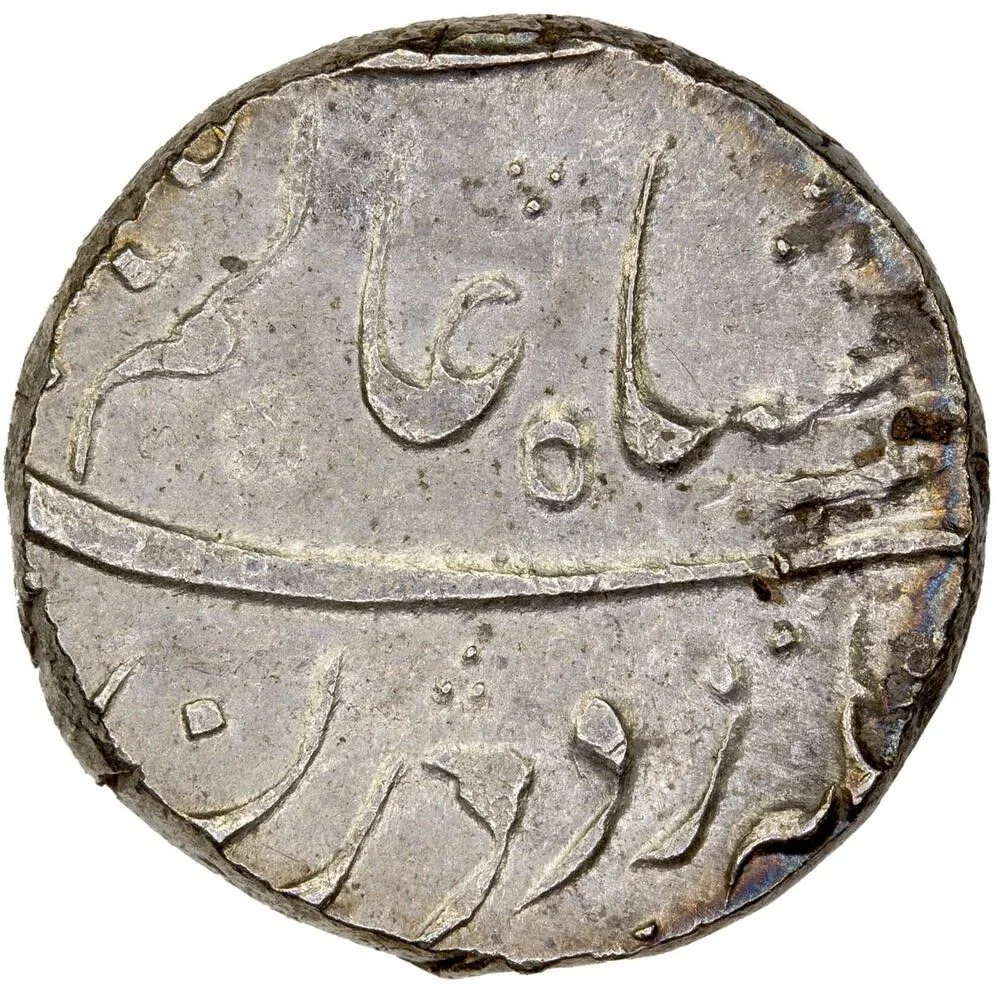
Obverse
Description:
Emperor and Mint lettering.
Inscription:
sikkah zar dar jahan illah shah alam panah befazl ahmad shah
Script: Urdu
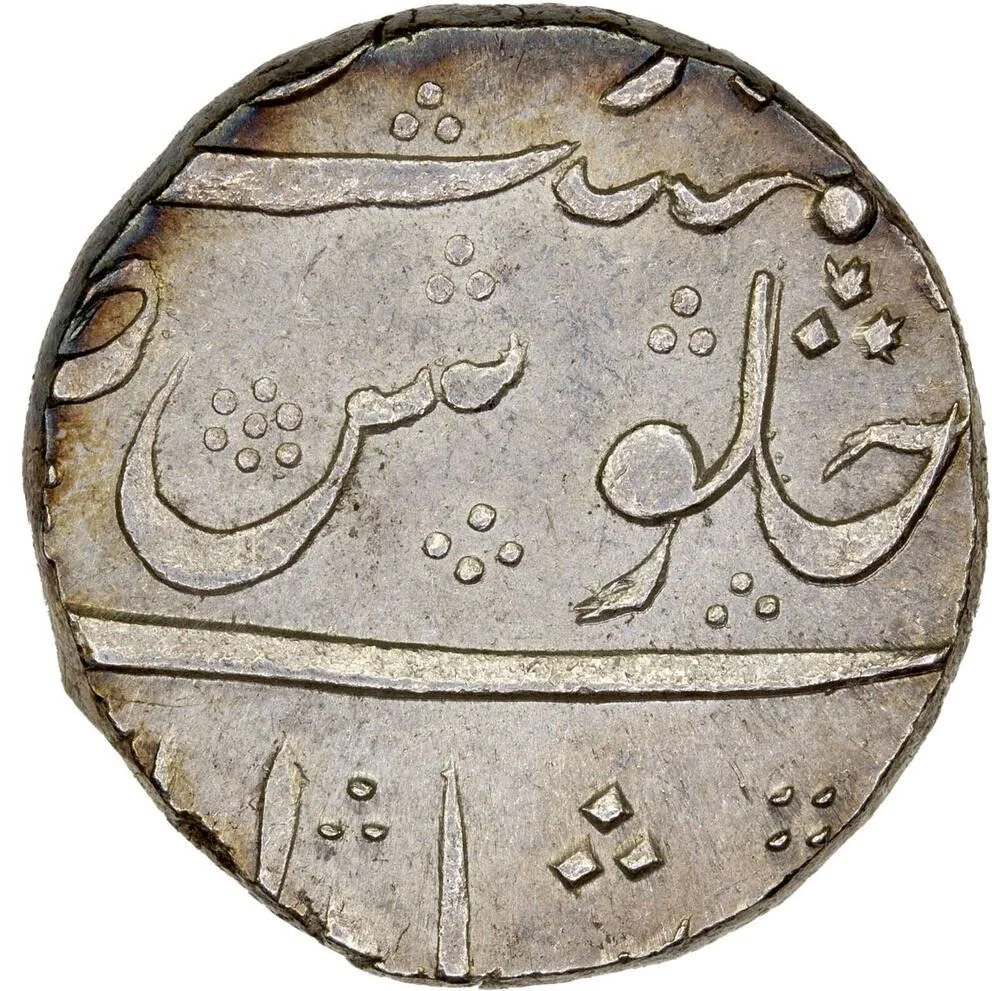
Reverse
Script: Urdu
Edge
Plain
Mintings
| Year | Mint Mark | Mintage | Quality | Collection |
|---|---|---|---|---|
| 1784 | — | — |
Historical background
In 1784, the Hyderabad-Narayanpet feudatory region existed within a complex and fragmented monetary landscape, characteristic of late 18th-century South India. The area was nominally under the suzerainty of the Nizam of Hyderabad, Asaf Jah II, but local jagirdars (feudal lords) and palegars (military chiefs) in places like Narayanpet exercised significant autonomy. This political decentralization was mirrored in the currency system, where the Mughal-era silver rupee of the Hyderabad mint (often called the Hali Sicca) was the official standard. However, its circulation and acceptance competed with a plethora of other coins, including older Mughal rupees, Maratha hon and rupees, and various local fanams and pagodas.
The currency situation was defined by chronic instability and scarcity. The Nizam's own finances were strained by massive tributes paid to the Marathas following the 1762 Battle of Rakshasbhuvan and by internal rebellions, leading to irregular minting and debasement of coinage. Within the Narayanpet jagir, local rulers likely collected revenue in Hyderabad rupees but also tolerated or even issued their own crude copper dams or pice for smaller, everyday transactions. This created a multi-tiered system where the value of coins depended not only on metal content but also on the authority of the issuer and their acceptance in local markets.
Consequently, trade and revenue collection were hampered by constant evaluation and discounting of coins. Money-changers (sarrafs) held essential power, determining exchange rates between the various silver, gold, and copper coins in circulation. For the peasantry, this often meant exploitation through unfavorable rates and demands for payment in specific, scarce coinages. Thus, in 1784, the feudatory's currency was less a unified system and more a contested economic space, reflecting the broader political instability as the Nizam's empire weakened and external powers like the Marathas and, increasingly, the British East India Company, began to exert indirect influence over the region's economic affairs.
The currency situation was defined by chronic instability and scarcity. The Nizam's own finances were strained by massive tributes paid to the Marathas following the 1762 Battle of Rakshasbhuvan and by internal rebellions, leading to irregular minting and debasement of coinage. Within the Narayanpet jagir, local rulers likely collected revenue in Hyderabad rupees but also tolerated or even issued their own crude copper dams or pice for smaller, everyday transactions. This created a multi-tiered system where the value of coins depended not only on metal content but also on the authority of the issuer and their acceptance in local markets.
Consequently, trade and revenue collection were hampered by constant evaluation and discounting of coins. Money-changers (sarrafs) held essential power, determining exchange rates between the various silver, gold, and copper coins in circulation. For the peasantry, this often meant exploitation through unfavorable rates and demands for payment in specific, scarce coinages. Thus, in 1784, the feudatory's currency was less a unified system and more a contested economic space, reflecting the broader political instability as the Nizam's empire weakened and external powers like the Marathas and, increasingly, the British East India Company, began to exert indirect influence over the region's economic affairs.
✨ Legendary