Logo Title
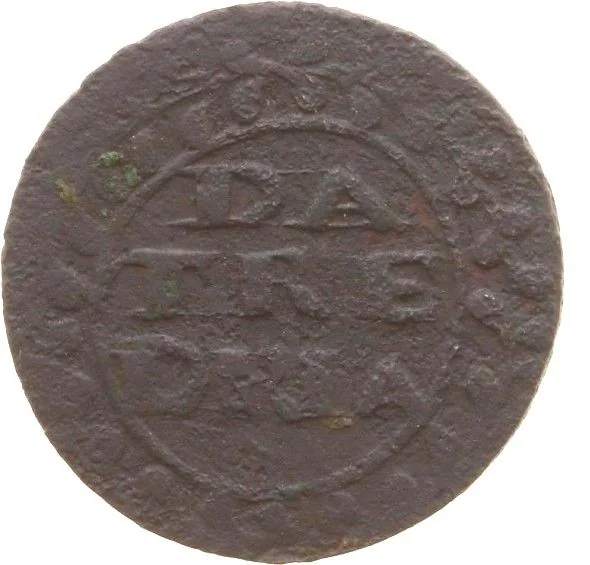
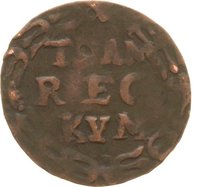
obverse
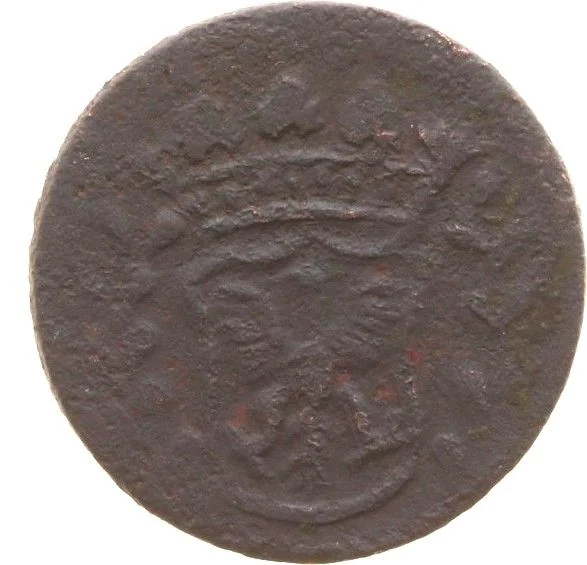
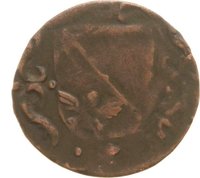
reverse
Heritage Auctions Europe

Duit – Lordship of Reckheim

Belgium
Context
Years: 1665–1703
Country: Belgium Country flag
Currency:
(1553—1665)
Demonetized: Yes
Material
Composition: Copper
Magnetic: No
Technique: Hammered
References
KM: #Click to copy to clipboard93
Numista: #447579

Obverse

Description:
Inscription in circle, surrounded by wreath.
Inscription:
DA

TRE

DRIA
Script: Latin

Reverse

Description:
Shield with left-facing eagle, wings spread, flanked by sprigs.

Edge

Categories

Symbols> Coat of Arms

Mintings

YearMint MarkMintageQualityCollection

Historical background

In the year 1665, the Lordship of Reckheim, a minor but strategically located territory within the Holy Roman Empire, finds its currency situation defined by profound complexity and instability. The Reckheim Thaler, stamped with the likeness of the ruling Lord, is the official coin of the realm, but it circulates amidst a cacophony of foreign currencies. Imperial Reichsthalers, Dutch Leeuwendaalders, Spanish Reales, and various regional Kreuzer and Groschen all jangle together in merchants' purses, their values fluctuating with trade flows and political fortunes. This monetary Babel creates constant friction in daily commerce, requiring money-changers at every market to determine the weight, silver content, and often dubious legitimacy of a bewildering array of coins.

This chaos is exacerbated by the recent financial strain of the Thirty Years' War, which ended just seventeen years prior. To fund his modest court and garrison, the Lord of Reckheim has occasionally resorted to debasement—reducing the precious metal content in his minted coins while insisting they hold their face value. This practice, though a short-term fiscal fix, has eroded trust in the local currency. Savvy merchants and foreign traders often demand payment in "good money" like Dutch silver, while the debased Reckheim coins are either hoarded for their residual bullion or passed along quickly, a process described by Gresham's Law where "bad money drives out good."

Consequently, the economy of the lordship operates on a precarious dual track. Official taxes and rents are calculated in a notional system of Gulden and Kreuzer, but actual settlement is often a negotiated affair involving commodities or more trusted foreign coin. The Lord’s council is aware that this monetary anarchy stifles trade and limits sovereign power, but proposals for a comprehensive recoinage are mired in debates over the immense cost and the risk of disrupting the fragile post-war recovery. Thus, in 1665, Reckheim’s currency remains a daily reminder of its limited autonomy within a fractured empire.
Legendary