

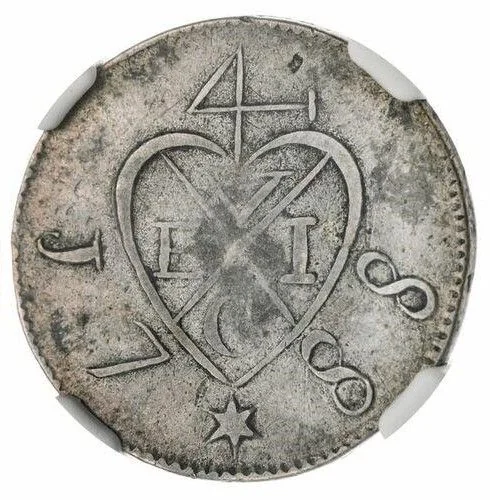
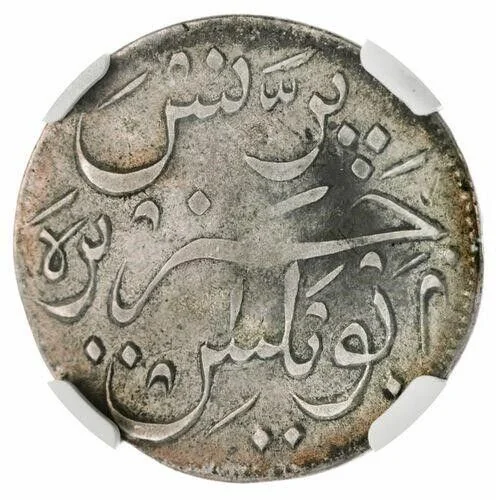
¼ dollar – Penang
Add to wishlist
Context
Year: 1788
Country: British East Indies
Issuer: Penang
Issuing organization: East India Company
Currency:
(1786—1826)
Demonetized: Yes
Material
References
KM: #
Numista: #446899
Value
Bullion value: $15.47
Obverse
Description:
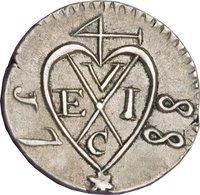
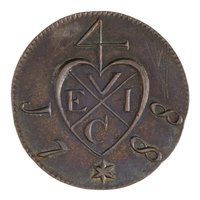
United East India Company arms, numeral 4 above, date below, separated by a six-pointed star.
Inscription:
4
VEIC
1788
VEIC
1788
Script: Latin
Reverse
Edge
Reeded
Mintings
| Year | Mint Mark | Mintage | Quality | Collection |
|---|---|---|---|---|
| 1788 | — | — |
Historical background
In 1788, Penang, then known as Prince of Wales Island, was a nascent British trading outpost under the administration of the British East India Company. Captain Francis Light had formally taken possession of the island just five years earlier, and the settlement of George Town was rapidly growing as a free port to challenge Dutch dominance in the region. This commercial boom created an urgent and chaotic currency situation, as the island attracted a diverse population of Malay, Chinese, Indian, and European traders, each bringing their own preferred mediums of exchange.
The currency environment was a complex bazaar of competing monies. The most widely accepted and trusted currency was the Spanish silver dollar (also known as the piece of eight), a global trade coin of consistent silver content. Alongside these, various other silver coins like Dutch ducatons and Indian rupees circulated, as well as a multitude of smaller copper and tin coins for daily transactions. The British East India Company attempted to impose order by issuing its own copper "coinage for the island of Penang," but these tokens held little value outside the local settlement and failed to displace the entrenched Spanish dollars. The lack of a standardized, authoritative currency led to constant disputes over exchange rates and coin valuations, hampering both commerce and administration.
Consequently, trade often relied on barter or the weighing of silver bullion, a cumbersome process for a port aspiring to be a major entrepôt. The British authorities, recognizing this instability as a threat to the island's economic potential, were in the early stages of grappling with the problem. The year 1788 thus represents a point of monetary fragmentation, setting the stage for future, more forceful interventions by the Company to regulate currency, a process that would culminate in the official declaration of the dollar as the sole legal tender in 1804.
The currency environment was a complex bazaar of competing monies. The most widely accepted and trusted currency was the Spanish silver dollar (also known as the piece of eight), a global trade coin of consistent silver content. Alongside these, various other silver coins like Dutch ducatons and Indian rupees circulated, as well as a multitude of smaller copper and tin coins for daily transactions. The British East India Company attempted to impose order by issuing its own copper "coinage for the island of Penang," but these tokens held little value outside the local settlement and failed to displace the entrenched Spanish dollars. The lack of a standardized, authoritative currency led to constant disputes over exchange rates and coin valuations, hampering both commerce and administration.
Consequently, trade often relied on barter or the weighing of silver bullion, a cumbersome process for a port aspiring to be a major entrepôt. The British authorities, recognizing this instability as a threat to the island's economic potential, were in the early stages of grappling with the problem. The year 1788 thus represents a point of monetary fragmentation, setting the stage for future, more forceful interventions by the Company to regulate currency, a process that would culminate in the official declaration of the dollar as the sole legal tender in 1804.
✨ Legendary