

1 escudo – Spain
Add to wishlist
Spain
Context
Years: 1784–1788
Issuer: Spain
Ruler: Charles III
Currency:
(1497—1833)
Demonetized: Yes
Total mintage: 292,400
Material
References
KM: #
Numista: #44673
Value
Bullion value: $457.96
Obverse
Description:
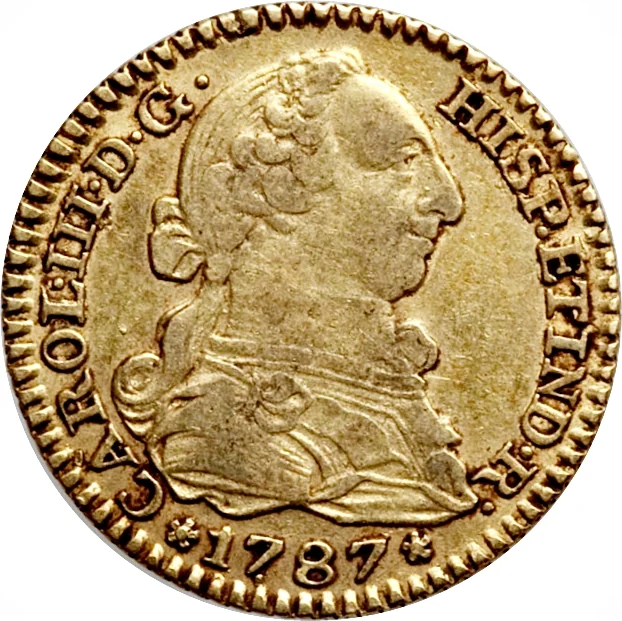
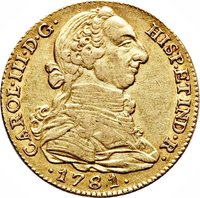
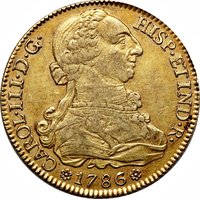
Armored bust of King Charles III facing right.
Inscription:
CAROL · III · D · G · HISP · ET IND · R ·
· 1787 ·
· 1787 ·
Script: Latin
Engraver: Pedro González de Sepúlveda
Reverse
Description:
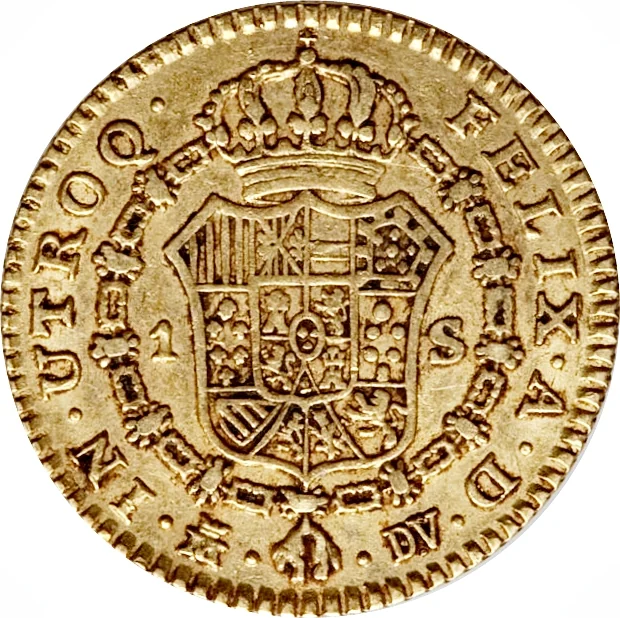
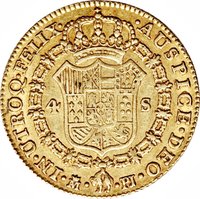
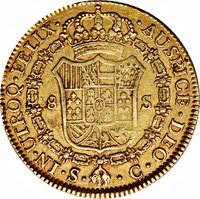
Crowned Spanish coat of arms with the Golden Fleece.
Inscription:
IN · UTROQ · · FELIX · A · D ·
1 S
·M· ·DV
1 S
·M· ·DV
Script: Latin
Engraver: Pedro González de Sepúlveda
Edge
Categories
| Symbols> Coat of Arms |
Mints
| Name | Mark |
|---|---|
| Royal Mint of Madrid | (M) |
| Royal Mint of Seville | S |
Mintings
| Year | Mint Mark | Mintage | Quality | Collection |
|---|---|---|---|---|
| 1784 | SV | — | ||
| 1785 | SC | — | ||
| 1787 | MDV | 118,864 | ||
| 1787 | SCM | — | ||
| 1788 | MDV | 160,956 | ||
| 1788 | MM | 12,580 |
Historical background
In 1784, Spain's currency system was a complex and fragile patchwork, reflecting the broader challenges of the Bourbon monarchy under King Charles III. The primary unit was the real, with the silver real de a ocho (piece of eight) serving as the cornerstone for both domestic and international trade. However, the monetary landscape was cluttered with a bewildering variety of coins from different reigns and mints, both Spanish and foreign, circulating simultaneously. This lack of uniformity, combined with widespread clipping and counterfeiting, created chronic uncertainty in everyday transactions and hampered economic efficiency.
The state's finances were under severe strain, a direct legacy of costly military engagements, most notably Spain's support for the American Revolutionary War, which had just concluded with the Treaty of Paris in 1783. While the war enhanced Spanish prestige, it drained the royal treasury and exacerbated a longstanding shortage of precious metals. This bullion famine was critical, as Spain's wealth was historically tied to silver and gold from its American colonies. Efforts to increase coinage were often undermined by the need to export bullion to pay foreign debts, leading to periodic shortages of sound coin in circulation and a reliance on inferior copper currency, the vellón, for daily use.
In response, the crown was actively pursuing reform. The period was one of "Ilustración" (Enlightenment), with ministers like the Count of Floridablanca seeking to modernize the economy. Key measures included attempts to centralize minting, suppress counterfeit operations, and introduce new, more uniform coinage. The Real Banco de San Carlos (precursor to the Bank of Spain) was founded in 1782 to help manage public debt and stabilize finances. Nevertheless, in 1784, these reforms were still a work in progress, and the currency system remained a vulnerable point in Spain's attempt to regain its economic footing in the postwar world.
The state's finances were under severe strain, a direct legacy of costly military engagements, most notably Spain's support for the American Revolutionary War, which had just concluded with the Treaty of Paris in 1783. While the war enhanced Spanish prestige, it drained the royal treasury and exacerbated a longstanding shortage of precious metals. This bullion famine was critical, as Spain's wealth was historically tied to silver and gold from its American colonies. Efforts to increase coinage were often undermined by the need to export bullion to pay foreign debts, leading to periodic shortages of sound coin in circulation and a reliance on inferior copper currency, the vellón, for daily use.
In response, the crown was actively pursuing reform. The period was one of "Ilustración" (Enlightenment), with ministers like the Count of Floridablanca seeking to modernize the economy. Key measures included attempts to centralize minting, suppress counterfeit operations, and introduce new, more uniform coinage. The Real Banco de San Carlos (precursor to the Bank of Spain) was founded in 1782 to help manage public debt and stabilize finances. Nevertheless, in 1784, these reforms were still a work in progress, and the currency system remained a vulnerable point in Spain's attempt to regain its economic footing in the postwar world.
💎 Very Rare