

1 speciedaler – Norway
Add to wishlist
Norway
Context
Year: 1690
Issuer: Norway
Ruler: Christian V
Currency:
(1523—1746)
Demonetized: Yes
Total mintage: 44
Material
References
KM: #
Numista: #445604
Value
Bullion value: $63.09
Obverse
Description:
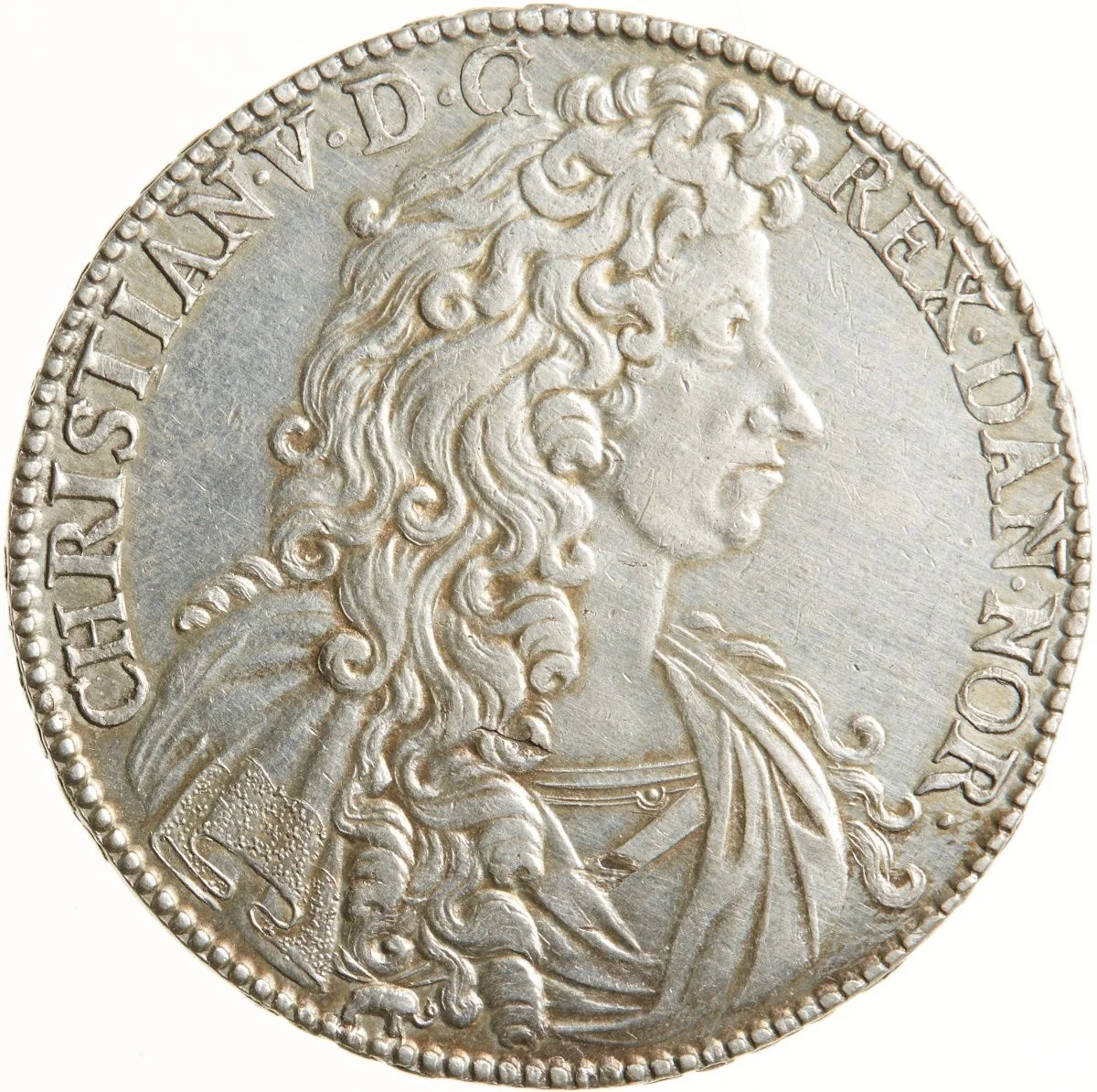
Bust of Christian V facing right, with long hair, an elephant symbol below, surrounded by inscription and a beaded rim.
Inscription:
CHRISTIAN·V·D·G REX·DAN·NOR·
Script: Latin
Engraver: Caspar Barth
Reverse
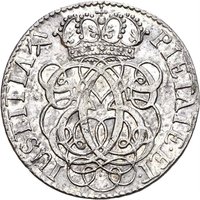
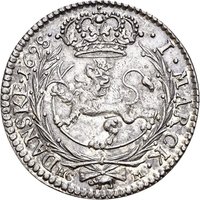
Description:
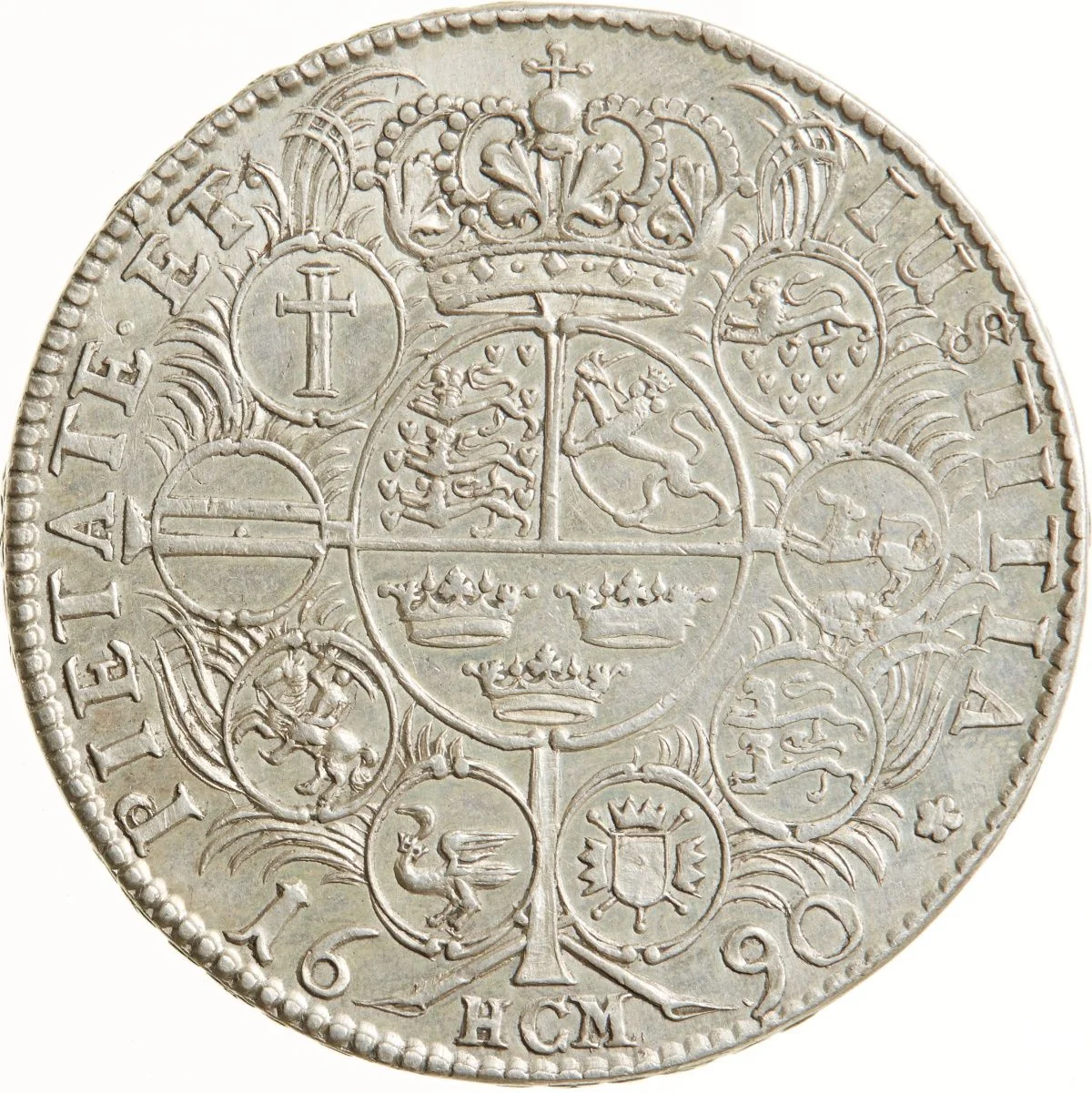
Shield with a cross, topped by a crown. The central shield features the Danish, Norwegian, and Swedish coats of arms (three lions, a lion with an axe, and three crowns). These are encircled by the arms of eight provinces on laurels: Goths, Wends, Schlesvig, Holstein, Stormarn, Ditmarsken, Oldenborg, and Delmenhorst. A dated inscription with the mintmaster's initials is at the bottom, all within a beaded rim.
Inscription:
PIETATE·ET· IUSTITIA ✿
16 HCM 90
16 HCM 90
Script: Latin
Engraver: Caspar Barth
Edge
Inscription. Crossed hammers mintmark after it.
Legend:
HÆC BOREAS CYMBRO FERT ORNAMENTA LABORUM ⚒
Mints
| Name | Mark |
|---|---|
| Norwegian Mint | — |
Mintings
| Year | Mint Mark | Mintage | Quality | Collection |
|---|---|---|---|---|
| 1690 | — | 44 |
Historical background
In 1690, Norway was part of the dual monarchy of Denmark-Norway, and its currency system was fundamentally dictated by Copenhagen. The primary circulating coin was the silver riksdaler, but the monetary landscape was chaotic and unstable. Decades of war had drained the royal treasury, leading to repeated debasements where the silver content of coins was reduced while their face value was maintained or increased. This created a confusing multiplicity of coins in circulation—old full-value coins, newer debased issues, and a plethora of foreign currencies—all trading at fluctuating values against one another, severely hampering trade and creating widespread distrust in the currency.
The situation was exacerbated by a critical shortage of small change, essential for everyday market transactions. To fill this void, local merchants and town councils often issued emergency tokens of lead, copper, or even cardboard, known as klippemynter (cut coins) or nødmynter (necessity coins). These tokens had only local acceptance and further fragmented the monetary system. For larger transactions, especially in foreign trade, the Norwegian economy relied heavily on the kreditdaler, a unit of account used in ledgers that represented a stable silver value, distinct from the actual depreciated coins physically changing hands.
This period of monetary confusion was a low point, reflecting the broader fiscal strains of the Danish-Norwegian state. It set the stage for a major reform that would arrive just a few years later. In 1695, King Christian V introduced a new national currency system based on the riksdaler speciedaler, aiming to restore a uniform silver standard and centralize control, though the full stabilization of Norway's currency would remain a protracted challenge throughout the 18th century.
The situation was exacerbated by a critical shortage of small change, essential for everyday market transactions. To fill this void, local merchants and town councils often issued emergency tokens of lead, copper, or even cardboard, known as klippemynter (cut coins) or nødmynter (necessity coins). These tokens had only local acceptance and further fragmented the monetary system. For larger transactions, especially in foreign trade, the Norwegian economy relied heavily on the kreditdaler, a unit of account used in ledgers that represented a stable silver value, distinct from the actual depreciated coins physically changing hands.
This period of monetary confusion was a low point, reflecting the broader fiscal strains of the Danish-Norwegian state. It set the stage for a major reform that would arrive just a few years later. In 1695, King Christian V introduced a new national currency system based on the riksdaler speciedaler, aiming to restore a uniform silver standard and centralize control, though the full stabilization of Norway's currency would remain a protracted challenge throughout the 18th century.
✨ Legendary