

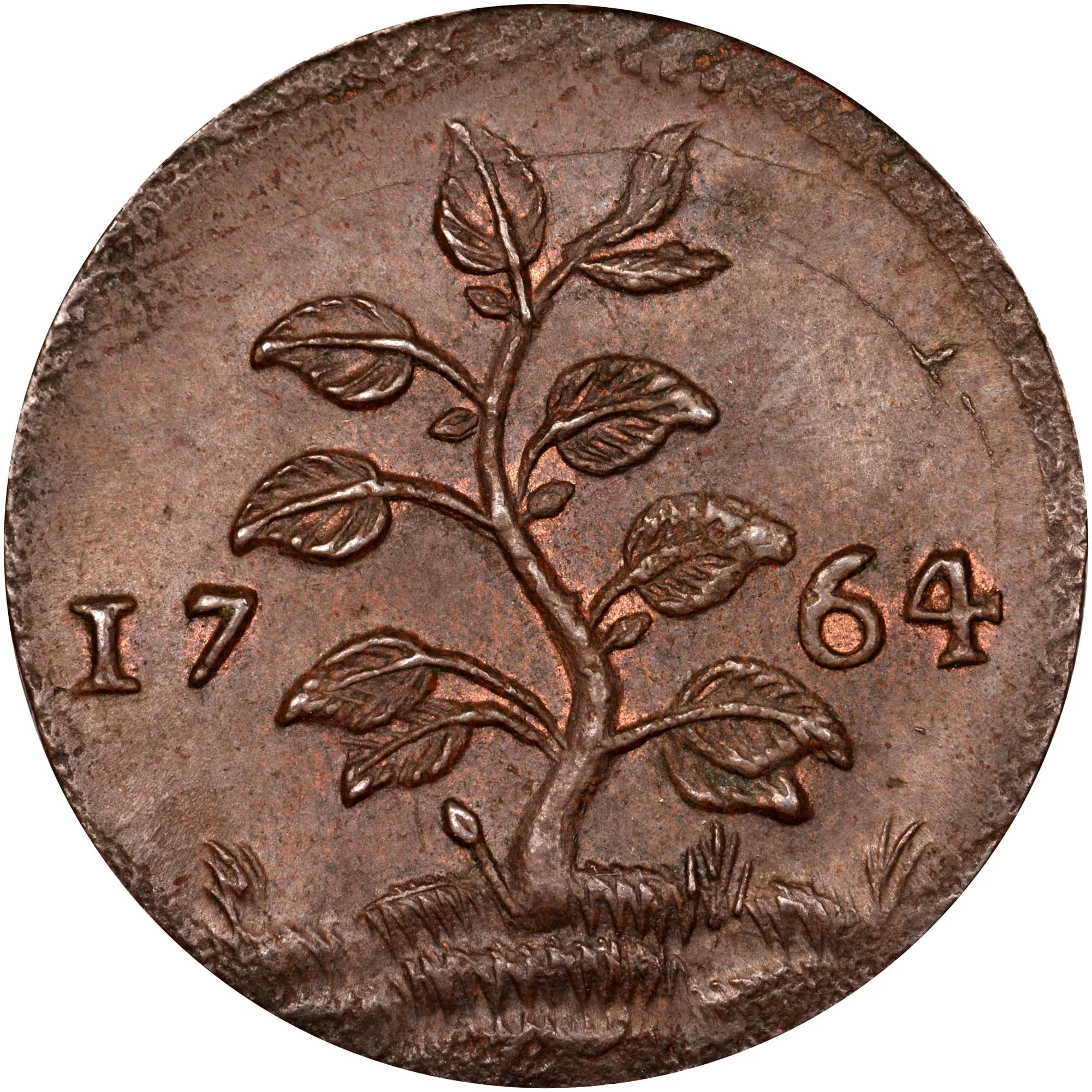
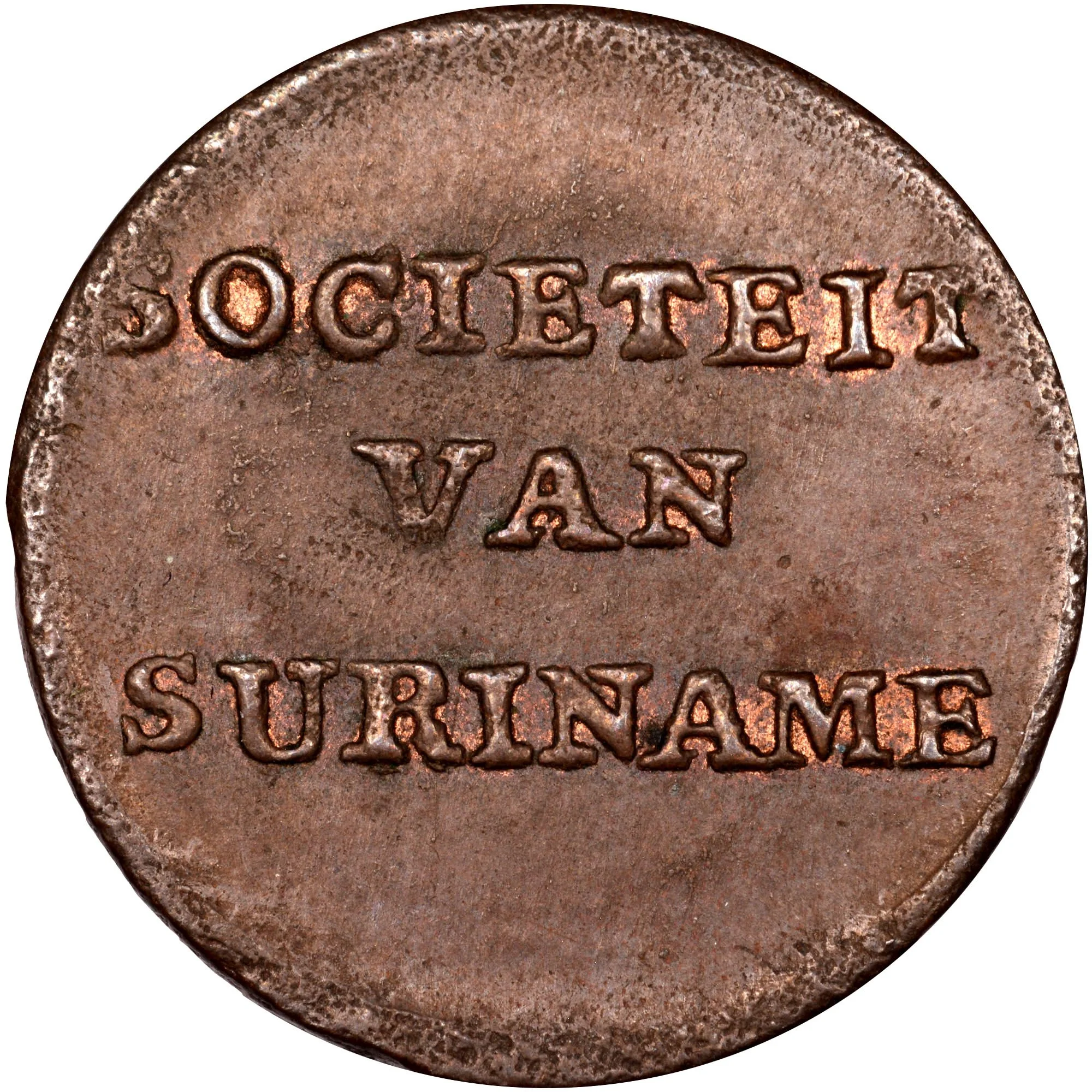
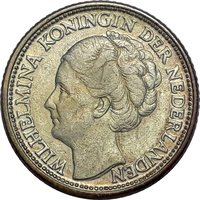
Obverse
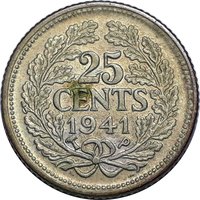
Reverse
Edge
Plain
Mints
| Name | Mark |
|---|---|
| Enkhuizen | — |
Mintings
| Year | Mint Mark | Mintage | Quality | Collection |
|---|---|---|---|---|
| 1764 | — | — |
Historical background
In 1764, Suriname was a Dutch plantation colony whose economic life was entirely dominated by the production of sugar, coffee, cotton, and cocoa through the brutal system of enslaved African labor. There was no official, standardized coinage issued specifically for the colony by the Dutch Republic. Instead, the currency situation was a complex and often chaotic patchwork of foreign coins that circulated by weight and declared value. Spanish-American silver pesos (pieces of eight) and Dutch guilders were the most common and trusted units of account for larger transactions, but Portuguese, French, and British coins also circulated due to regional trade.
The chronic shortage of official coinage led to the widespread use of alternative, locally accepted forms of money. Most notably, the colony authorized the use of "Surinamese paper money," a form of credit paper issued by the colonial government. These notes, denominated in guilders, were used to pay soldiers and officials and circulated alongside coin. More informally, for smaller everyday transactions, commodities themselves became currency. Planters and merchants often used "cacao beans" as a de facto small-change currency, a practice with pre-colonial roots, while negotiable bills of exchange drawn on Amsterdam merchants were essential for settling large-scale international trade.
This unstable monetary environment was prone to depreciation and confusion. The value of foreign coins fluctuated with their metal content and market trust, while the paper money often traded at a discount to its face value, especially as doubts about the colonial government's ability to redeem it persisted. Ultimately, the currency situation of 1764 reflected Suriname’s position as an extractive outpost: its economy was fully integrated into the Atlantic commercial system, yet it lacked the financial infrastructure of the European metropole, relying on a precarious mix of imported coin, local credit, and ad-hoc commodities to function.
The chronic shortage of official coinage led to the widespread use of alternative, locally accepted forms of money. Most notably, the colony authorized the use of "Surinamese paper money," a form of credit paper issued by the colonial government. These notes, denominated in guilders, were used to pay soldiers and officials and circulated alongside coin. More informally, for smaller everyday transactions, commodities themselves became currency. Planters and merchants often used "cacao beans" as a de facto small-change currency, a practice with pre-colonial roots, while negotiable bills of exchange drawn on Amsterdam merchants were essential for settling large-scale international trade.
This unstable monetary environment was prone to depreciation and confusion. The value of foreign coins fluctuated with their metal content and market trust, while the paper money often traded at a discount to its face value, especially as doubts about the colonial government's ability to redeem it persisted. Ultimately, the currency situation of 1764 reflected Suriname’s position as an extractive outpost: its economy was fully integrated into the Atlantic commercial system, yet it lacked the financial infrastructure of the European metropole, relying on a precarious mix of imported coin, local credit, and ad-hoc commodities to function.
💎 Extremely Rare