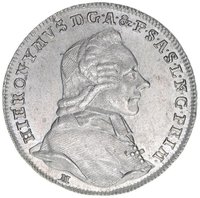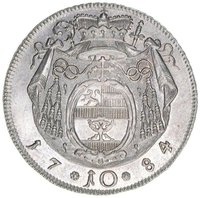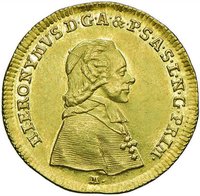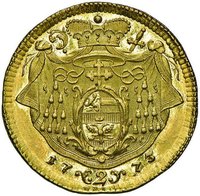
In 1774, the currency situation within the Prince-Archbishopric of Salzburg was characterized by a complex and often unstable monetary system, typical of the Holy Roman Empire's fragmented political landscape. The territory did not mint its own distinctive coinage but operated within a broader regional framework. The primary currency in circulation was the
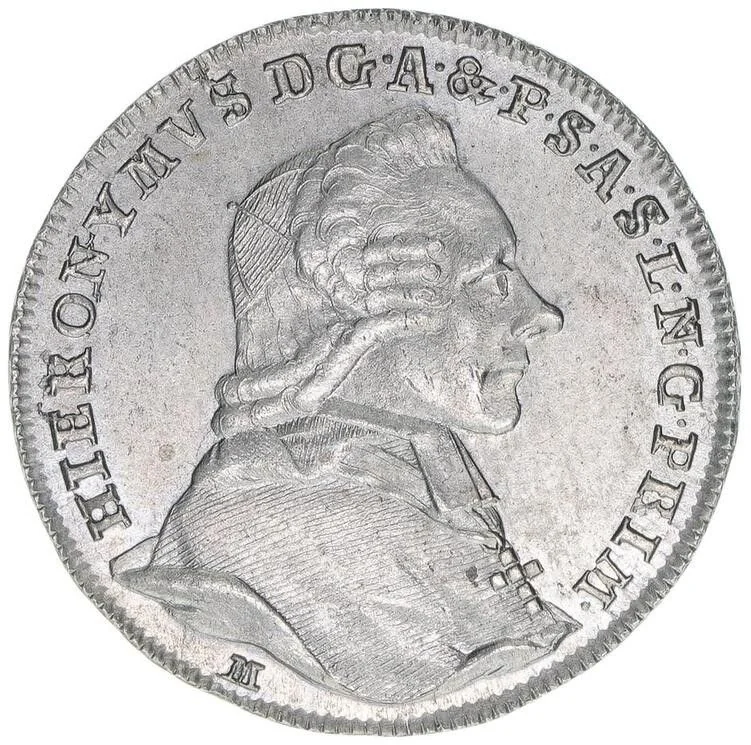
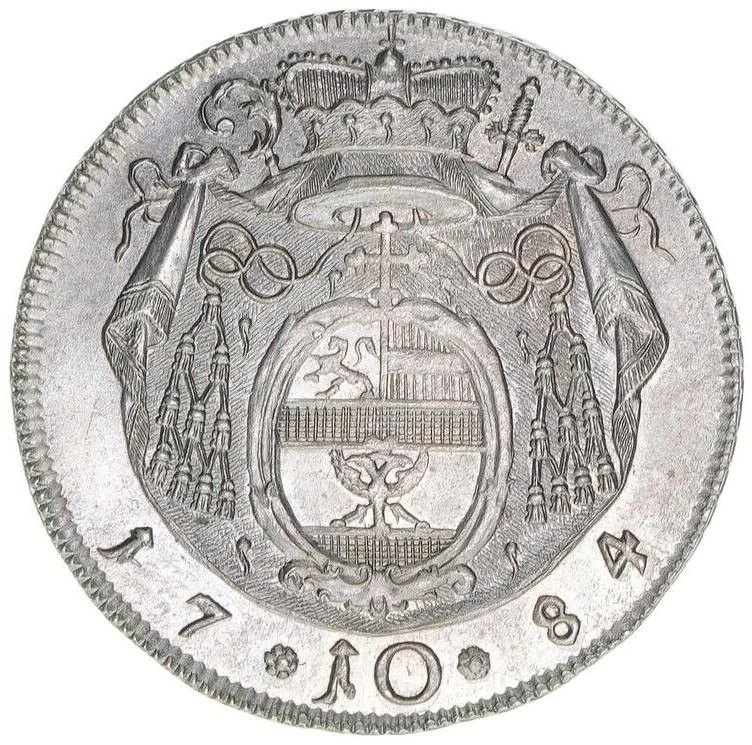
Conventionsgulden (also called the Florin), established by the Bavarian monetary convention of 1753. This treaty, which Salzburg adhered to, aimed to standardize silver coinage across southern Germany and Austria, defining a gulden as a specific weight and fineness of silver. However, alongside these "convention" coins, older, debased regional coins and foreign currencies also circulated, leading to frequent confusion and valuation disputes in trade.
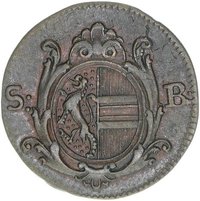
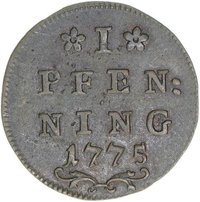
The economic pressures of the time exacerbated these monetary challenges. Archbishop Hieronymus von Colloredo, a reform-minded ruler influenced by Enlightenment principles, governed a state whose finances were strained by the costs of administration, architectural projects, and the maintenance of its prestigious court. Furthermore, the peasant economy, the backbone of Salzburg, dealt primarily in small change. A chronic shortage of low-denomination coins, such as kreuzers and pfennigs, made everyday transactions difficult and fostered reliance on token money and private coinage, which further undermined monetary consistency and public trust.
Ultimately, the currency situation reflected Salzburg's intermediate position between larger powers and the limitations of its sovereignty. While the Conventionsgulden provided a stable standard for larger transactions and state accounting, the messy reality of daily circulation highlighted the archbishopric's lack of full control over its monetary policy. This instability was a minor but persistent obstacle to economic modernization, which Colloredo's reforms sought to address. The situation would remain largely in place until the archbishopric's secularization and absorption into the Habsburg Empire in the early 19th century, which finally brought it under a unified monetary system.