

1 Kroon – Spanish Netherlands
Netherlands
Context
Year: 1541
Country: Netherlands 
Issuer: Spanish Netherlands
Ruler: Charles V
Currency:
(1506—1713)
Subdivision: 1 Kroon = 42 Stuivers = 84 Groot
Demonetized: Yes
Material
Weight: 3.41 g
Gold weight: 3.17 g
Shape: Irregular round
Composition: 92.9% Gold
Magnetic: No
Technique: Hammered
Alignment: Coin alignment
flip
References
KM: #Click to copy to clipboard186-5
Numista: #438137
Value
Bullion value: $527.39
Obverse
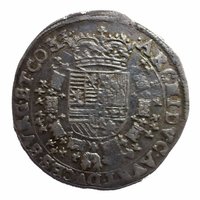
Description:
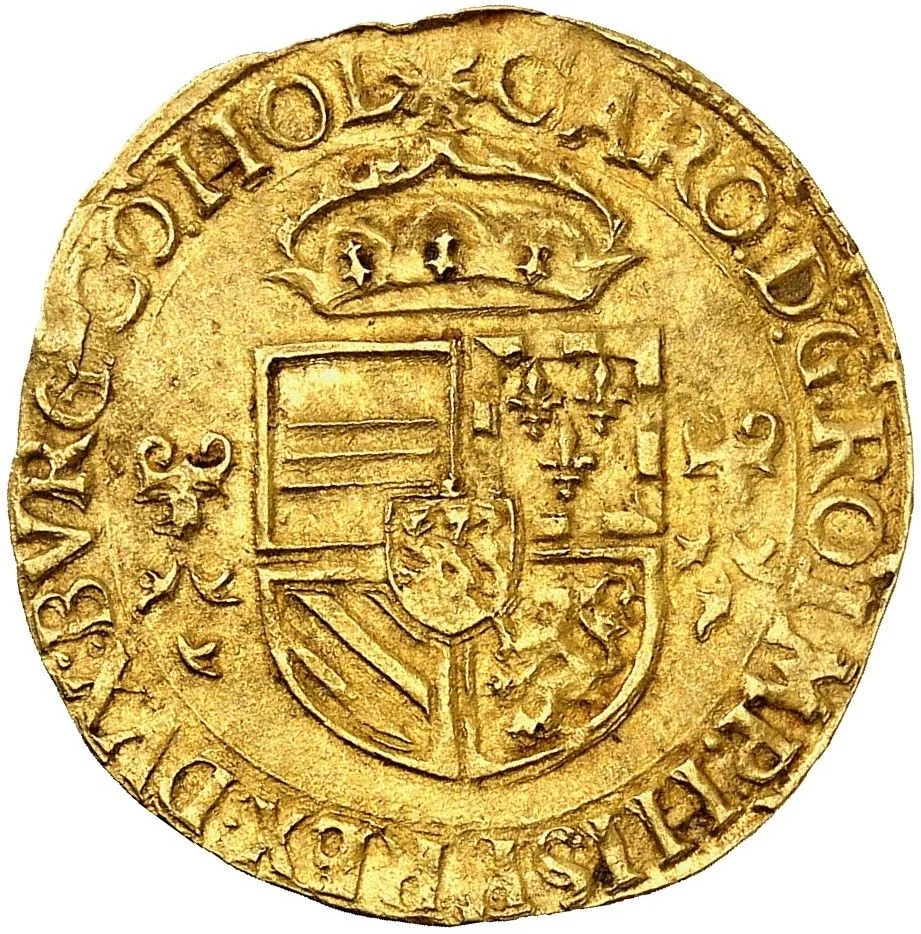
Austrian-Burgundian arms with flanking firesteels, sparks, and a sun above.
Inscription:
CARO · D : G · RO · IMP · HISP · REX · DVX · BVRG · CO · HOL
Script: Latin
Reverse
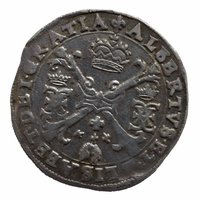
Description:
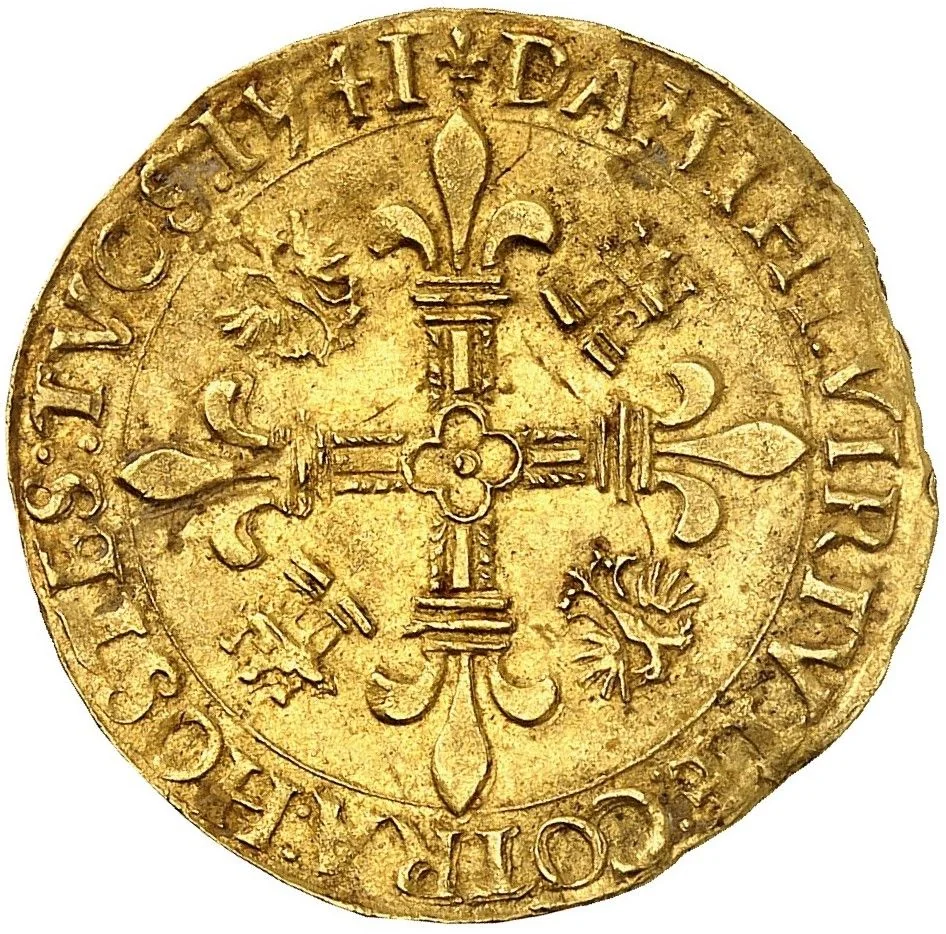
Cross with fleur-de-lis tips, alternating with towers and imperial eagles. Date and mint mark in legend.
Inscription:
DA MIHI VIRTVTE COTRA HOSTES TVOS 1541
Script: Latin
Edge
Mints
| Name | Mark |
|---|---|
| Bruges | — |
Mintings
| Year | Mint Mark | Mintage | Quality | Collection |
|---|---|---|---|---|
| 1541 | — | — |
Historical background
In 1541, the currency situation in the Spanish Netherlands was one of profound instability and complexity, a direct consequence of its position within the vast Habsburg Empire. The region, a commercial powerhouse for Europe, was subject to the monetary policies decreed by Emperor Charles V, who was concurrently fighting costly wars across the continent. To finance these conflicts, the government frequently resorted to debasement—reducing the precious metal content in coins while maintaining their face value. This practice, intended to create short-term profit for the treasury, eroded public trust and sparked a vicious cycle of inflation, as people hoarded older, purer coins (Gresham's Law in action).
The monetary landscape was a chaotic patchwork. Alongside official Habsburg issues, numerous foreign coins from neighboring states like France, England, and the German principalities circulated freely, their values fluctuating against each other. Furthermore, individual cities and provinces within the Netherlands sometimes minted their own variants, adding to the confusion. This proliferation of currencies of varying intrinsic worth made everyday commerce difficult and risky, hampering the very trade that was the region's lifeblood. Merchants and money-changers had to navigate a bewildering array of exchange rates and assays.
Recognizing the severe economic damage, Charles V attempted reform. In 1541, he was in the process of implementing a new monetary ordinance aimed at standardizing the coinage across his Burgundian territories. The goal was to introduce stable, uniform gold and silver coins, notably the Carolinus guilder, to drive out debased and foreign money. However, the success of this reform was immediately undermined by the state's continued financial desperation; the new, purer coins were often melted down or exported, while debasement quietly resumed. Thus, the situation remained fundamentally unstable, caught between the imperative for sound money and the imperial demand for war finance.
The monetary landscape was a chaotic patchwork. Alongside official Habsburg issues, numerous foreign coins from neighboring states like France, England, and the German principalities circulated freely, their values fluctuating against each other. Furthermore, individual cities and provinces within the Netherlands sometimes minted their own variants, adding to the confusion. This proliferation of currencies of varying intrinsic worth made everyday commerce difficult and risky, hampering the very trade that was the region's lifeblood. Merchants and money-changers had to navigate a bewildering array of exchange rates and assays.
Recognizing the severe economic damage, Charles V attempted reform. In 1541, he was in the process of implementing a new monetary ordinance aimed at standardizing the coinage across his Burgundian territories. The goal was to introduce stable, uniform gold and silver coins, notably the Carolinus guilder, to drive out debased and foreign money. However, the success of this reform was immediately undermined by the state's continued financial desperation; the new, purer coins were often melted down or exported, while debasement quietly resumed. Thus, the situation remained fundamentally unstable, caught between the imperative for sound money and the imperial demand for war finance.
✨ Legendary