

2 thalers – Brunswick-Lüneburg-Calenberg
Add to wishlist
Circulating commemorative coins
Commemoration: Death of George
Germany
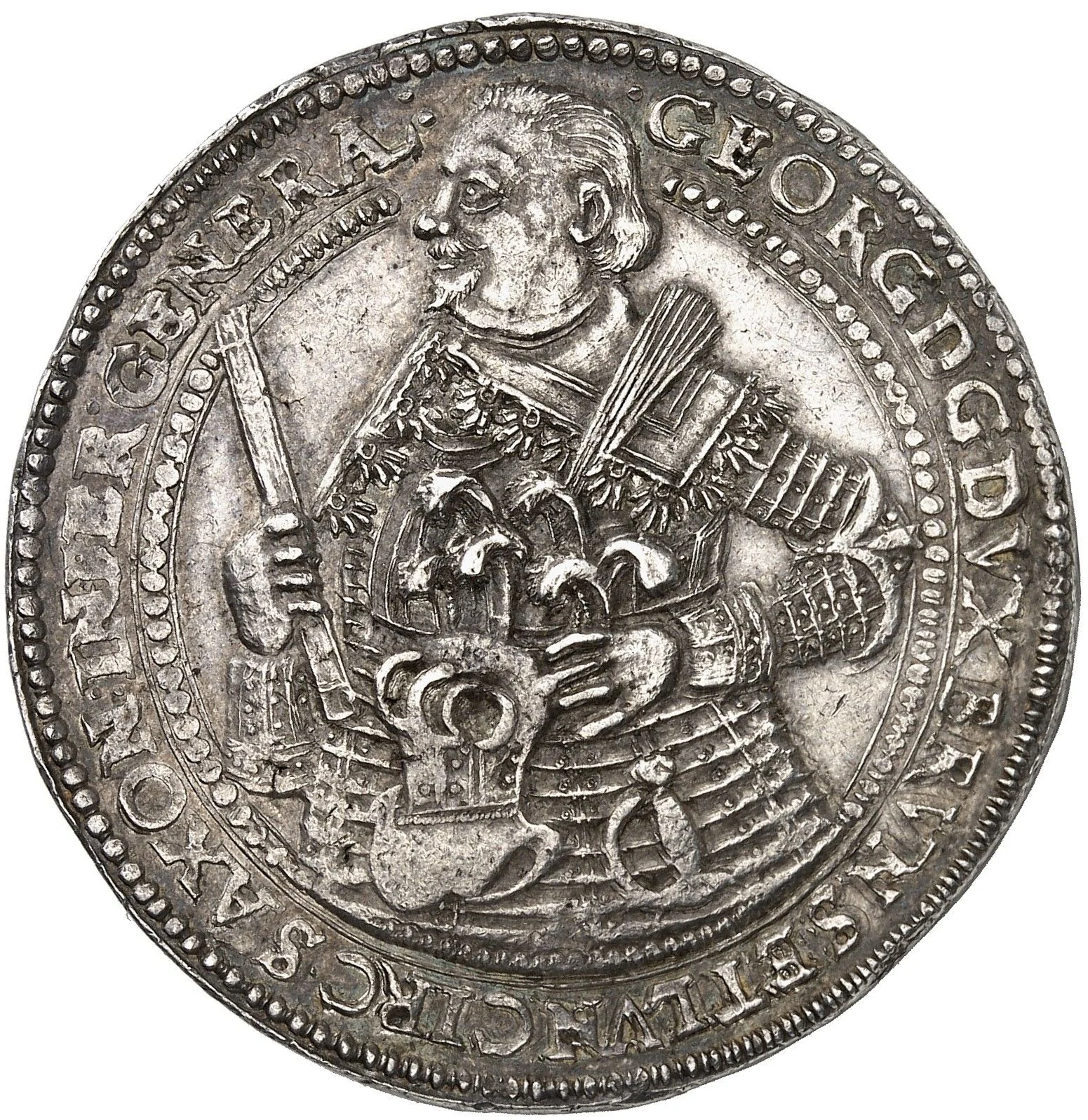
Obverse
Description:
Left half-length portrait.
Inscription:
GEORG D G DVX BRVNS ET LVN CIRC SAXON INFER GENERAL
Script: Latin
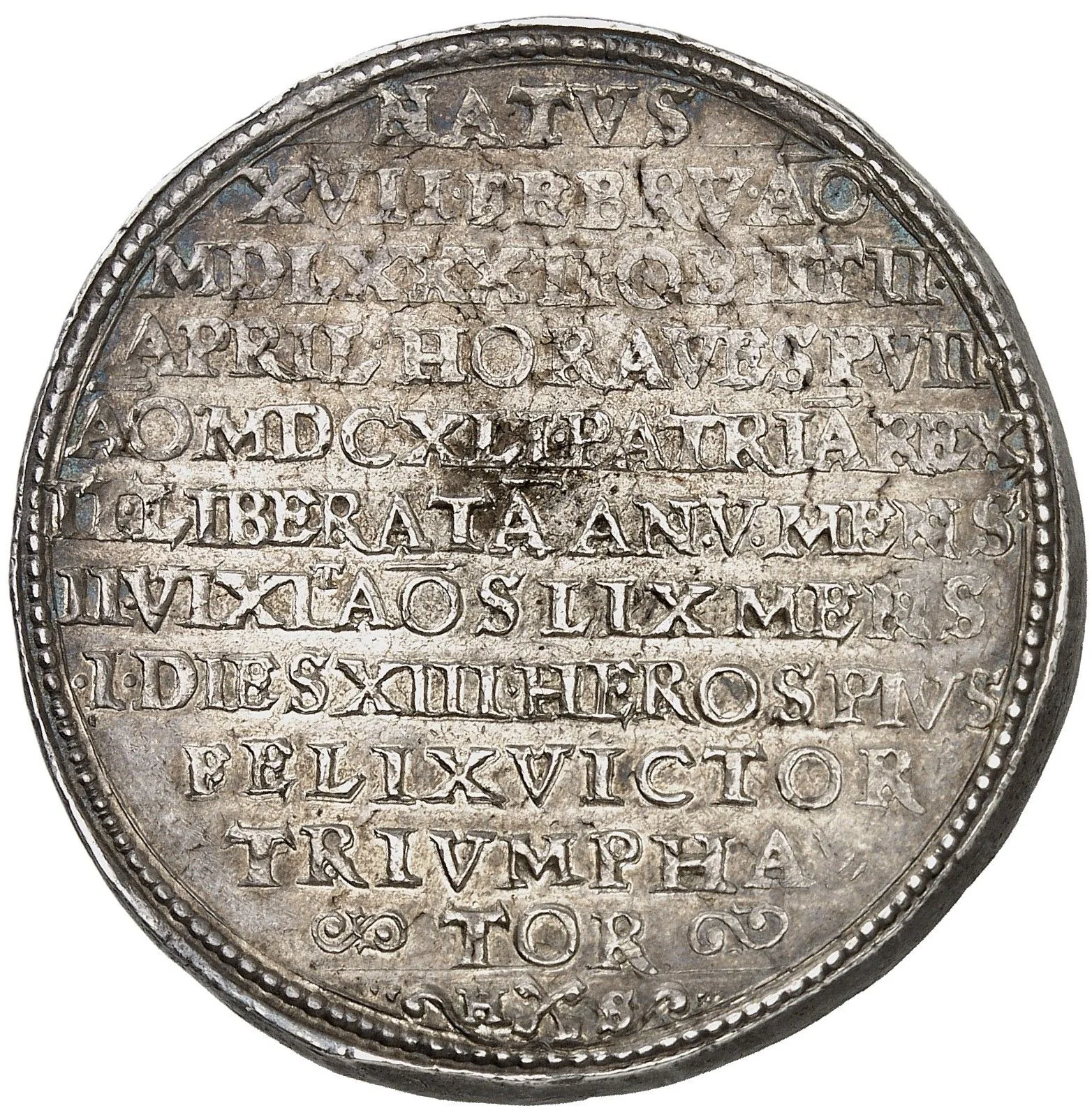
Reverse
Description:
10-line inscription.
Inscription:
NATVS
XVII FEBRV AO
MDLXXXII OBIIT II
APRIL HORA VESP VII
AO MDCXLI PATRIA REX
IT LIBERATA AN V MENS
II VIXIT AO S LIX MENS
I DIES XIII HEROSPIVS
FELIX VICTOR
TRIVMPHA
TOR
H S
XVII FEBRV AO
MDLXXXII OBIIT II
APRIL HORA VESP VII
AO MDCXLI PATRIA REX
IT LIBERATA AN V MENS
II VIXIT AO S LIX MENS
I DIES XIII HEROSPIVS
FELIX VICTOR
TRIVMPHA
TOR
H S
Script: Latin
Edge
Plain
Mints
| Name | Mark |
|---|---|
| Zellerfeld | — |
Mintings
| Year | Mint Mark | Mintage | Quality | Collection |
|---|---|---|---|---|
| 1641 | — | — |
Historical background
In 1641, the Duchy of Brunswick-Lüneburg, specifically the Principality of Calenberg, was embroiled in the profound monetary chaos that plagued the Holy Roman Empire during the Thirty Years' War. The region operated within a complex system where multiple authorities—the Emperor, the Imperial Diet, and individual princes—issued competing coinage regulations. The standard unit of account was the Reichsthaler, a large silver coin, but daily transactions relied on a plethora of smaller Groschen, Mariengroschen, and Pfennig coins. By 1641, the pressures of war finance had led to severe debasement, as rulers reduced the precious metal content in coins to fund armies, causing rampant inflation and a loss of public trust.
The currency situation was characterized by a flood of inferior, small-change coins, known as Kippermünze, which drove good, full-weight silver coins out of circulation (Gresham's Law). This "Kipper und Wipper" crisis, though its peak had passed in the 1620s, left a legacy of monetary fragmentation and instability. In Calenberg, Duke George of Brunswick-Lüneburg faced the dual challenge of managing his principality's finances while navigating the wider Imperial currency system, which was struggling to enforce its Reichsmünzordnung (Imperial Coinage Ordinance) against the inflationary practices of numerous states.
Consequently, economic life in 1641 was marked by uncertainty and hardship. Prices were volatile, long-distance trade was hampered by the lack of a reliable medium of exchange, and the local population suffered from the effective devaluation of their wealth. This monetary disarray reflected the broader political and economic disintegration caused by the war, forcing local authorities to constantly recalibrate exchange rates and contend with a chaotic mix of domestic and foreign coins circulating within their borders.
The currency situation was characterized by a flood of inferior, small-change coins, known as Kippermünze, which drove good, full-weight silver coins out of circulation (Gresham's Law). This "Kipper und Wipper" crisis, though its peak had passed in the 1620s, left a legacy of monetary fragmentation and instability. In Calenberg, Duke George of Brunswick-Lüneburg faced the dual challenge of managing his principality's finances while navigating the wider Imperial currency system, which was struggling to enforce its Reichsmünzordnung (Imperial Coinage Ordinance) against the inflationary practices of numerous states.
Consequently, economic life in 1641 was marked by uncertainty and hardship. Prices were volatile, long-distance trade was hampered by the lack of a reliable medium of exchange, and the local population suffered from the effective devaluation of their wealth. This monetary disarray reflected the broader political and economic disintegration caused by the war, forcing local authorities to constantly recalibrate exchange rates and contend with a chaotic mix of domestic and foreign coins circulating within their borders.

✨ Legendary