

1 Krone – Denmark
Denmark
Context

References
KM: #Click to copy to clipboardPn30
Numista: #434653
Value
Bullion value: $5777.21
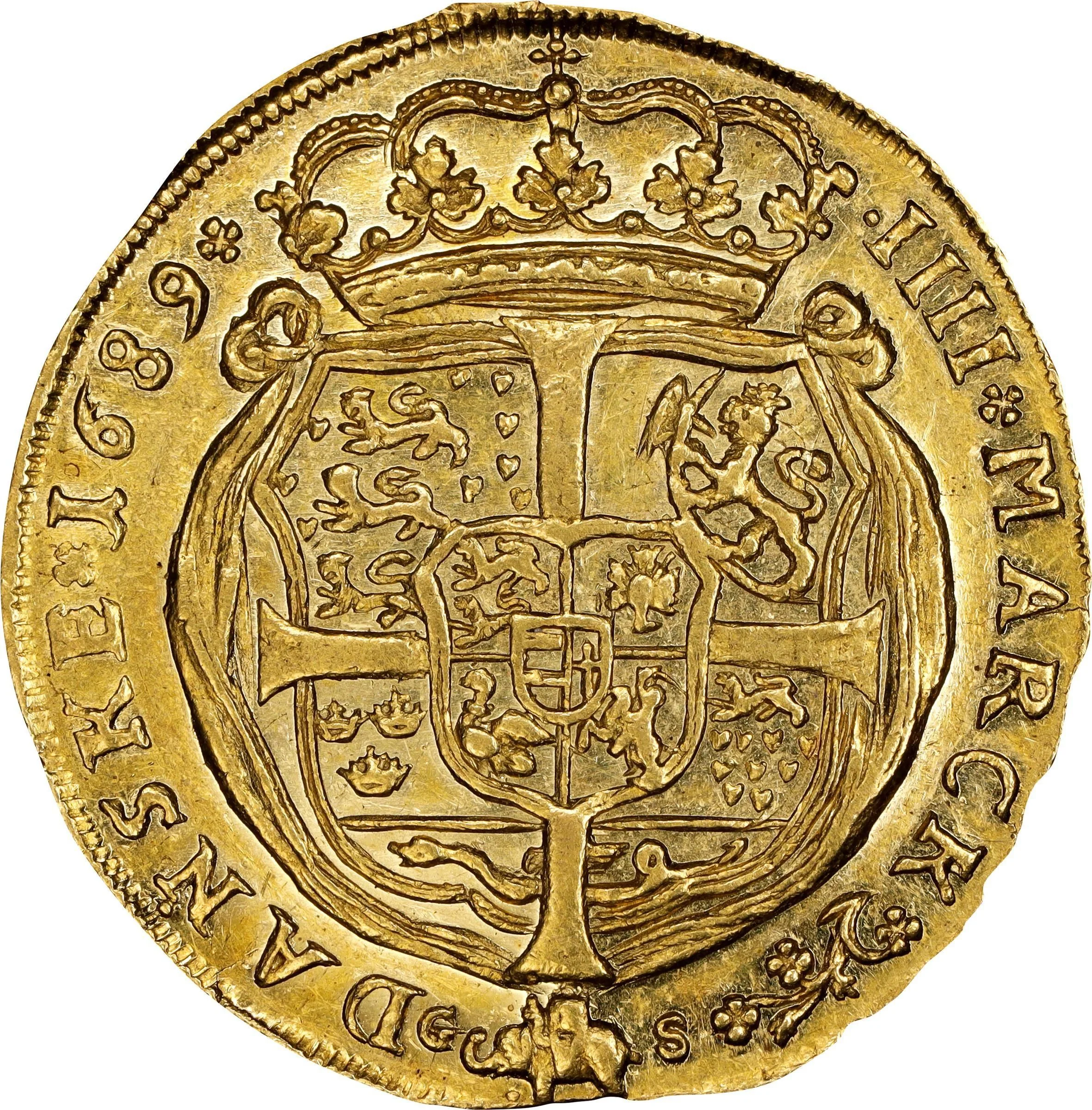
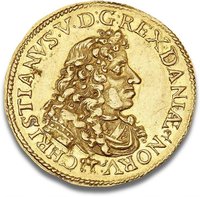
Obverse
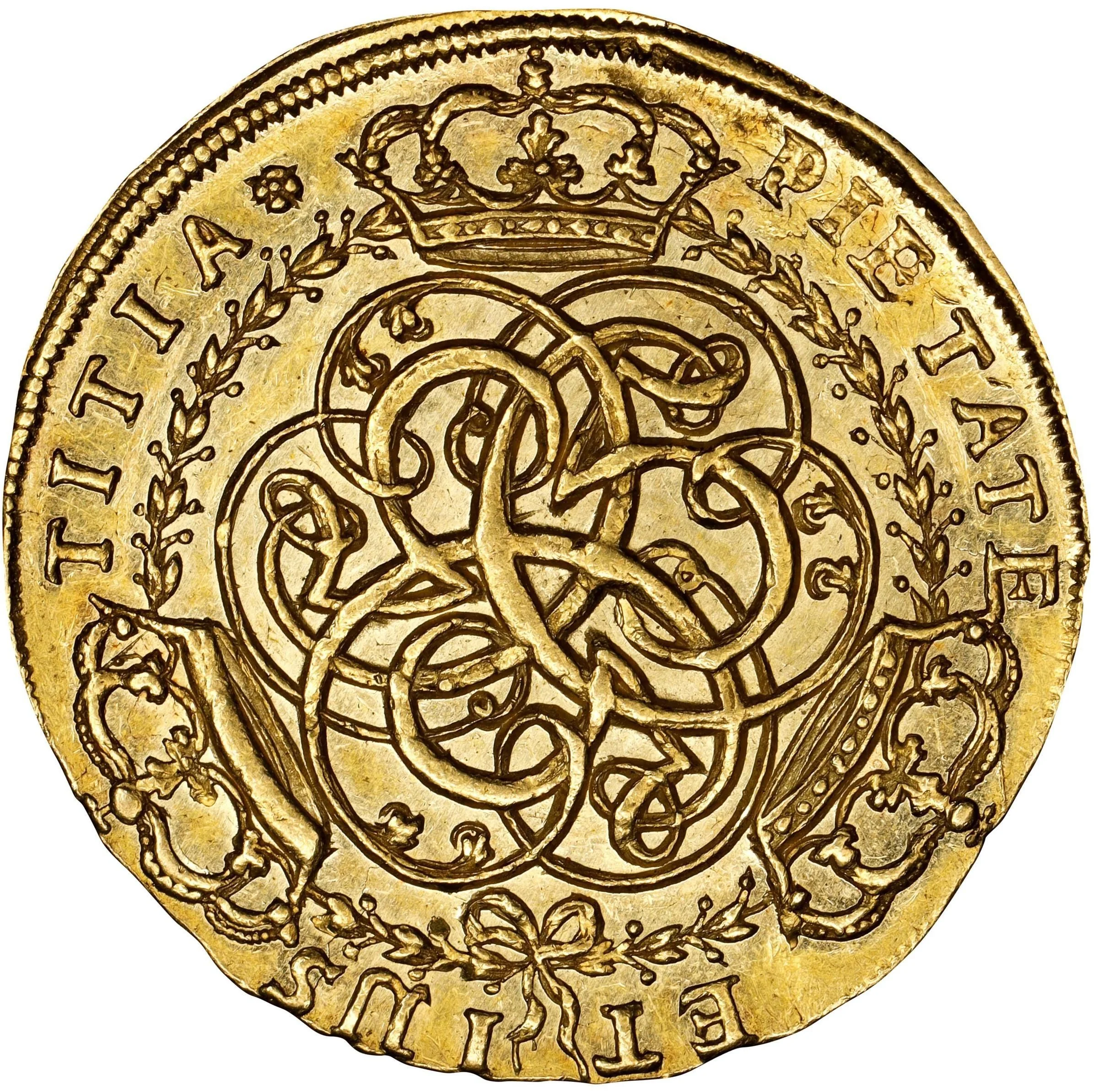
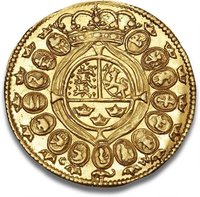
Reverse
Edge
Categories
| Symbols> Coat of Arms |
| Symbols> Monogram |
Mints
| Name | Mark |
|---|---|
| Copenhagen | — |
Mintings
| Year | Mint Mark | Mintage | Quality | Collection |
|---|---|---|---|---|
| 1689 | — | — |
Historical background
In 1689, Denmark operated under a bimetallic monetary system, a legacy of the 1625 Kurant ordinance. The official currency was the krone (crown), subdivided into marks and skilling, but the system was fundamentally based on both silver and gold. The primary circulating coin was the silver krone, but its value was officially tied to a gold standard through a fixed exchange rate with the gold ducat. This theoretical parity was difficult to maintain in practice, as the market value of the metals fluctuated, leading to persistent instability.
The period was marked by significant currency debasement and inflation, a direct consequence of the state's financial needs, particularly due to Denmark's costly involvement in the Scanian War (1675-1679) against Sweden. To finance war debts and state expenditures, the government repeatedly reduced the silver content in coinage while ordering its nominal value to remain the same. This practice eroded public trust, encouraged hoarding of older, purer coins (Gresham's Law), and caused price surges. By 1689, the monetary system was strained, with a wide gap between the face value of coins and their intrinsic metal worth.
Consequently, monetary policy in 1689 was in a state of tension and transition. The government, under King Christian V, grappled with the economic fallout of its earlier actions. Efforts were focused on managing the coinage to stabilize trade and state finances, but a comprehensive reform was still years away. The situation underscored the challenges of early modern state finance, where currency was a direct tool of the sovereign, leading to cycles of debasement and attempted stabilization that affected all levels of Danish society.
The period was marked by significant currency debasement and inflation, a direct consequence of the state's financial needs, particularly due to Denmark's costly involvement in the Scanian War (1675-1679) against Sweden. To finance war debts and state expenditures, the government repeatedly reduced the silver content in coinage while ordering its nominal value to remain the same. This practice eroded public trust, encouraged hoarding of older, purer coins (Gresham's Law), and caused price surges. By 1689, the monetary system was strained, with a wide gap between the face value of coins and their intrinsic metal worth.
Consequently, monetary policy in 1689 was in a state of tension and transition. The government, under King Christian V, grappled with the economic fallout of its earlier actions. Efforts were focused on managing the coinage to stabilize trade and state finances, but a comprehensive reform was still years away. The situation underscored the challenges of early modern state finance, where currency was a direct tool of the sovereign, leading to cycles of debasement and attempted stabilization that affected all levels of Danish society.
✨ Legendary