

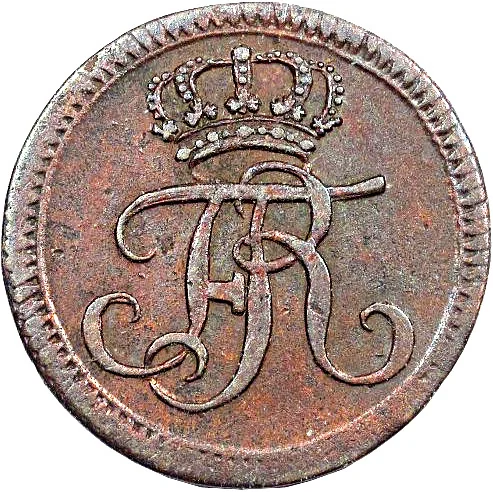
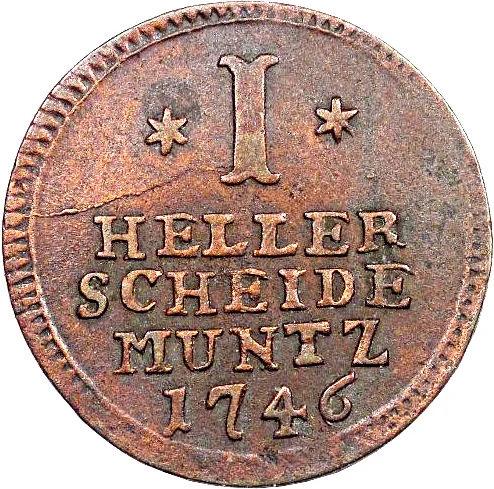
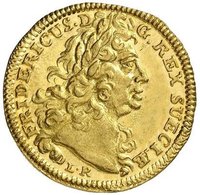
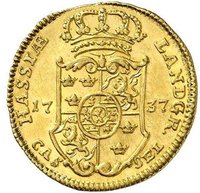
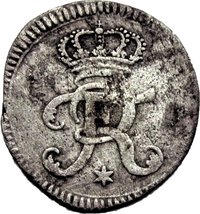
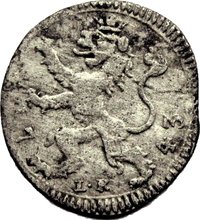
1 Heller – Landgraviate of Hesse-Cassel
Context
Material
References
KM: #Click to copy to clipboard400
Numista: #43185
Mintings
| Year | Mint Mark | Mintage | Quality | Collection |
|---|---|---|---|---|
| 1743 | — | — | ||
| 1744 | — | — | ||
| 1745 | — | — | ||
| 1746 | — | — | ||
| 1747 | — | — | ||
| 1748 | — | — | ||
| 1749 | — | — | ||
| 1750 | — | — |
Historical background
In 1743, the currency situation in the Landgraviate of Hesse-Cassel was complex and strained, a legacy of its ruler Landgrave William VIII’s ambitious military policies. To finance his large, modern army and his political ambitions within the Holy Roman Empire, the state heavily relied on the lucrative practice of Soldatenhandel—leasing troops to foreign powers, most notably Great Britain during the War of the Austrian Succession. While this generated substantial foreign subsidies, it was not enough to cover expenditures, leading to chronic budget deficits and a reliance on debasement of the coinage.
The local economy suffered from a proliferation of different coins in circulation. Alongside the official Reichsthaler, there were numerous lower-value Gute Groschen and Albuses, often with their silver content reduced by the state mint to create seigniorage profit. This practice, combined with the influx of foreign currencies from passing armies and trade, created a chaotic monetary environment. The value of coins was unstable, public trust in the currency was low, and merchants faced significant difficulties in everyday transactions, hindering commerce.
Consequently, 1743 represents a point of mounting pressure within a longer fiscal crisis. The landgrave’s immediate financial needs from military ventures directly conflicted with the need for a stable and trustworthy currency for the domestic economy. While the troop trade provided temporary relief, it did not solve the underlying structural issues, setting the stage for future monetary reforms that would be attempted later in the century to unify and stabilize the Hessian currency system.
The local economy suffered from a proliferation of different coins in circulation. Alongside the official Reichsthaler, there were numerous lower-value Gute Groschen and Albuses, often with their silver content reduced by the state mint to create seigniorage profit. This practice, combined with the influx of foreign currencies from passing armies and trade, created a chaotic monetary environment. The value of coins was unstable, public trust in the currency was low, and merchants faced significant difficulties in everyday transactions, hindering commerce.
Consequently, 1743 represents a point of mounting pressure within a longer fiscal crisis. The landgrave’s immediate financial needs from military ventures directly conflicted with the need for a stable and trustworthy currency for the domestic economy. While the troop trade provided temporary relief, it did not solve the underlying structural issues, setting the stage for future monetary reforms that would be attempted later in the century to unify and stabilize the Hessian currency system.
⭐ Rare