

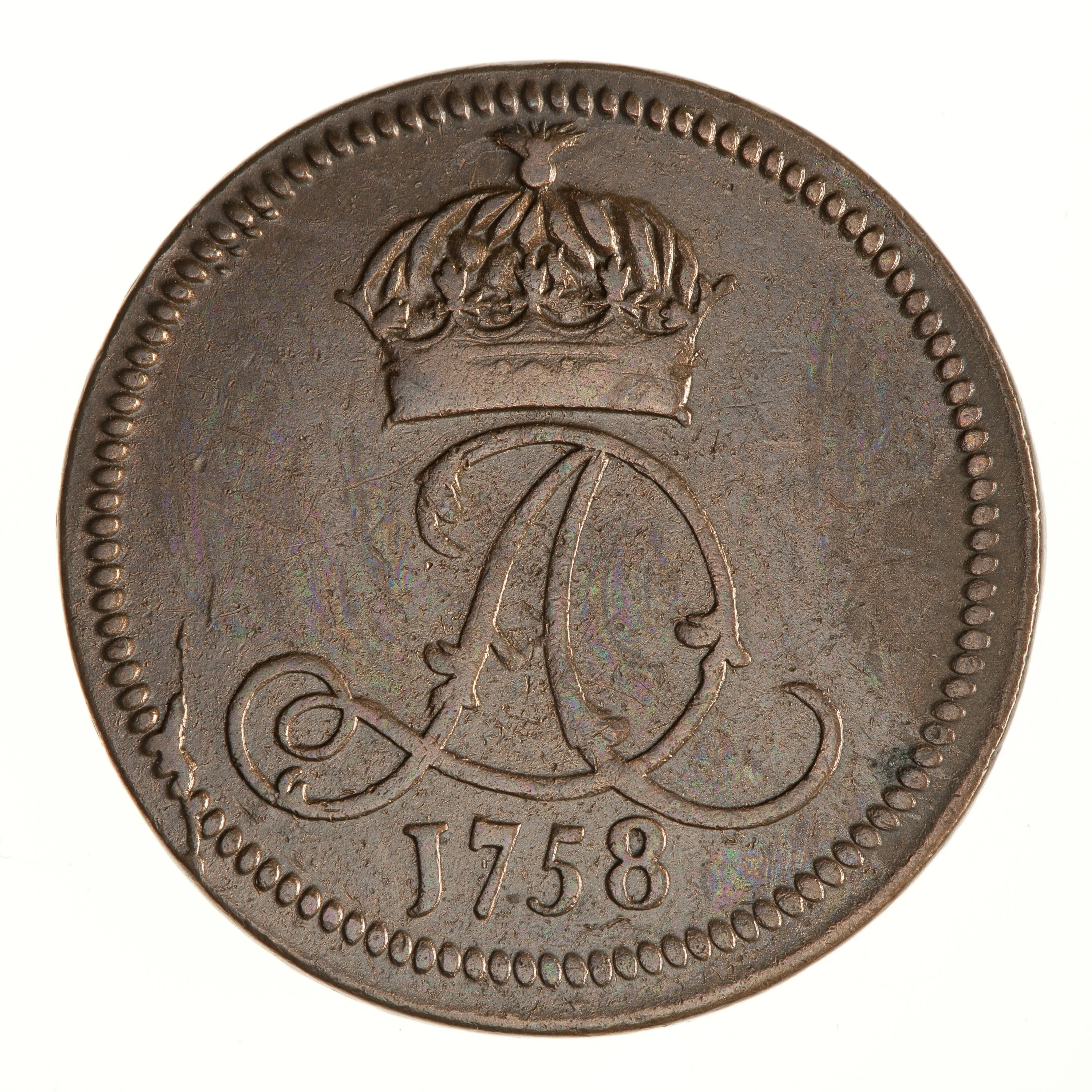
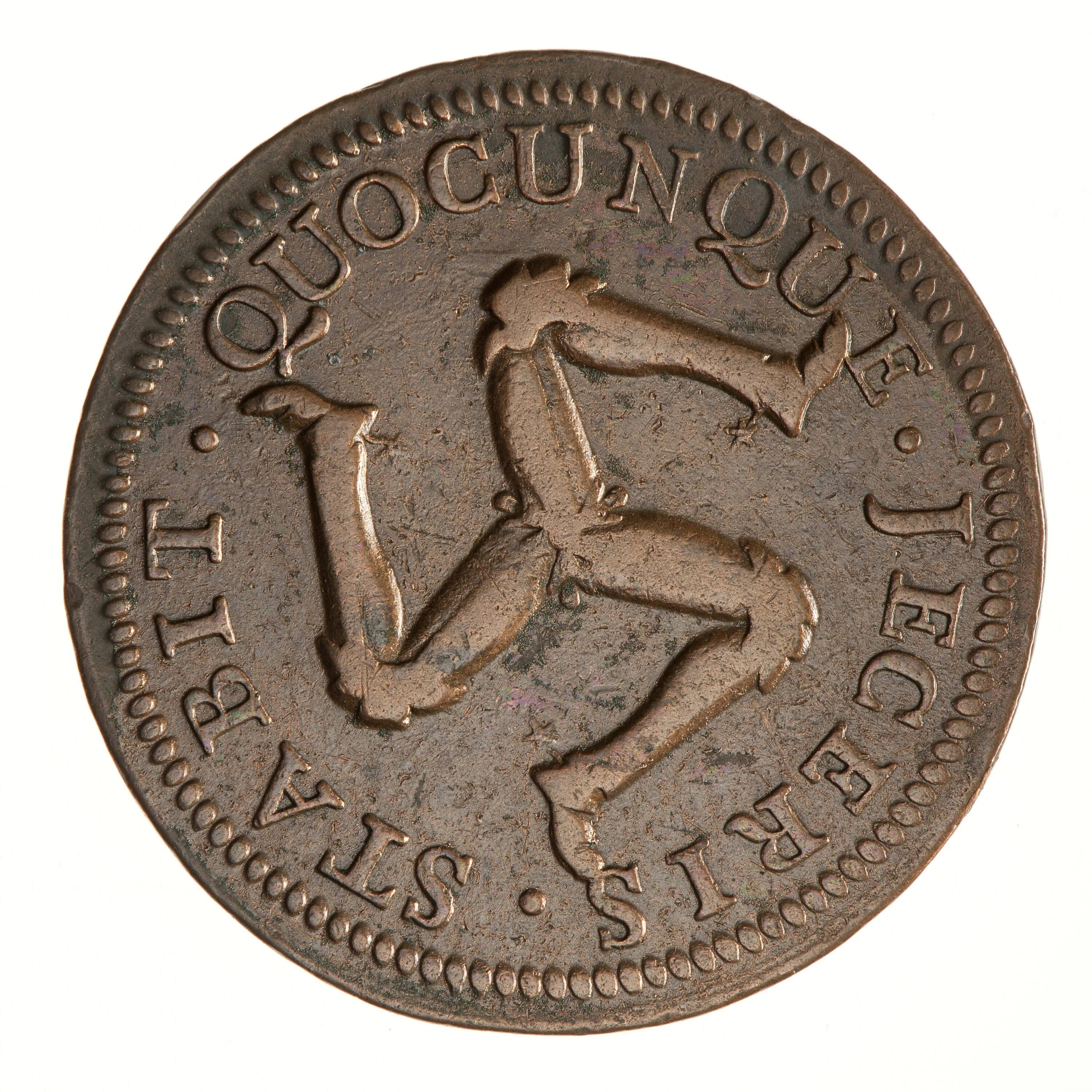
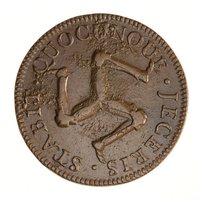
½ Penny – Isle of Man
Context
Year: 1758
Country: British Crown dependencies
Issuer: Isle of Man 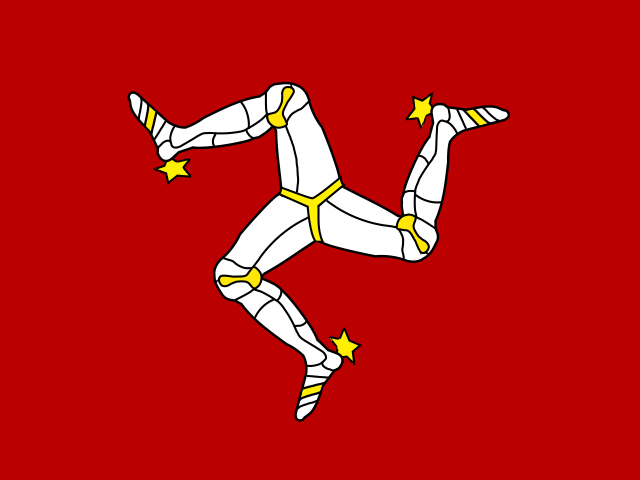
Currency:
(1709—1839)
Demonetized: Yes
Total mintage: 72,000
Material
References
KM: #Click to copy to clipboard6
Numista: #43114
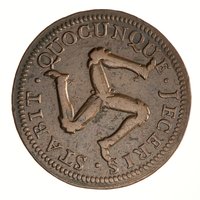
Obverse
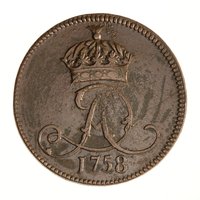
Reverse
Edge
Mintings
| Year | Mint Mark | Mintage | Quality | Collection |
|---|---|---|---|---|
| 1758 | — | 72,000 | ||
| 1758 | — | — | Proof |
Historical background
In 1758, the Isle of Man's currency situation was complex and transitional, defined by its unique political status. The island was a feudal lordship, ruled by the Duke of Atholl as Lord of Man, and was not yet integrated into the British monetary system. Consequently, a confusing mix of currencies circulated, primarily English, Irish, and Scottish coins, alongside various foreign silver pieces like Spanish dollars and Portuguese johannes. Their values were not fixed by law but by local proclamation and market practice, leading to instability and inconvenience in trade.
The local economy suffered from a chronic shortage of official small change, a problem common across the British Isles. To fill this gap, local merchants and innkeepers issued their own private token coinage, often made of copper or brass. These tokens, bearing the issuer's name and promise to pay, facilitated everyday transactions but were only redeemable within a limited local network. This fragmented system created risk for the populace and hindered commercial development, as the value and acceptance of money were inconsistent.
This unsatisfactory situation was a key factor leading to the British Crown's intervention. Just five years later, in 1763, the British Parliament would begin the process of revesting the Lordship in the Crown, culminating in the Purchase Act of 1765. A primary motivation for this takeover was to standardize the island's currency and trade. Therefore, 1758 represents the final years of the island's archaic monetary autonomy, with pressure building for the integration that would soon see the British pound sterling established as the sole official currency.
The local economy suffered from a chronic shortage of official small change, a problem common across the British Isles. To fill this gap, local merchants and innkeepers issued their own private token coinage, often made of copper or brass. These tokens, bearing the issuer's name and promise to pay, facilitated everyday transactions but were only redeemable within a limited local network. This fragmented system created risk for the populace and hindered commercial development, as the value and acceptance of money were inconsistent.
This unsatisfactory situation was a key factor leading to the British Crown's intervention. Just five years later, in 1763, the British Parliament would begin the process of revesting the Lordship in the Crown, culminating in the Purchase Act of 1765. A primary motivation for this takeover was to standardize the island's currency and trade. Therefore, 1758 represents the final years of the island's archaic monetary autonomy, with pressure building for the integration that would soon see the British pound sterling established as the sole official currency.
💎 Very Rare