

50 Mon – Kubota Domain
Japan
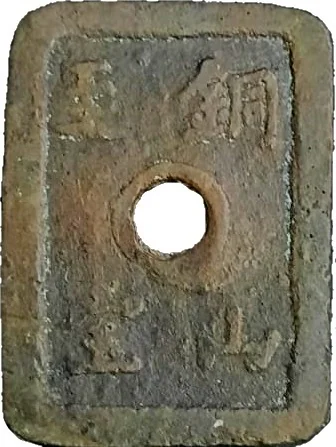
Obverse
Description:
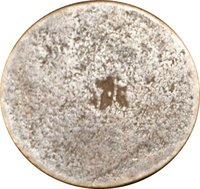
Four figures circle a pit.
Inscription:
至 銅
寶 山
寶 山
Translation:
Supreme Copper Treasure Mountain
Language: Classical Chinese
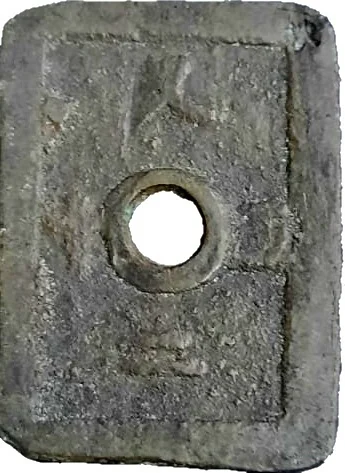
Reverse
Description:
Four figures circle a pit.
Inscription:
久
十 五
二
十 五
二
Translation:
Nine
Ten Five
Two
Ten Five
Two
Language: Chinese
Edge
Mintings
| Year | Mint Mark | Mintage | Quality | Collection |
|---|---|---|---|---|
| — | — | — |
Historical background
In 1862, the Kubota Domain (also known as the Akita Domain) faced a complex and strained currency situation typical of many late Edo-period domains, yet exacerbated by its northern location and economic structure. Like others, Kubota issued its own paper scrip, known as hansatsu, to circulate within its borders. However, the domain's finances were heavily burdened by the Tokugawa shogunate's sankin-kōtai system, which required the lord to maintain a costly residence in Edo and travel there periodically. Furthermore, Kubota's economy, reliant on copper mining (the famous Ani and Hitachi mines) and agriculture, was vulnerable to crop failures and fluctuating metal prices, creating persistent debt and specie shortages.
The domain's monetary system was a tangled hierarchy of currencies. Gold and silver coinage from the shogunate (Koban and Ichibu-gin) were used for official transactions and external trade, but were chronically scarce within the domain. To facilitate local exchange and address this shortage, Kubota issued a variety of hansatsu denominated in gold, silver, and even rice. This created confusion, as the exchange rates between domain notes and central coinage, and between notes themselves, could be unstable. The value of hansatsu was ultimately backed by the domain's credit, which was weakening under fiscal pressure.
By 1862, these pressures were reaching a critical point. The domain had engaged in repeated debasements and expansions of its note issue to cover deficits, leading to inflation and a loss of public confidence in its paper currency. This internal financial instability occurred against the backdrop of the national crisis following the arrival of Commodore Perry, as the shogunate's own authority and monetary system began to falter. Consequently, Kubota's currency woes were both a symptom of its local economic struggles and a microcosm of the broader collapse of the Edo monetary order, which would culminate in the Meiji Restoration's unified currency reforms just a few years later.
The domain's monetary system was a tangled hierarchy of currencies. Gold and silver coinage from the shogunate (Koban and Ichibu-gin) were used for official transactions and external trade, but were chronically scarce within the domain. To facilitate local exchange and address this shortage, Kubota issued a variety of hansatsu denominated in gold, silver, and even rice. This created confusion, as the exchange rates between domain notes and central coinage, and between notes themselves, could be unstable. The value of hansatsu was ultimately backed by the domain's credit, which was weakening under fiscal pressure.
By 1862, these pressures were reaching a critical point. The domain had engaged in repeated debasements and expansions of its note issue to cover deficits, leading to inflation and a loss of public confidence in its paper currency. This internal financial instability occurred against the backdrop of the national crisis following the arrival of Commodore Perry, as the shogunate's own authority and monetary system began to falter. Consequently, Kubota's currency woes were both a symptom of its local economic struggles and a microcosm of the broader collapse of the Edo monetary order, which would culminate in the Meiji Restoration's unified currency reforms just a few years later.
✨ Legendary