

1 Heller – County of Lippe-Detmold
Context
Year: 1783
Issuer: County of Lippe-Detmold
Ruler: Louis Henry Adolf
Currency:
(1413—1788)
Demonetized: Yes
References
KM: #Click to copy to clipboard205
Numista: #429088
Obverse
Description:
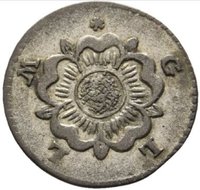
A rose.
Reverse
Description:
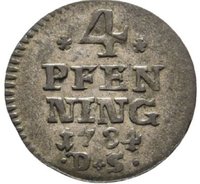
Denomination and date on six lines.
Inscription:
*I*
HELLER
GR. LIPP:
SCHEIDE
MUNTZ
1783
HELLER
GR. LIPP:
SCHEIDE
MUNTZ
1783
Edge
Mintings
| Year | Mint Mark | Mintage | Quality | Collection |
|---|---|---|---|---|
| 1783 | — | — |
Historical background
In 1783, the County of Lippe-Detmold, a small principality within the Holy Roman Empire, operated within a complex and fragmented monetary system typical of the era. The county did not possess the sovereign right to mint its own full-fledged coinage; instead, it issued limited Scheidemünzen (small change or fractional coins) under the authority of the wider Westphalian Circle. These low-denomination coins, essential for daily market transactions, circulated alongside a multitude of foreign currencies. The most important of these was the Reichsthaler, the theoretical standard of the Empire, but in practice, coins from neighboring states like Brunswick, Prussia, and Hesse-Kassel, as well as older regional issues, all passed through the economy at varying exchange rates.
This monetary plurality created chronic challenges for trade and administration. The value of coins was based on their precious metal content (specie value), but also on often-disputed official "convention" rates set by the regional monetary conventions of the Westphalian Circle. Debasement of coinage by various states, coupled with the inflow of inferior foreign coins, led to instability, confusion, and frequent losses for ordinary people. For Count Simon August and his officials, managing public finances and tax collection in this environment was fraught with difficulty, as they had to constantly reckon and convert between different monetary units.
The situation in 1783 was one of entrenched instability, yet it was not in acute crisis. The county's economy was primarily agrarian, and the system of multiple currencies, while inefficient, was the accepted norm. However, the underlying fragility of the system placed a burden on commerce and highlighted the limitations of the county's autonomy. It was a microcosm of the Holy Roman Empire's broader weaknesses—decentralized authority and a lack of uniform economic policy—which would become pressing issues in the decades to come as the pressures of modernization and war finance grew.
This monetary plurality created chronic challenges for trade and administration. The value of coins was based on their precious metal content (specie value), but also on often-disputed official "convention" rates set by the regional monetary conventions of the Westphalian Circle. Debasement of coinage by various states, coupled with the inflow of inferior foreign coins, led to instability, confusion, and frequent losses for ordinary people. For Count Simon August and his officials, managing public finances and tax collection in this environment was fraught with difficulty, as they had to constantly reckon and convert between different monetary units.
The situation in 1783 was one of entrenched instability, yet it was not in acute crisis. The county's economy was primarily agrarian, and the system of multiple currencies, while inefficient, was the accepted norm. However, the underlying fragility of the system placed a burden on commerce and highlighted the limitations of the county's autonomy. It was a microcosm of the Holy Roman Empire's broader weaknesses—decentralized authority and a lack of uniform economic policy—which would become pressing issues in the decades to come as the pressures of modernization and war finance grew.
✨ Legendary