

1 Gold Ecu – France
France
Context

Material
Weight: 3.36 g
Gold weight: 3.24 g
Shape: Irregular round
Composition: 96.3% Gold
Magnetic: No
Technique: Hammered
References
KM: #Click to copy to clipboard575A var.
Numista: #428406
Value
Bullion value: $540.40
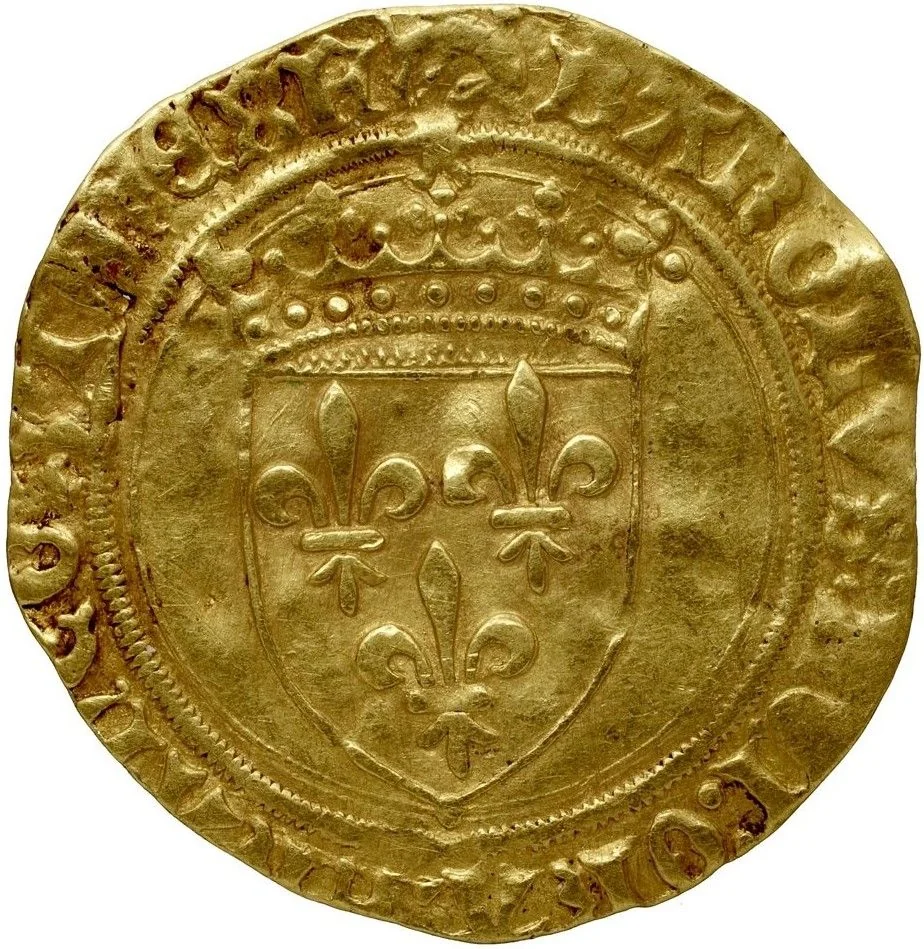
Obverse
Description:
Crowned coat of arms.
Inscription:
KAROLVS DEI GRA FRAnCORVm REX
Script: Latin (uncial)
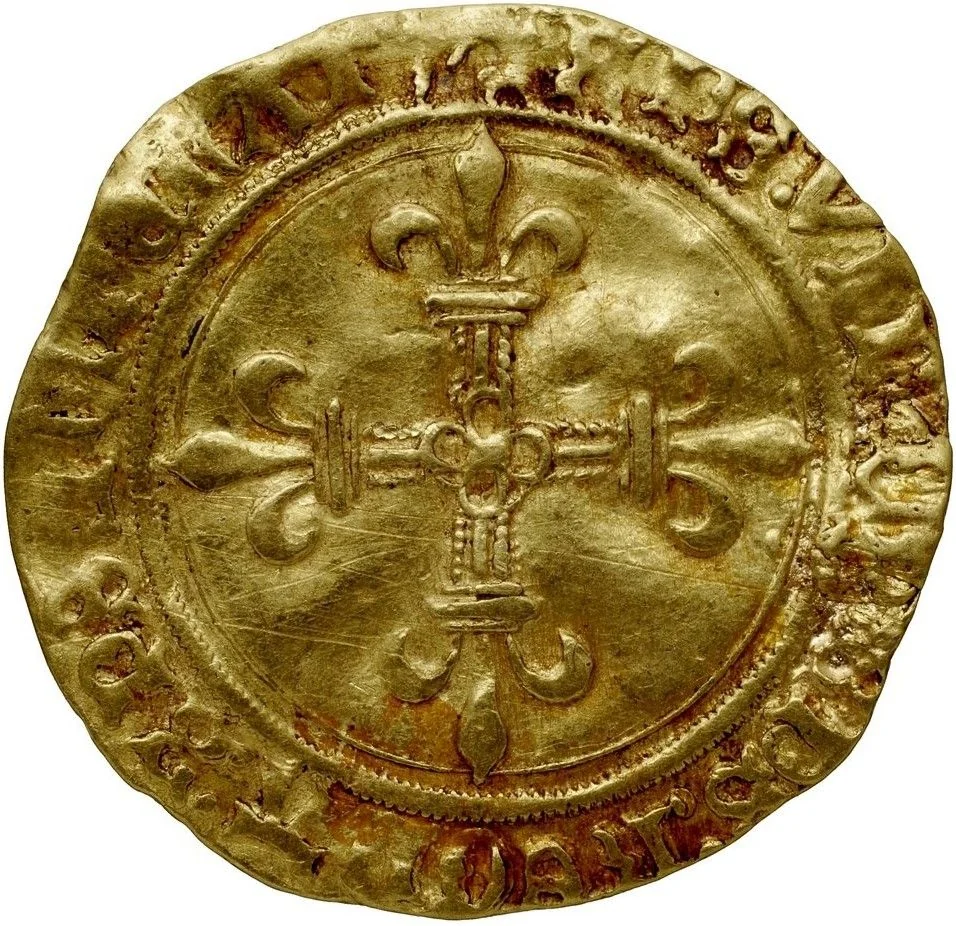
Reverse
Edge
Mints
| Name | Mark |
|---|---|
| Montélimar | — |
Mintings
| Year | Mint Mark | Mintage | Quality | Collection |
|---|---|---|---|---|
| — | — | — |
Historical background
In 1496, France was in a period of monetary transition and instability under the reign of King Charles VIII. The kingdom operated on a bimetallic system of gold and silver coins, but the valuation and purity of these coins were frequently manipulated by royal decree to meet the crown's pressing financial needs, primarily funding the costly Italian Wars. These manipulations, known as "mutations," created a complex and often confusing landscape where the official value of a coin (its value de compte or "money of account") could differ significantly from its intrinsic metal content, leading to widespread distrust and economic friction.
The primary coins in circulation were the gold écu d'or and the silver gros tournois, but their values were not stable. The crown's practice of periodically issuing stronger, purer coins (like the gros à la couronne) alongside debased older ones encouraged hoarding and the export of good coinage, a phenomenon described by Gresham's Law ("bad money drives out good"). This situation was exacerbated by the existence of both royal coinage and the separate, but officially recognized, coinage of powerful ecclesiastical and feudal mints, further complicating trade and taxation.
Consequently, the monetary situation in 1496 was one of fragmentation and uncertainty. Merchants and money-changers had to constantly assess the specific type and mint of each coin, not just its face value. While there were attempts at reform, including ordinances to standardize coinage, the crown's chronic shortage of funds made lasting stability impossible. The system placed a heavy burden on the peasantry and smaller merchants, who were most vulnerable to the inflationary effects of debasement and the complexities of a disordered currency regime.
The primary coins in circulation were the gold écu d'or and the silver gros tournois, but their values were not stable. The crown's practice of periodically issuing stronger, purer coins (like the gros à la couronne) alongside debased older ones encouraged hoarding and the export of good coinage, a phenomenon described by Gresham's Law ("bad money drives out good"). This situation was exacerbated by the existence of both royal coinage and the separate, but officially recognized, coinage of powerful ecclesiastical and feudal mints, further complicating trade and taxation.
Consequently, the monetary situation in 1496 was one of fragmentation and uncertainty. Merchants and money-changers had to constantly assess the specific type and mint of each coin, not just its face value. While there were attempts at reform, including ordinances to standardize coinage, the crown's chronic shortage of funds made lasting stability impossible. The system placed a heavy burden on the peasantry and smaller merchants, who were most vulnerable to the inflationary effects of debasement and the complexities of a disordered currency regime.
✨ Legendary