

6 Ducats – Denmark
Non-circulating coins
Commemoration: Defeat of the Swedish army and break of the siege of Copenhagen in 1659
Denmark
Context

References
KM: #Click to copy to clipboardPnF16
Numista: #427867
Value
Bullion value: $3492.75
Obverse
Description:
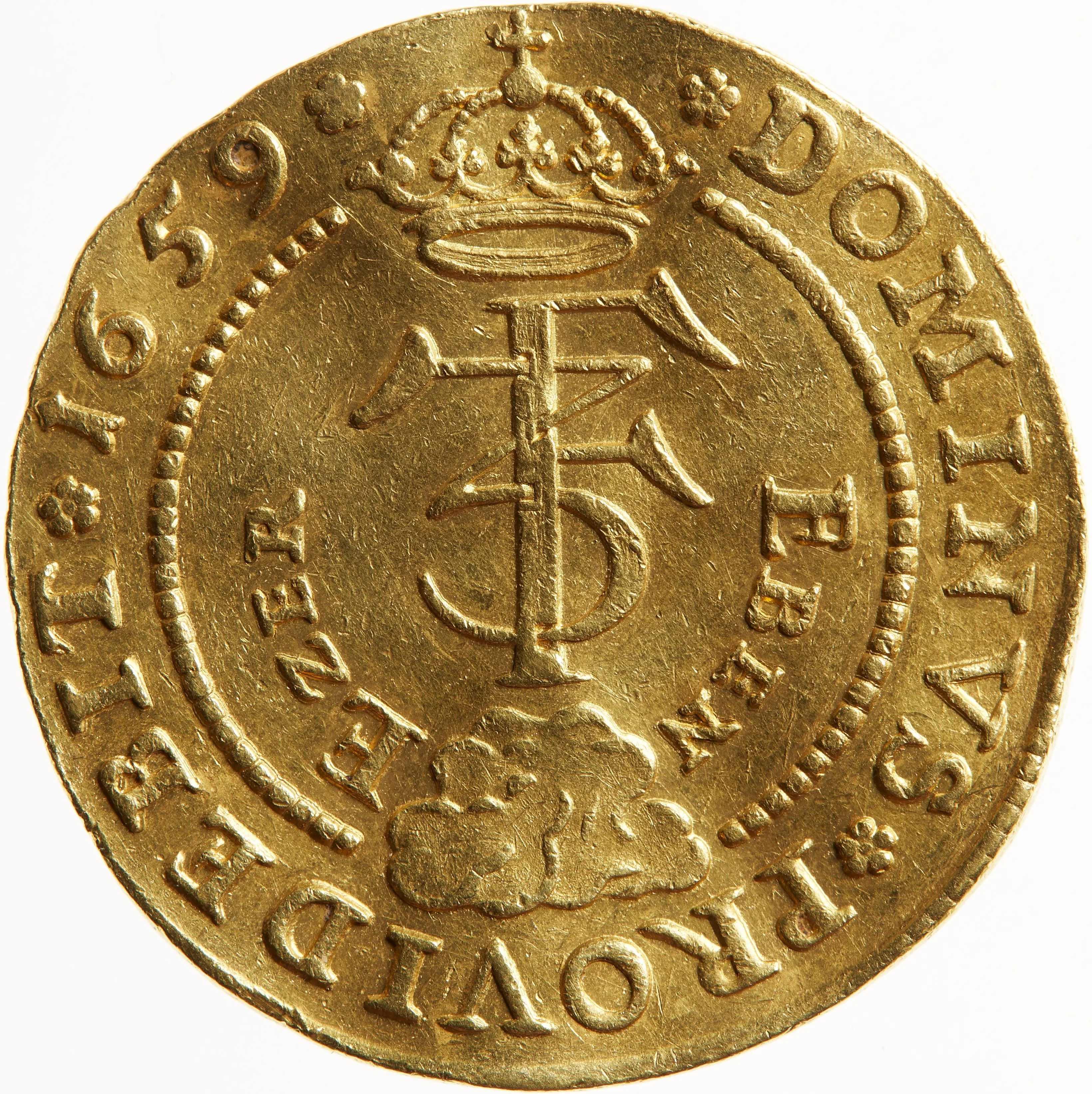
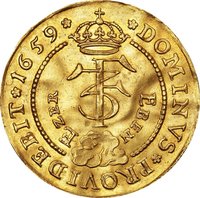
King’s monogram within a beaded circle, topped by a crown. A cloud inscribed "EBEN-EZER" breaks through the circle and crown below. The king’s motto and date surround the design.
Inscription:
*DOMINVS * PROVIDEBIT * 1659 *
F3
EBEN-EZER
F3
EBEN-EZER
Script: Latin
Reverse
Description:
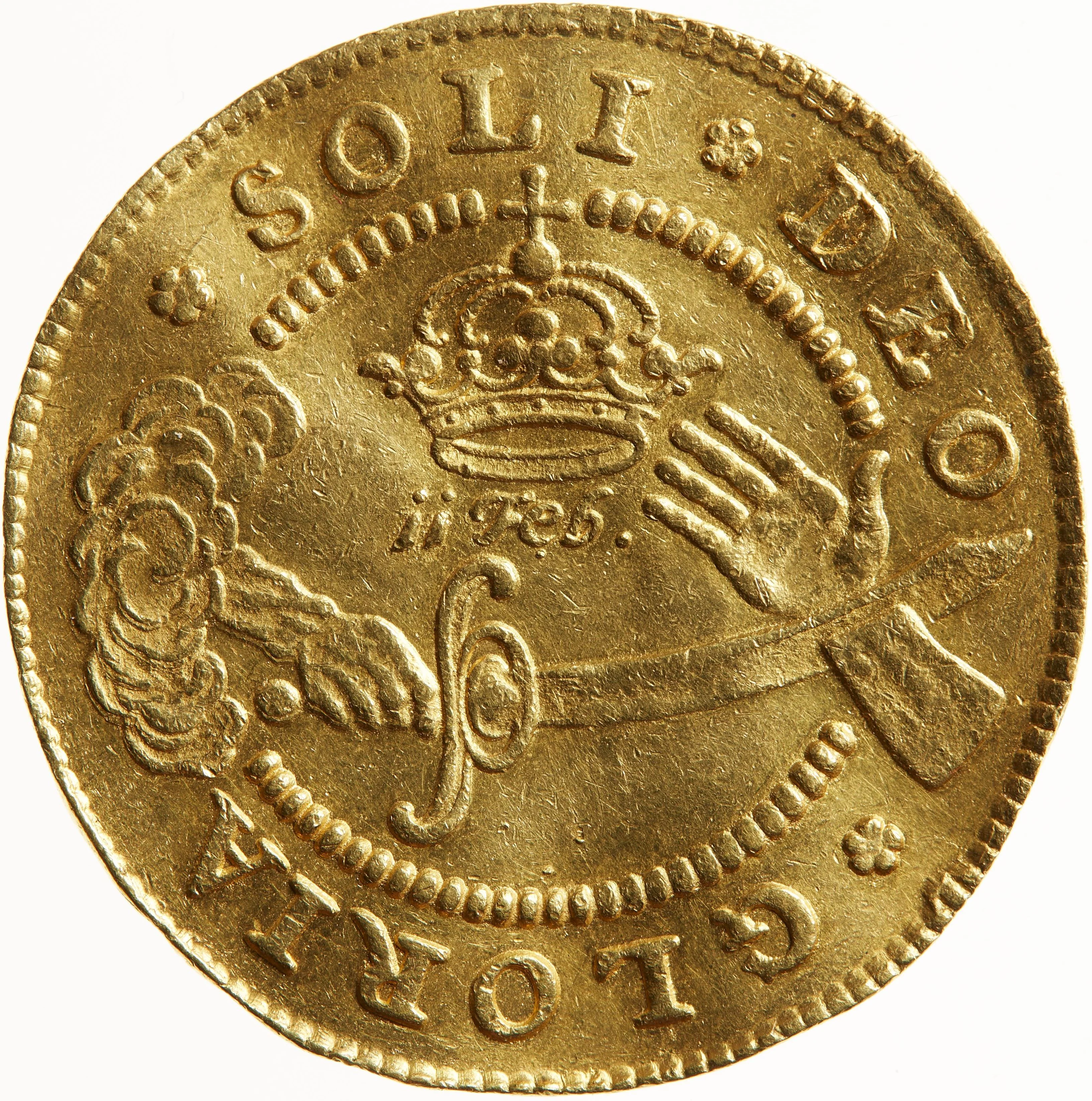
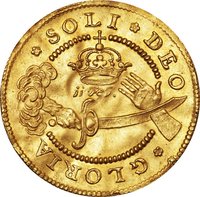
An arm from a cloud cuts a hand reaching for a crown, within a beaded circle. Legend outside.
Inscription:
* SOLI * DEO * GLORIA
ii Feb
ii Feb
Script: Latin
Edge
Mints
| Name | Mark |
|---|---|
| Copenhagen | — |
Mintings
| Year | Mint Mark | Mintage | Quality | Collection |
|---|---|---|---|---|
| 1659 | — | — |
Historical background
In 1659, Denmark found itself in a dire monetary crisis, a direct consequence of the devastating Second Northern War (1655-1660). King Frederik III had financed the costly conflict against Sweden largely by debasing the currency. The state minted vast quantities of so-called "klippe" coins—crudely stamped, square pieces of silver with a drastically reduced precious metal content compared to their face value. This practice of inflation eroded public trust and caused the value of the currency to plummet, leading to severe price inflation and economic hardship for the population.
The situation was exacerbated by the Treaty of Roskilde in 1658 and the subsequent Swedish siege of Copenhagen in 1658-1659. The treaty had ceded the rich, revenue-generating provinces of Skåne, Halland, and Blekinge to Sweden, stripping the Danish crown of a significant part of its tax base. With the treasury exhausted and the country under military threat, the government resorted to even more extreme monetary measures, including forced loans and the continued issuance of poor-quality coinage to pay soldiers and war debts.
This period represents one of the lowest points in Danish monetary history. The widespread circulation of debased coins disrupted trade and created a dual system where older, full-value coins were hoarded and disappeared from circulation (Gresham's Law in action). The crisis underscored the weak state of royal finances and was a key factor leading to the establishment of the absolute monarchy in 1660, as the estates sought a strong central power to restore economic and political stability. The monetary system would only be properly reformed and stabilized later in the 1660s.
The situation was exacerbated by the Treaty of Roskilde in 1658 and the subsequent Swedish siege of Copenhagen in 1658-1659. The treaty had ceded the rich, revenue-generating provinces of Skåne, Halland, and Blekinge to Sweden, stripping the Danish crown of a significant part of its tax base. With the treasury exhausted and the country under military threat, the government resorted to even more extreme monetary measures, including forced loans and the continued issuance of poor-quality coinage to pay soldiers and war debts.
This period represents one of the lowest points in Danish monetary history. The widespread circulation of debased coins disrupted trade and created a dual system where older, full-value coins were hoarded and disappeared from circulation (Gresham's Law in action). The crisis underscored the weak state of royal finances and was a key factor leading to the establishment of the absolute monarchy in 1660, as the estates sought a strong central power to restore economic and political stability. The monetary system would only be properly reformed and stabilized later in the 1660s.
✨ Legendary