

2 ducats – Denmark
Add to wishlist
Denmark
Context
Material
References
KM: #
Numista: #427643
Value
Bullion value: $1071.59
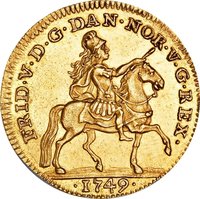
Obverse
Description:
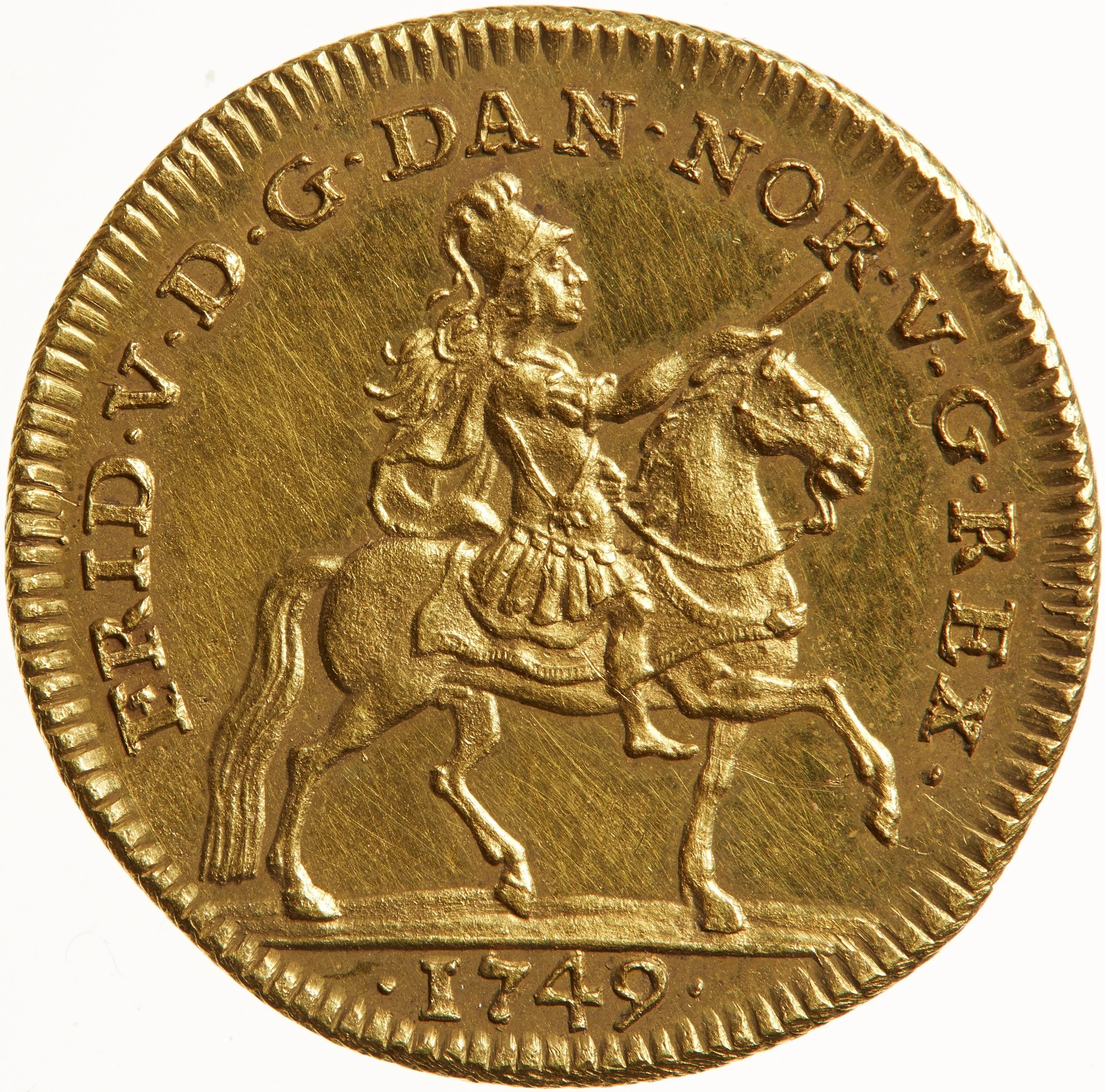
King Frederik V on horseback in parade, wearing armor and the Order of the Elephant. He holds a raised scepter.
Inscription:
FRID • V • D • G • DAN • NOR • V • G • REX •
• 1749 •
• 1749 •
Script: Latin
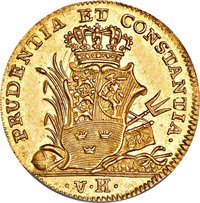
Reverse
Description:
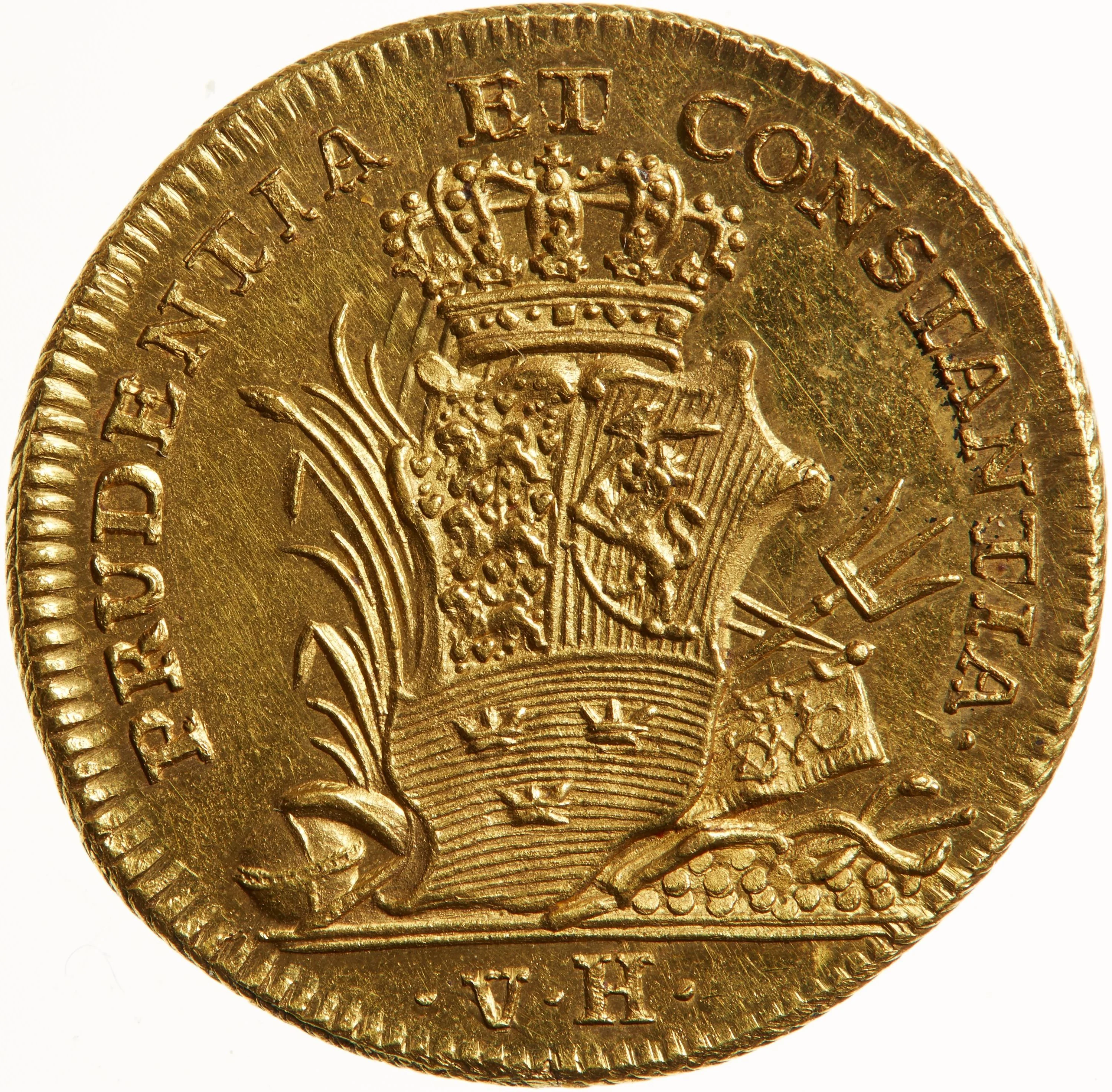
Ornate crowned shield, bent right, bearing the arms of Denmark, Norway, and the Kalmar Union. At left are a sword and orb; at right, a trident, Danish West Indies Company banner, caduceus, and coins. Mintmark in exergue.
Inscription:
PRUDENTIA ET CONSTANTIA.
V.H.
V.H.
Script: Latin
Edge
Mints
| Name | Mark |
|---|---|
| Royal Danish Mint | — |
Mintings
| Year | Mint Mark | Mintage | Quality | Collection |
|---|---|---|---|---|
| 1749 | — | — |
Historical background
In 1749, Denmark operated under a complex and strained monetary system, a legacy of decades of war, debasement, and economic turmoil. The primary currency was the rigsdaler, but its value was unstable due to a chronic shortage of silver. The state had repeatedly issued low-quality subsidiary coins, such as the skilling, and paper money known as kurantdaler, which circulated at a fluctuating discount against the silver rigsdaler. This created a confusing dual system: one for accounting in silver (rigsdaler specie) and one for everyday transactions in devalued currency (rigsdaler courant), leading to widespread public mistrust and hindering commerce.
The situation was a direct result of the financial burdens of the Great Northern War (1700-1721) and subsequent conflicts, which had drained the treasury. To finance these wars, the government had heavily debased the coinage, reducing its precious metal content, and issued excessive amounts of paper money not fully backed by silver reserves. By 1749, the economy was still grappling with inflation and a lack of confidence in the state's financial management, with the exchange rate between courant and specie being a constant source of uncertainty for merchants and the public alike.
Recognizing the crisis, the Danish state was on the cusp of significant reform. The year 1749 itself was a pivotal moment, as it saw the planning and preparation for a major monetary restructuring that would be enacted in the following years. This reform, championed by figures like Count Johan Sigismund Schulin, aimed to stabilize the currency by introducing new, standardized silver coins and systematically recalling the old, debased money. Thus, the background of 1749 is one of a system in its final years of dysfunction, setting the stage for the more stable Danish rigsdaler system that would be formally established in the early 1750s.
The situation was a direct result of the financial burdens of the Great Northern War (1700-1721) and subsequent conflicts, which had drained the treasury. To finance these wars, the government had heavily debased the coinage, reducing its precious metal content, and issued excessive amounts of paper money not fully backed by silver reserves. By 1749, the economy was still grappling with inflation and a lack of confidence in the state's financial management, with the exchange rate between courant and specie being a constant source of uncertainty for merchants and the public alike.
Recognizing the crisis, the Danish state was on the cusp of significant reform. The year 1749 itself was a pivotal moment, as it saw the planning and preparation for a major monetary restructuring that would be enacted in the following years. This reform, championed by figures like Count Johan Sigismund Schulin, aimed to stabilize the currency by introducing new, standardized silver coins and systematically recalling the old, debased money. Thus, the background of 1749 is one of a system in its final years of dysfunction, setting the stage for the more stable Danish rigsdaler system that would be formally established in the early 1750s.
✨ Legendary