

2 skilling – Denmark
Add to wishlist
Denmark
Context
Material
References
KM: #
Numista: #42563
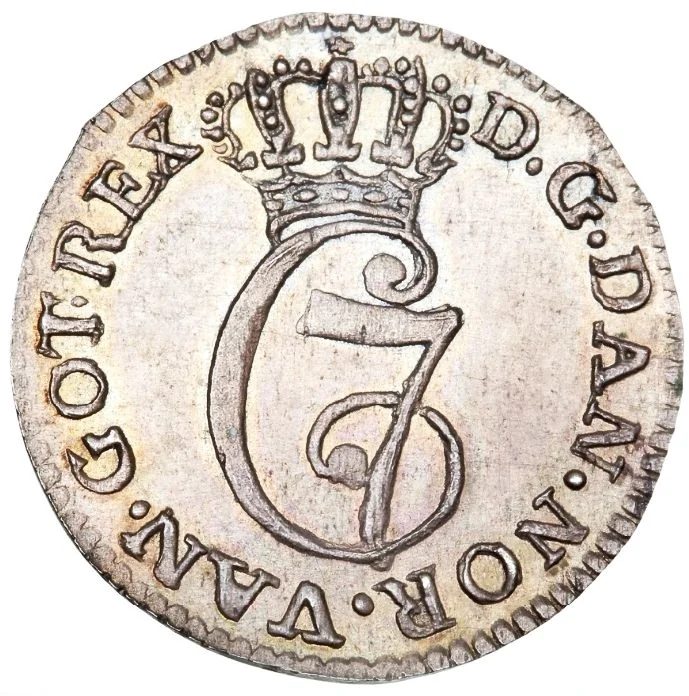
Obverse
Description:
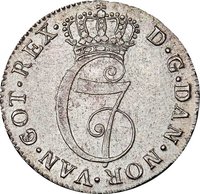
Crowned royal monogram. Rim inscription.
Inscription:
C7
D.G.DAN.NOR.VAN.GOT.REX
D.G.DAN.NOR.VAN.GOT.REX
Script: Latin
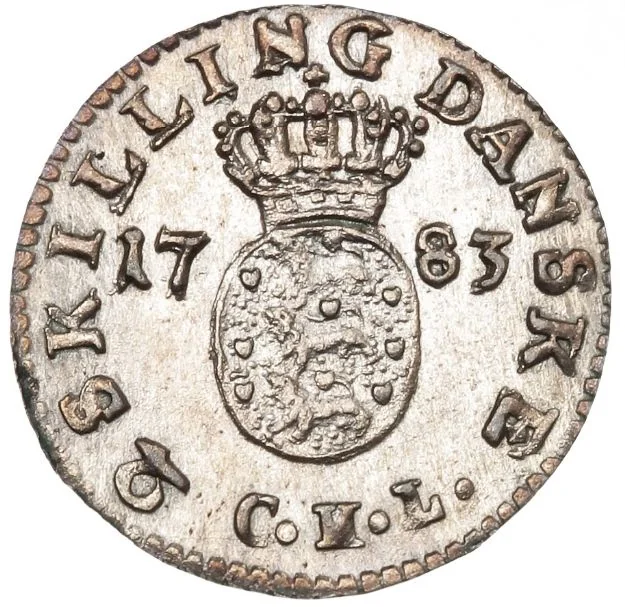
Reverse
Description:
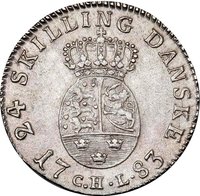
Shield with Danish arms divides date. Value encircles; mint initials below.
Inscription:
2 SKILLING DANSKE
17 | 83
C.H.L.
17 | 83
C.H.L.
Script: Latin
Edge
Categories
| Symbols> Coat of Arms |
Mints
| Name | Mark |
|---|---|
| Royal Danish Mint | — |
| Altona, Schleswig-Holstein | CHL |
| Altona, Schleswig-Holstein | DCL |
Mintings
Historical background
In 1778, Denmark operated under a silver standard, with the rigsdaler specie as the primary currency unit. However, the monetary system was complex and strained. The state treasury, heavily burdened by debts from wars and expansive projects, had resorted to issuing vast quantities of paper money called kurantsedler since the mid-18th century. These notes were not directly redeemable for silver but circulated alongside a confusing array of older coins, creating a de facto dual system of "species" (silver-based) and "current" (paper-based) money with fluctuating exchange rates.
The situation was marked by significant inflation and a severe loss of confidence. The over-issuance of paper money had led to a sharp depreciation of the kurant rigsdaler against the silver rigsdaler specie. By 1778, the exchange rate had deteriorated to approximately 3 kurant rigsdaler for 1 rigsdaler specie, a stark indicator of the currency's weakness. This eroded public trust, hampered trade, and created economic uncertainty, as the value of money was unstable and unpredictable.
This precarious financial backdrop set the stage for the major monetary reforms that would follow in the subsequent decades. The state's fiscal troubles, exacerbated by the American Revolutionary War's disruption to trade (despite Danish neutrality), made the currency problem urgent. While the comprehensive restructuring, including the establishment of the Rigsbank in 1791, lay in the future, the year 1778 represents a point of deep crisis within the long period of monetary instability that characterized much of Denmark's late 18th century.
The situation was marked by significant inflation and a severe loss of confidence. The over-issuance of paper money had led to a sharp depreciation of the kurant rigsdaler against the silver rigsdaler specie. By 1778, the exchange rate had deteriorated to approximately 3 kurant rigsdaler for 1 rigsdaler specie, a stark indicator of the currency's weakness. This eroded public trust, hampered trade, and created economic uncertainty, as the value of money was unstable and unpredictable.
This precarious financial backdrop set the stage for the major monetary reforms that would follow in the subsequent decades. The state's fiscal troubles, exacerbated by the American Revolutionary War's disruption to trade (despite Danish neutrality), made the currency problem urgent. While the comprehensive restructuring, including the establishment of the Rigsbank in 1791, lay in the future, the year 1778 represents a point of deep crisis within the long period of monetary instability that characterized much of Denmark's late 18th century.
🌟 Uncommon