

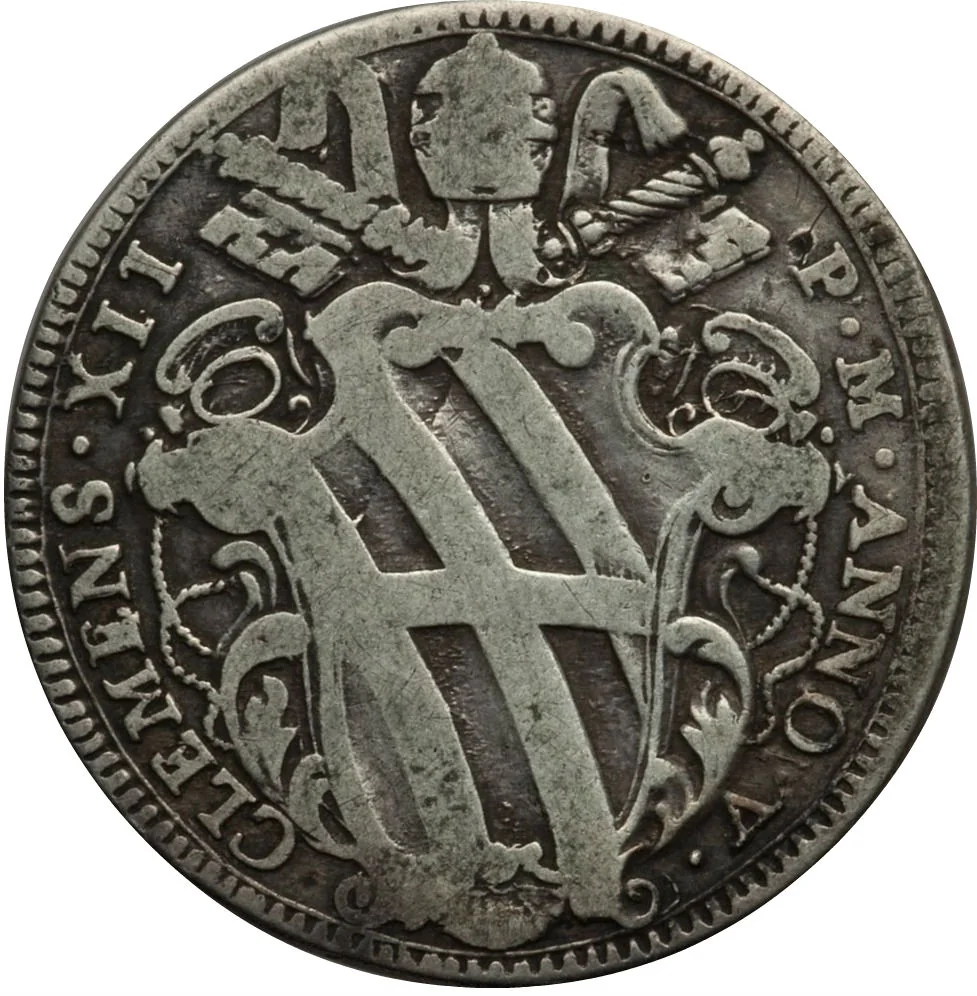
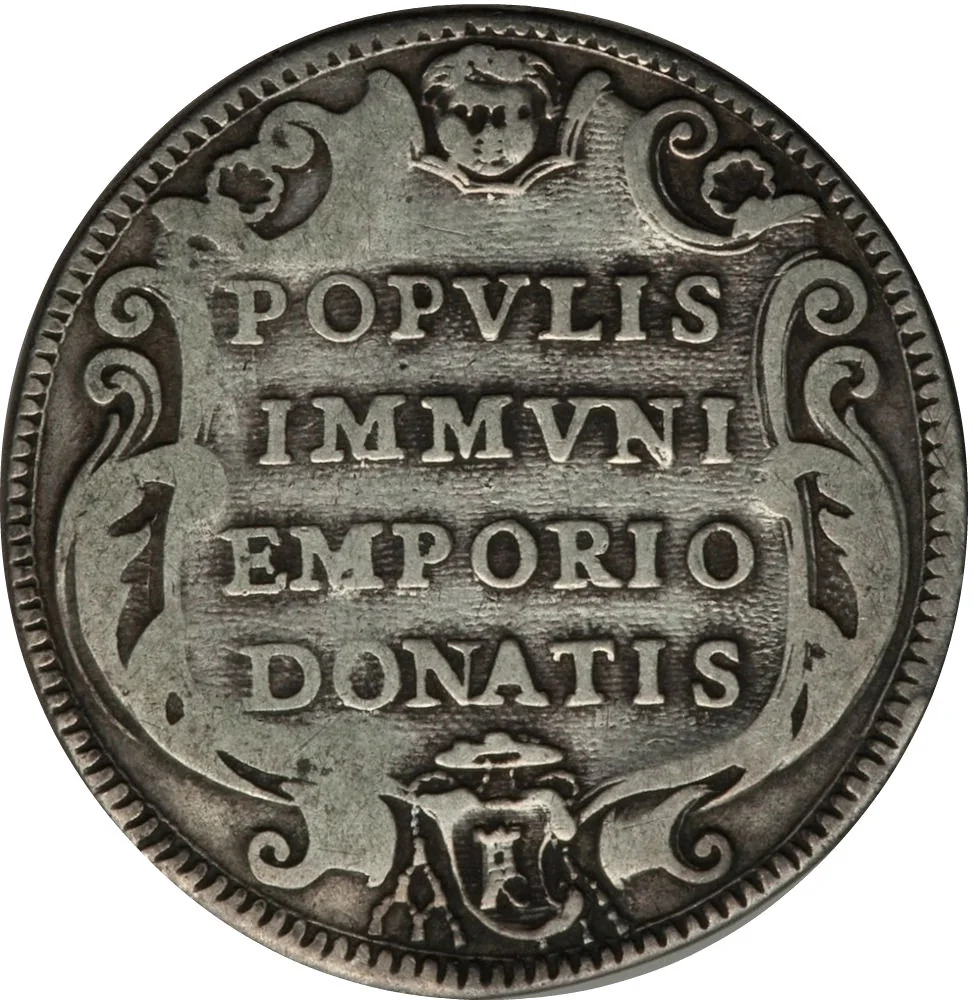
1 teston – Papal States
Add to wishlist
Vatican City
Context
Years: 1733–1734
Country: Vatican City
Issuer: Papal States
Ruler: Clement XII
Currency:
(1534—1835)
Demonetized: Yes
Material
References
KM: #
Numista: #113847
Value
Bullion value: $18.30
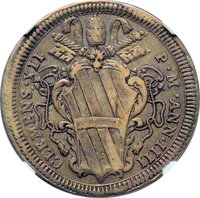
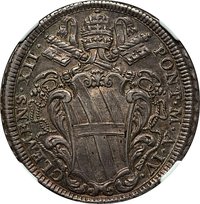
Obverse
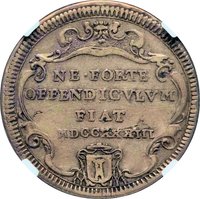
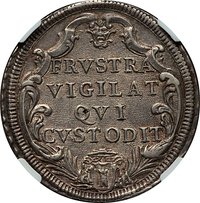
Reverse
Edge
Mintings
| Year | Mint Mark | Mintage | Quality | Collection |
|---|---|---|---|---|
| 1733 | — | — | ||
| 1734 | — | — |
Historical background
In 1733, the Papal States, a mosaic of central Italian territories under the temporal rule of the Pope, operated within a complex and archaic monetary system typical of the ancien régime. The primary unit was the Papal scudo (specifically the scudo di moneta), a silver coin that served as the backbone of larger transactions and state accounting. However, the circulating medium was a chaotic mix of older papal issues, coins from other Italian states (like Roman giuli and baiocchi), and foreign silver and gold pieces, particularly Spanish and French. This proliferation of different coins, each with fluctuating intrinsic metal values, created constant challenges for commerce and tax collection, as exchange rates were neither stable nor uniformly enforced.
The monetary situation was further strained by the financial demands of the papal government and the broader European context. Pope Clement XII, who ascended the throne in 1730, inherited significant debts from his predecessors and faced the immense costs of administration, patronage, and public works. The outbreak of the War of the Polish Succession in 1733, while not directly involving the Papal States in major combat, disrupted trade and financial flows across the Italian peninsula. This period saw a recurring temptation for sovereigns to engage in debasement—reducing the precious metal content in coins to generate short-term revenue—a practice the Papacy had historically used, which eroded public trust in the currency.
Consequently, the monetary landscape was one of localized confusion and vulnerability. Prices and wages were often negotiated with reference to specific physical coins rather than abstract units of account, and money changers (banchieri) held crucial power in daily economic life. While the mid-18th century would later see attempts at reform under Pope Benedict XIV, the year 1733 represents a point within a prolonged era of monetary fragmentation. The system was fundamentally reactive, struggling to facilitate a growing economy and susceptible to the pressures of papal finance and international precious metal markets, leaving merchants and the populace to navigate its inherent inconsistencies.
The monetary situation was further strained by the financial demands of the papal government and the broader European context. Pope Clement XII, who ascended the throne in 1730, inherited significant debts from his predecessors and faced the immense costs of administration, patronage, and public works. The outbreak of the War of the Polish Succession in 1733, while not directly involving the Papal States in major combat, disrupted trade and financial flows across the Italian peninsula. This period saw a recurring temptation for sovereigns to engage in debasement—reducing the precious metal content in coins to generate short-term revenue—a practice the Papacy had historically used, which eroded public trust in the currency.
Consequently, the monetary landscape was one of localized confusion and vulnerability. Prices and wages were often negotiated with reference to specific physical coins rather than abstract units of account, and money changers (banchieri) held crucial power in daily economic life. While the mid-18th century would later see attempts at reform under Pope Benedict XIV, the year 1733 represents a point within a prolonged era of monetary fragmentation. The system was fundamentally reactive, struggling to facilitate a growing economy and susceptible to the pressures of papal finance and international precious metal markets, leaving merchants and the populace to navigate its inherent inconsistencies.
✨ Legendary