

¼ rupee – Arcot
Add to wishlist
India
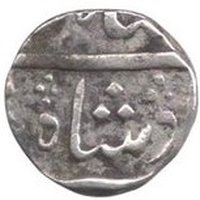
Obverse
Description:
Persian couplet by Shah Alam II.
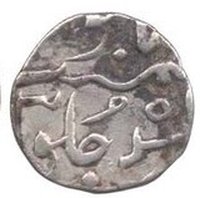
Reverse
Description:
Persian - Julus mint.
Edge
Mints
| Name | Mark |
|---|---|
| Arcot | — |
Mintings
| Year | Mint Mark | Mintage | Quality | Collection |
|---|---|---|---|---|
| 1771 | — | — | ||
| 1806 | — | — | ||
| 1806 | — | — | ||
| 1807 | — | — |
Historical background
In 1771, the Carnatic region of South India, with Arcot as its capital, was in a state of profound financial and political crisis, directly impacting its currency. The Nawab of Arcot, Muhammad Ali Khan Wallajah, was a deeply indebted client of the British East India Company, which had militarily installed and sustained him in power. His enormous debts, primarily to the Company and to private British creditors (often Company officials themselves), were used as a political tool to extract territorial revenue concessions and deepen British control. The Nawab’s treasury was perpetually drained to service these debts, leading to chronic shortages of specie (coin) and erratic minting of the local currency, the Arcot rupee.
The currency system itself was chaotic. While the Arcot rupee was the nominal standard, various other rupees (from Bombay, Surat, and Mughal mints) circulated at fluctuating values, causing confusion in trade and revenue collection. Furthermore, to meet his obligations, the Nawab increasingly resorted to debasement—reducing the silver content in newly minted coins while insisting they had the same face value. This practice, combined with the influx of varying foreign coins, led to severe inflation, loss of public confidence in the currency, and widespread economic hardship for the local population, who saw the real value of their money erode.
This unstable monetary environment was a direct reflection of the transitional and exploitative nature of British colonial rule in this period. The Company prioritized extracting wealth and securing political leverage over establishing sound fiscal governance. The currency crisis in Arcot was, therefore, not merely an economic issue but a symptom of a collapsing indigenous fiscal structure under the weight of colonial demands, setting a precedent for the more formalized and controlled currency systems the British would later impose across India.
The currency system itself was chaotic. While the Arcot rupee was the nominal standard, various other rupees (from Bombay, Surat, and Mughal mints) circulated at fluctuating values, causing confusion in trade and revenue collection. Furthermore, to meet his obligations, the Nawab increasingly resorted to debasement—reducing the silver content in newly minted coins while insisting they had the same face value. This practice, combined with the influx of varying foreign coins, led to severe inflation, loss of public confidence in the currency, and widespread economic hardship for the local population, who saw the real value of their money erode.
This unstable monetary environment was a direct reflection of the transitional and exploitative nature of British colonial rule in this period. The Company prioritized extracting wealth and securing political leverage over establishing sound fiscal governance. The currency crisis in Arcot was, therefore, not merely an economic issue but a symptom of a collapsing indigenous fiscal structure under the weight of colonial demands, setting a precedent for the more formalized and controlled currency systems the British would later impose across India.

✨ Legendary