

4 Ducats – Teutonic Order
Germany
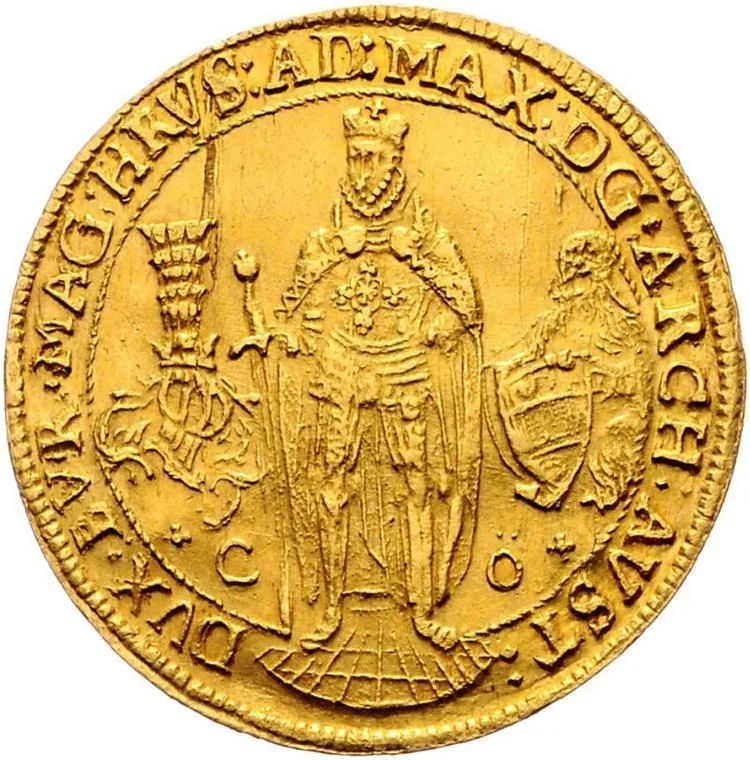
Obverse
Description:
Armored Emperor Maximilian, crowned.
Inscription:
MAX DG ARCH AVST DVX BVR MAG HRVS AD
Script: Latin
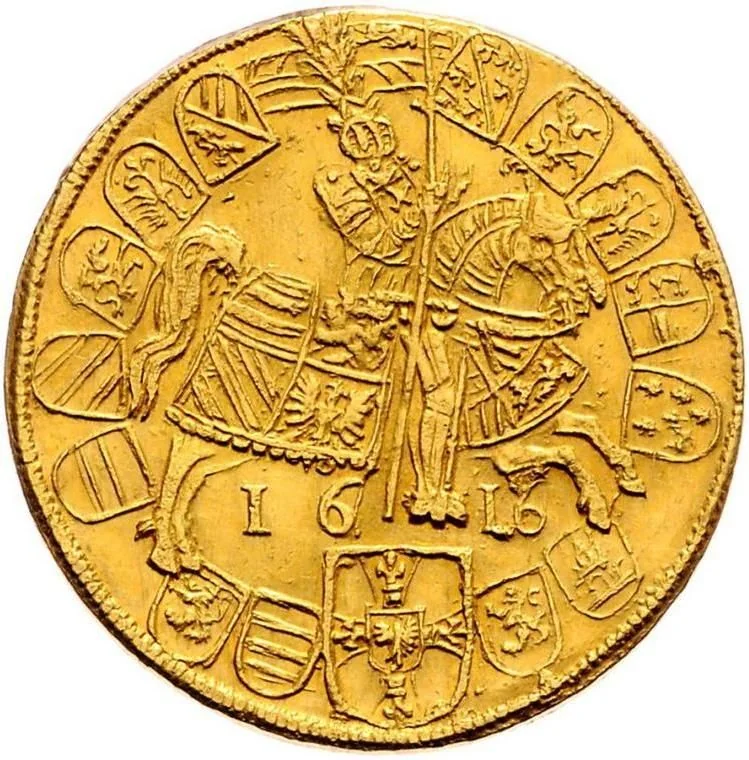
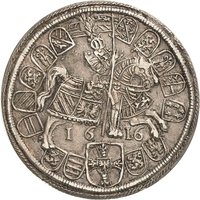
Reverse
Description:
Maximilian rides right, encircled by heraldic shields.
Inscription:
16 16
Script: Latin
Edge
Mintings
| Year | Mint Mark | Mintage | Quality | Collection |
|---|---|---|---|---|
| 1616 | — | — |
Historical background
In 1616, the Teutonic Order, governing the Duchy of Prussia as a fief of the Polish Crown, operated within a complex and challenging monetary landscape. The state’s currency system was not autonomous; it was deeply integrated into and subordinate to the powerful monetary union of the Polish-Lithuanian Commonwealth, primarily using the Polish złoty and its subsidiary grosz. However, the Order’s own mint in Królewiec (Königsberg) produced coins—such as the schilling and groschen—that were largely for regional circulation. A persistent problem was the influx of debased foreign coins and counterfeit money from neighboring states, which eroded trust in the currency and disrupted local commerce.
The financial situation of the Order itself was precarious. Having secularized its Prussian branch nearly a century earlier, the remaining Teutonic Order state was a relatively minor ecclesiastical territory with diminished revenues from lands now under Polish control. Military expenditures for maintaining fortresses and a small standing force, coupled with the costs of administration, strained its treasury. This financial pressure created a temptation to engage in currency manipulation, such as issuing coins with lower precious metal content, a practice common among contemporary states but one that risked inflation and further economic instability.
Consequently, the monetary environment in 1616 was one of dependency and vulnerability. The Teutonic Order’s monetary policy was largely reactive, struggling to maintain the integrity of its coinage against external forces while managing internal fiscal shortfalls. This fragile equilibrium left the state’s economy susceptible to the broader economic shifts and political decisions emanating from its powerful overlord in Warsaw, highlighting the Order’s diminished sovereignty in the early 17th century.
The financial situation of the Order itself was precarious. Having secularized its Prussian branch nearly a century earlier, the remaining Teutonic Order state was a relatively minor ecclesiastical territory with diminished revenues from lands now under Polish control. Military expenditures for maintaining fortresses and a small standing force, coupled with the costs of administration, strained its treasury. This financial pressure created a temptation to engage in currency manipulation, such as issuing coins with lower precious metal content, a practice common among contemporary states but one that risked inflation and further economic instability.
Consequently, the monetary environment in 1616 was one of dependency and vulnerability. The Teutonic Order’s monetary policy was largely reactive, struggling to maintain the integrity of its coinage against external forces while managing internal fiscal shortfalls. This fragile equilibrium left the state’s economy susceptible to the broader economic shifts and political decisions emanating from its powerful overlord in Warsaw, highlighting the Order’s diminished sovereignty in the early 17th century.

✨ Legendary