

¼ Portugaloser – Denmark
Denmark
Context

References
KM: #Click to copy to clipboard114
Numista: #420313
Value
Bullion value: $1432.63
Obverse
Description:
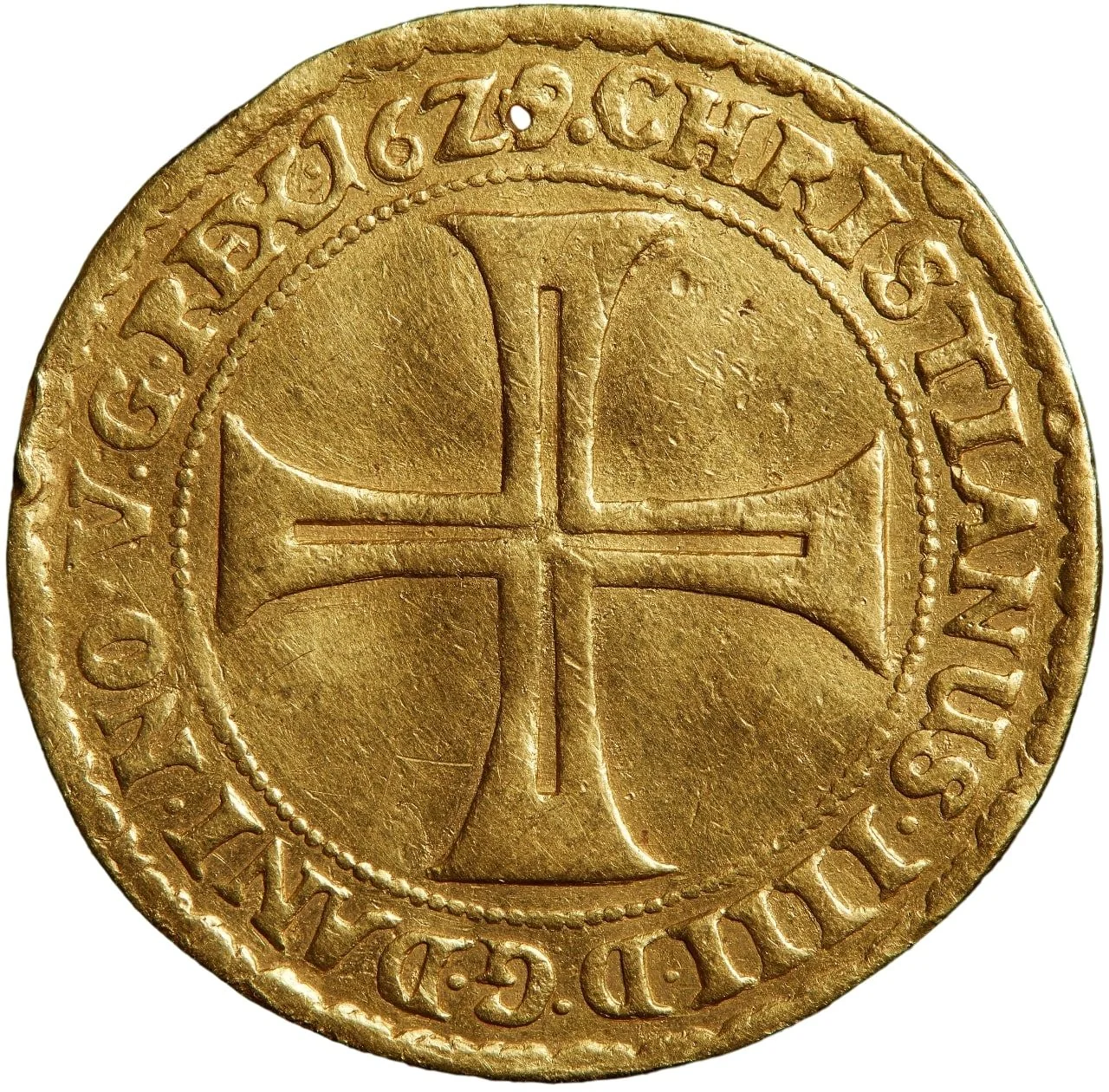
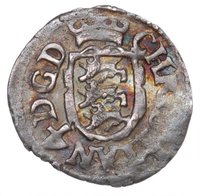
Cross inside circle, date above.
Inscription:
CHRISTIANUS IIII D G DANI NO V G REX 16Z9
Script: Latin
Reverse
Edge
Mintings
| Year | Mint Mark | Mintage | Quality | Collection |
|---|---|---|---|---|
| 1629 | — | — |
Historical background
In 1629, Denmark found itself in a state of severe monetary crisis, a direct consequence of the devastating Thirty Years' War and the policies of King Christian IV. The kingdom had entered the war in 1625 to defend Protestant interests and expand its influence, but the catastrophic defeat at the Battle of Lutter in 1626 and subsequent military losses drained the royal treasury. To finance the ongoing conflict, the government had resorted to heavy borrowing and, most damagingly, the deliberate debasement of the currency. The royal mint in Copenhagen significantly reduced the silver content in coins like the skilling and mark, while issuing excessive amounts of nearly pure copper klippe coins, leading to a disastrous divergence between the face value and intrinsic metal value of the currency.
This monetary manipulation created economic chaos within Denmark. Trust in the coinage collapsed, causing rampant inflation and a breakdown in trade as merchants and the public hoarded older, purer coins. A complex and unstable system of multiple exchange rates emerged, with foreign currencies and older Danish coins circulating at a premium over the new debased money. The situation crippled the economy, burdened the peasantry and fixed-income earners, and undermined both state finances and public confidence in the crown. The financial strain was so acute that it forced Christian IV to accept the Peace of Lübeck in May 1629, withdrawing from the war and relinquishing territorial ambitions to avoid complete ruin.
The crisis of 1629 was therefore a pivotal moment, exposing the limits of royal power and the economic cost of military ambition. It forced a period of financial reckoning and set the stage for future attempts at monetary reform. While the immediate pressure of war finance was alleviated by the peace treaty, the legacy of the debased coinage and shattered public trust would burden the Danish economy for years to come, serving as a stark lesson on the dangers of funding war through currency devaluation.
This monetary manipulation created economic chaos within Denmark. Trust in the coinage collapsed, causing rampant inflation and a breakdown in trade as merchants and the public hoarded older, purer coins. A complex and unstable system of multiple exchange rates emerged, with foreign currencies and older Danish coins circulating at a premium over the new debased money. The situation crippled the economy, burdened the peasantry and fixed-income earners, and undermined both state finances and public confidence in the crown. The financial strain was so acute that it forced Christian IV to accept the Peace of Lübeck in May 1629, withdrawing from the war and relinquishing territorial ambitions to avoid complete ruin.
The crisis of 1629 was therefore a pivotal moment, exposing the limits of royal power and the economic cost of military ambition. It forced a period of financial reckoning and set the stage for future attempts at monetary reform. While the immediate pressure of war finance was alleviated by the peace treaty, the legacy of the debased coinage and shattered public trust would burden the Danish economy for years to come, serving as a stark lesson on the dangers of funding war through currency devaluation.
✨ Legendary