Logo Title
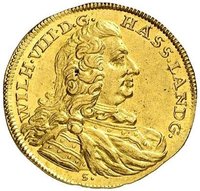
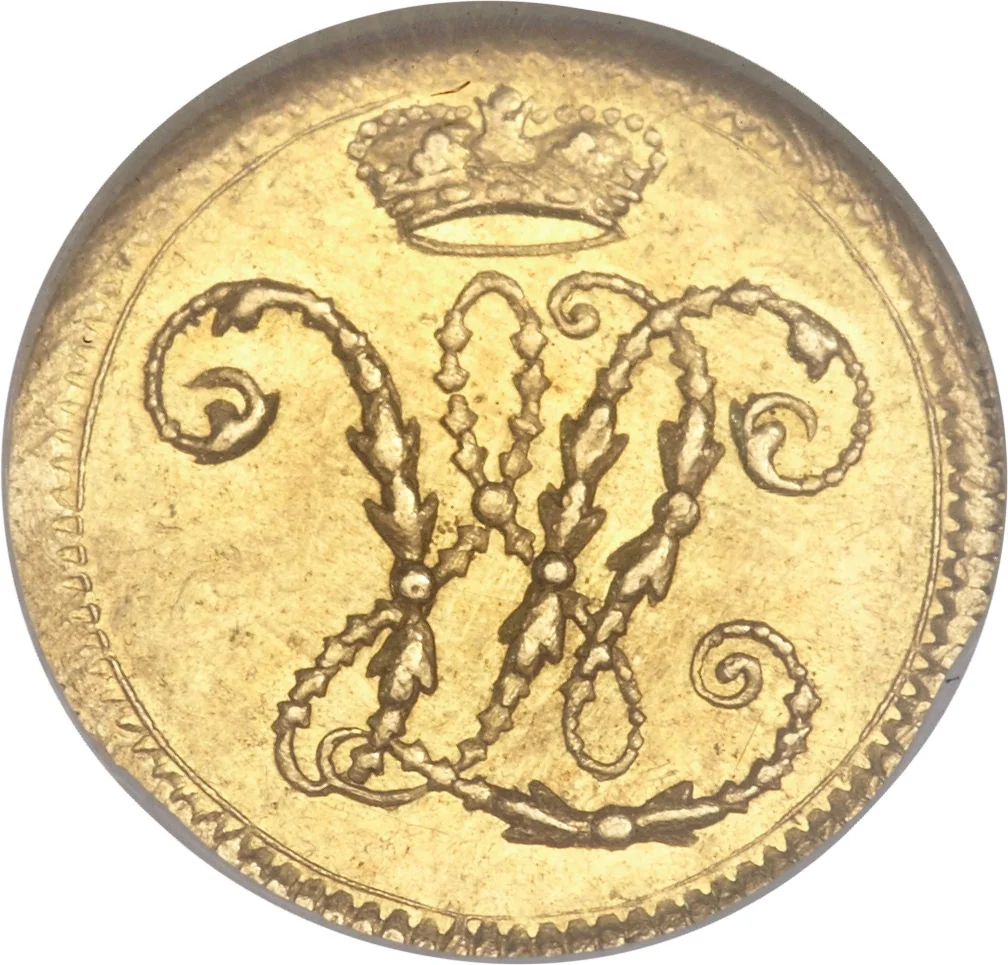
obverse
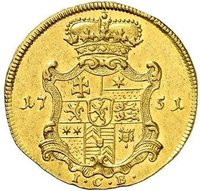
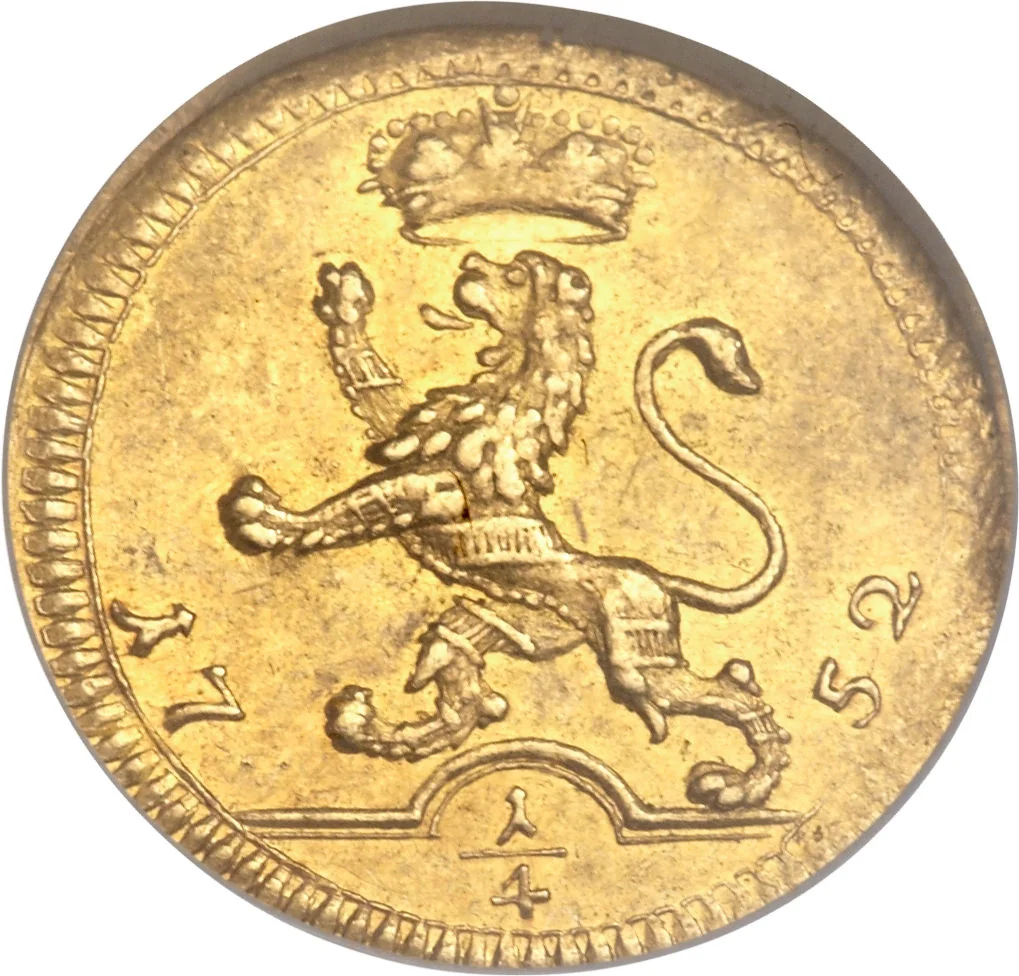
reverse
Heritage Auctions

¼ Ducat – Landgraviate of Hesse-Cassel

Germany
Context
Year: 1752
Country: Germany Country flag
Currency:
Demonetized: Yes
Material
Weight: 0.88 g
Gold weight: 0.87 g
Shape: Round
Composition: 98.6% Gold
Magnetic: No
References
KM: #Click to copy to clipboard452
Numista: #41963
Value
Bullion value: $145.03

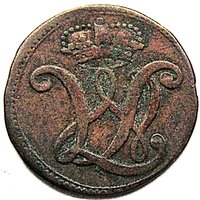
Obverse

Description:
Crowned initials.

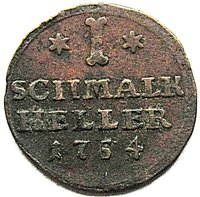
Reverse

Description:
Rampant lion crowned, facing left.
Inscription:
17 52

¼
Script: Latin

Edge

Mintings

YearMint MarkMintageQualityCollection
1752

Historical background

In 1752, the currency situation in the Landgraviate of Hesse-Cassel was one of relative stability and strength, a notable achievement in the fragmented and often chaotic monetary landscape of the Holy Roman Empire. This stability was largely the legacy of Landgrave Charles, who ruled until 1730, and was diligently maintained by his successor, Landgrave William VIII. The foundation was the Hessian Thaler, a high-quality silver coin that served as the primary unit of account and a trusted medium of exchange both within the territory and in broader regional commerce. Its reliability was crucial for a state whose economy was significantly bolstered by the hiring out of its well-trained soldiers as mercenaries to foreign powers, a practice requiring trustworthy financial transactions and specie reserves.

However, this domestic stability existed within a complex and challenging imperial monetary environment. Hesse-Cassel was part of the Frankfurt Imperial Coinage System (Frankfurter Münzfuß), one of several regional monetary agreements aimed at standardizing coin weights and fineness across member states. While this system provided a framework, the coexistence of numerous local and foreign coins in circulation—from neighboring German states, the Dutch Republic, and beyond—created persistent practical complications. Merchants and officials constantly had to navigate varying exchange rates and valuations, making bookkeeping and taxation administratively burdensome.

The landgraviate's fiscal health in this period was further reinforced by its substantial treasury reserves and the absence of major military engagements on its own soil. William VIII, a shrewd financial manager, continued to accumulate wealth, famously building a war chest that would later fund his son's support for the British during the American Revolutionary War. Therefore, in 1752, Hesse-Cassel stood as a fiscally sound principality with a strong, stable currency, but its monetary officials remained perennially engaged in managing the inevitable friction between its robust domestic coinage and the heterogeneous currencies flowing across its borders.
Legendary