Logo Title
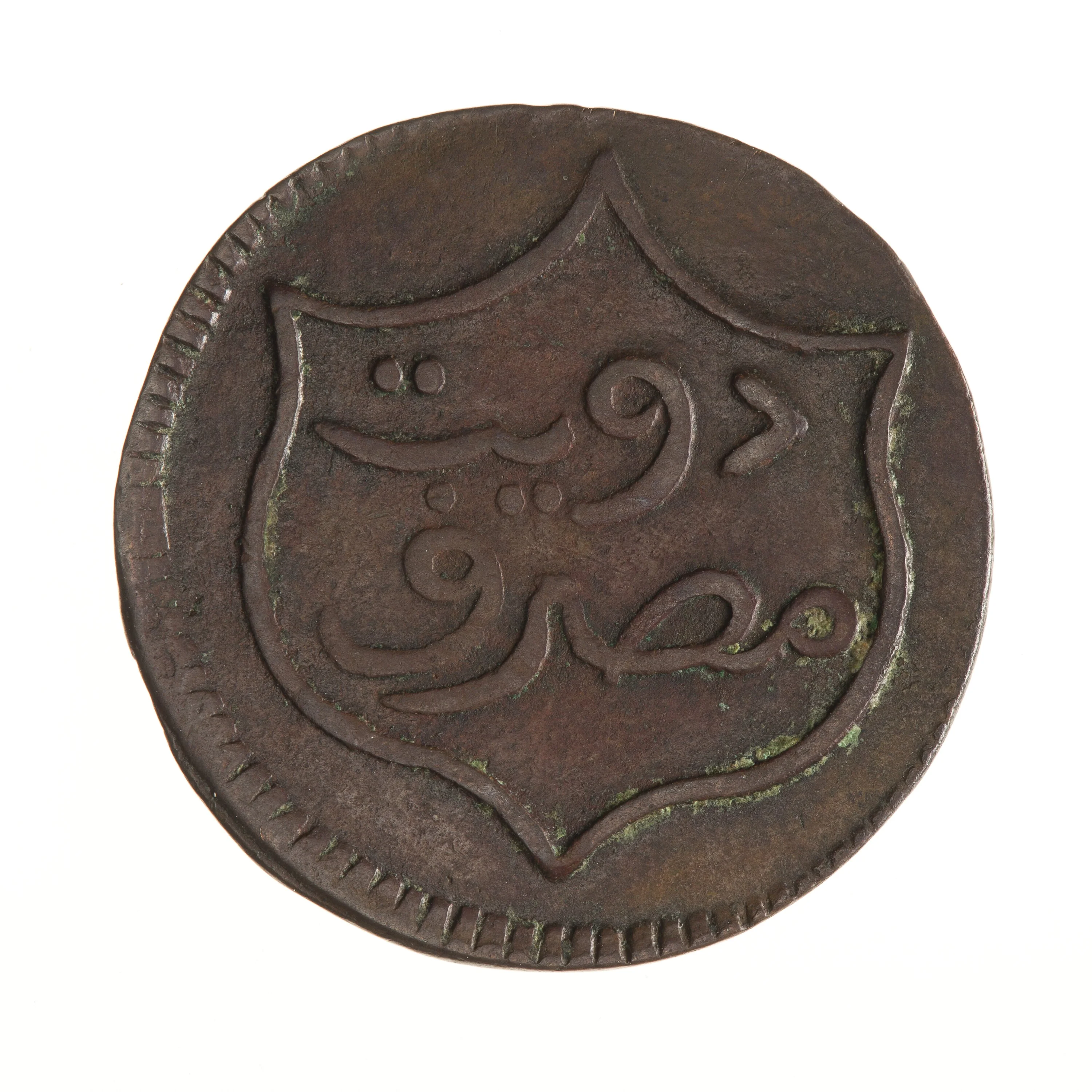
obverse
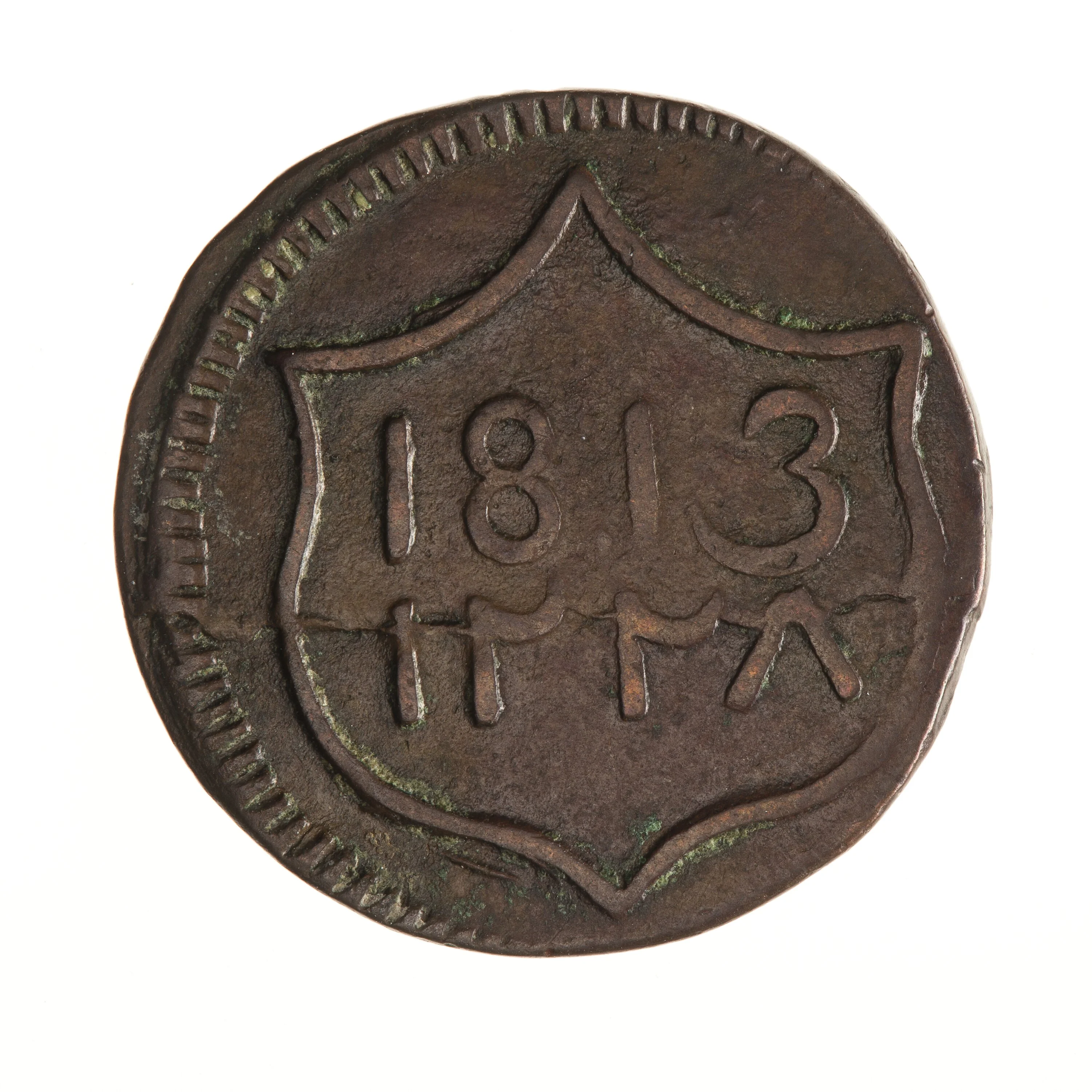
reverse
Museums Victoria / CC-BY

1 Duit – State of Maluka

Indonesia
Context
Year: 1813
Islamic (Hijri) Year: 1228
Country: Indonesia Country flag
Currency:
Demonetization: 1818
Material
Weight: 2.43 g
Shape: Round
Composition: Copper
Magnetic: No
References
KM: #Click to copy to clipboard5
Numista: #117870

Obverse

Description:
Denomination
Inscription:
دويت

مصرف
Translation:
German

Bank
Script: Arabic
Language: Arabic

Reverse

Description:
Date range
Inscription:
1813

١٢٢٨
Translation:
1813

1228
Script: Arabic
Language: Arabic

Edge

Mintings

YearMint MarkMintageQualityCollection
1813

Historical background

In 1813, the currency situation in the State of Maluka was a complex tapestry of competing systems, reflecting its history as a strategic trading hub. The official currency, the Malukan Guilder, was minted by the Sultanate and theoretically backed by silver reserves. However, years of costly regional conflicts and diminished silver imports had severely debased the coinage, leading to widespread distrust. In major port cities, Spanish silver dollars (pieces of eight) and Dutch guilders circulated more freely than the local issue, as they were valued for their consistent weight and purity in international trade.

This monetary fragmentation was exacerbated by a thriving informal economy. In rural inland areas, barter remained common, with rice, spices, and bolts of cloth serving as de facto units of exchange. Furthermore, various merchant houses and local chieftains issued their own promissory notes and copper tokens for local use, creating a patchwork of unreliable scrip. This lack of a uniform, trusted medium of exchange stifled internal commerce and made tax collection a fraught and inefficient process for the central authority.

The situation posed a significant threat to the Sultanate's sovereignty and economic stability. European colonial powers, particularly the British and the Dutch, exploited this monetary chaos by insisting on payment for goods and concessions in their own hard currencies, further draining the state of reliable specie. Consequently, 1813 was a year of intense deliberation in the royal court, with factions debating a major currency reform—a potential recoinage, the establishment of a state bank, or even the adoption of a foreign standard—to unify the economy and assert financial independence amidst growing colonial pressures.
Legendary