


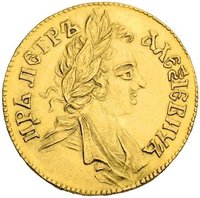
Obverse
Description:
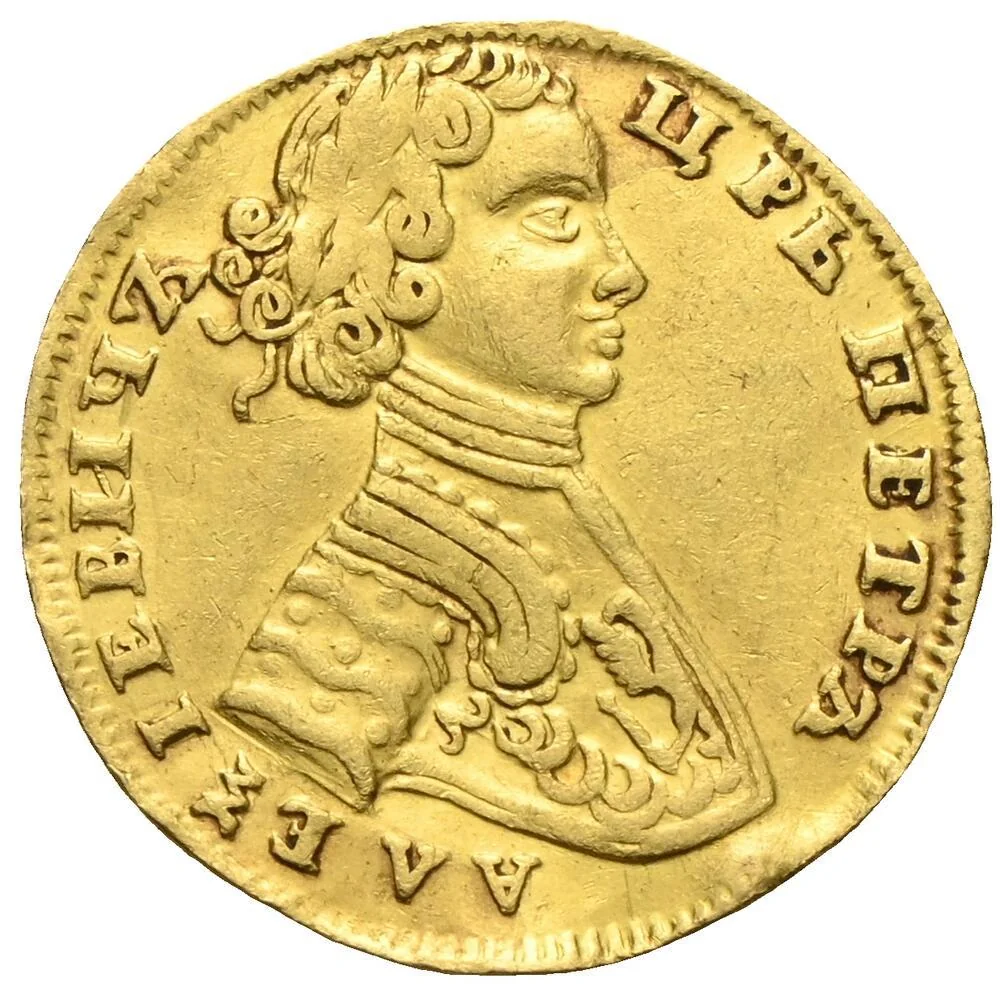
Peter I bust facing right.
Script: Cyrillic
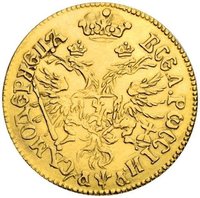
Reverse
Description:
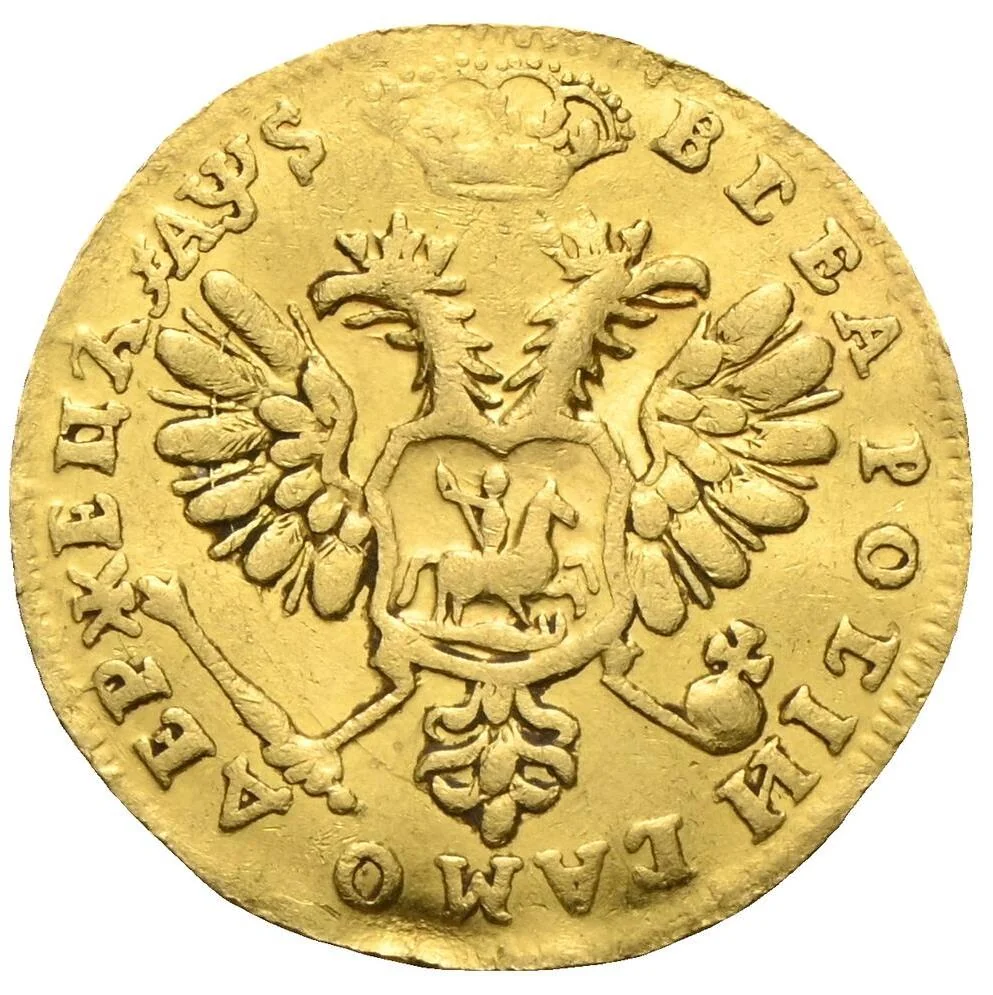
Two-headed eagle.
Script: Cyrillic
Edge
Mints
| Name | Mark |
|---|---|
| Kadashevsky Mint | — |
Mintings
| Year | Mint Mark | Mintage | Quality | Collection |
|---|---|---|---|---|
| 1706 | — | — |
Historical background
In 1706, the currency system of the Russian Empire was under severe strain due to the demands of the Great Northern War (1700-1721). Tsar Peter I, engaged in a costly conflict with Sweden, required vast sums to fund his modernized army and nascent navy. The state's primary revenue sources, including traditional taxes and monopolies, were insufficient, leading to a heavy reliance on currency manipulation. The government financed the war largely by debasing the silver coinage, reducing the silver content in kopeks and rubles minted at the Moscow Mint to generate more coins from the same bullion reserve, a practice that fueled inflation and eroded public trust.
The monetary landscape was a complex mix of old and new. Alongside the debased new silver coins, older, full-weight pre-Petrine coins (primarily kopeks and altyns) remained in circulation, leading to a two-tier system where older coins were hoarded for their intrinsic value. Furthermore, foreign currency, particularly German thalers (known in Russia as yefimki), circulated widely and were often preferred for large transactions due to their reliable silver content. The state even collected taxes in these foreign coins, only to melt them down to produce its own debased currency, creating a damaging cycle of monetary outflow and depreciation.
This period represented a critical, albeit chaotic, transition. Peter I’s reforms were modernizing the state, but his approach to finance in 1706 was largely extractive and short-term. The rampant debasement would soon lead to a full-scale monetary crisis, prompting Peter to seek more systematic solutions later in his reign, including the introduction of a decimal system and copper coinage for small change. Thus, in 1706, the empire’s currency was not a stable system but a fiscal instrument of war, setting the stage for a comprehensive financial overhaul once the immediate military pressures subsided.
The monetary landscape was a complex mix of old and new. Alongside the debased new silver coins, older, full-weight pre-Petrine coins (primarily kopeks and altyns) remained in circulation, leading to a two-tier system where older coins were hoarded for their intrinsic value. Furthermore, foreign currency, particularly German thalers (known in Russia as yefimki), circulated widely and were often preferred for large transactions due to their reliable silver content. The state even collected taxes in these foreign coins, only to melt them down to produce its own debased currency, creating a damaging cycle of monetary outflow and depreciation.
This period represented a critical, albeit chaotic, transition. Peter I’s reforms were modernizing the state, but his approach to finance in 1706 was largely extractive and short-term. The rampant debasement would soon lead to a full-scale monetary crisis, prompting Peter to seek more systematic solutions later in his reign, including the introduction of a decimal system and copper coinage for small change. Thus, in 1706, the empire’s currency was not a stable system but a fiscal instrument of war, setting the stage for a comprehensive financial overhaul once the immediate military pressures subsided.

✨ Legendary