

1 Ducaton – Spanish Netherlands
Netherlands
Context
Years: 1637–1664
Country: Netherlands 
Issuer: Spanish Netherlands
Ruler: Philip IV
Currency:
(1506—1713)
Demonetized: Yes
Material
Diameter: 43 mm
Weight: 64.6 g
Silver weight: 60.98 g
Shape: Irregular round
Composition: 94.4% Silver
Magnetic: No
Technique: Hammered
Alignment: Coin alignment
flip
References
KM: #Click to copy to clipboard75.1
Numista: #413319
Value
Bullion value: $174.54
Obverse
Description:
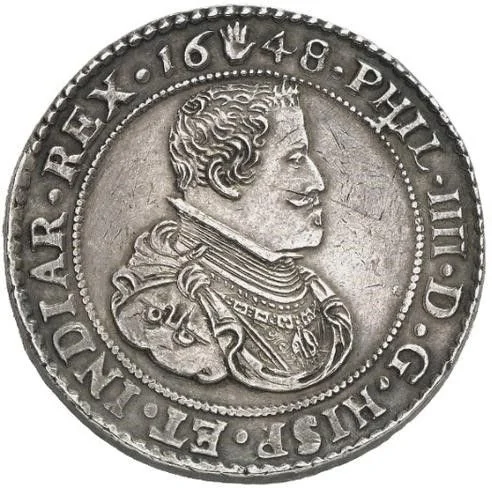
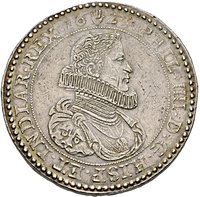
Philip IV bust right, date above mint mark.
Inscription:
PHIL IIII D G HISP ET INDIAR REX
Script: Latin
Reverse
Description:
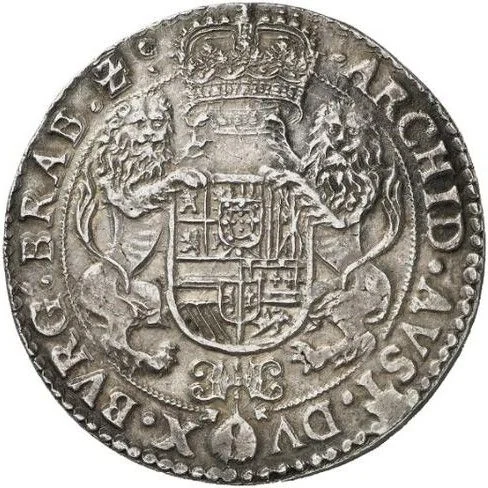
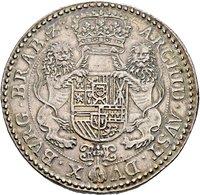
Crowned coat of arms with lion supporters and the Golden Fleece pendant.
Inscription:
ARCHID AVST DVX BVRG BRAB Ƶ c
Script: Latin
Edge
Plain
Mintings
| Year | Mint Mark | Mintage | Quality | Collection |
|---|---|---|---|---|
| 1637 | — | — | ||
| 1638 | — | — | ||
| 1639 | — | — | ||
| 1640 | — | — | ||
| 1642 | — | — | ||
| 1644 | — | — | ||
| 1645 | — | — | ||
| 1646 | — | — | ||
| 1647 | — | — | ||
| 1648 | — | — | ||
| 1649 | — | — | ||
| 1650 | — | — | ||
| 1651 | — | — | ||
| 1652 | — | — | ||
| 1653 | — | — | ||
| 1654 | — | — | ||
| 1655 | — | — | ||
| 1656 | — | — | ||
| 1658 | — | — | ||
| 1659 | — | — | ||
| 1662 | — | — | ||
| 1664 | — | — |
Historical background
In 1637, the Spanish Netherlands was embroiled in the Eighty Years' War, a protracted conflict for independence from the Spanish Crown. This constant state of warfare placed an immense financial strain on the region, leading to severe fiscal and monetary instability. To fund its military campaigns, the Spanish Crown, under Philip IV and his chief minister Olivares, resorted to repeated currency manipulations. The government frequently debased the coinage by reducing the precious metal content, especially in the widely used patagon and real coins, while officially maintaining their old face value. This practice, intended to create short-term revenue, instead fueled inflation, eroded public trust, and created chaotic exchange rates between "good" and "bad" money.
This monetary crisis unfolded alongside the infamous Tulip Mania bubble, which peaked and collapsed in early 1637. While the two phenomena were distinct, the environment of speculative fever and easy credit in the tulip trade was exacerbated by the underlying currency confusion. Merchants and ordinary citizens alike were navigating a marketplace where the intrinsic value of the coins in their hands was uncertain and subject to sudden government decree. The coexistence of these crises—one financial and state-driven, the other a speculative frenzy—created a unique moment of economic frenzy and profound anxiety about value itself.
The situation prompted official intervention. In October 1637, the Council of Brabant in Brussels attempted to restore order by issuing a placard that aimed to stabilize the currency. The decree fixed the exchange rates for the myriad of circulating coins, both domestic and foreign, and sought to withdraw heavily debased pieces from circulation. However, these measures were only partially successful. The fundamental pressure of war finance remained, and the government's credibility was damaged. Thus, the currency situation of 1637 remained one of fragile and enforced stability, underlying the broader economic fragility of a war-torn region.
This monetary crisis unfolded alongside the infamous Tulip Mania bubble, which peaked and collapsed in early 1637. While the two phenomena were distinct, the environment of speculative fever and easy credit in the tulip trade was exacerbated by the underlying currency confusion. Merchants and ordinary citizens alike were navigating a marketplace where the intrinsic value of the coins in their hands was uncertain and subject to sudden government decree. The coexistence of these crises—one financial and state-driven, the other a speculative frenzy—created a unique moment of economic frenzy and profound anxiety about value itself.
The situation prompted official intervention. In October 1637, the Council of Brabant in Brussels attempted to restore order by issuing a placard that aimed to stabilize the currency. The decree fixed the exchange rates for the myriad of circulating coins, both domestic and foreign, and sought to withdraw heavily debased pieces from circulation. However, these measures were only partially successful. The fundamental pressure of war finance remained, and the government's credibility was damaged. Thus, the currency situation of 1637 remained one of fragile and enforced stability, underlying the broader economic fragility of a war-torn region.
✨ Legendary