

1 Ducaton – Spanish Netherlands
Netherlands
Context
Years: 1618–1620
Country: Netherlands 
Issuer: Spanish Netherlands
Currency:
(1506—1713)
Demonetized: Yes
Material
Diameter: 43 mm
Weight: 64 g
Silver weight: 60.42 g
Shape: Irregular round
Composition: 94.4% Silver
Magnetic: No
Technique: Hammered
Alignment: Coin alignment
flip
References
KM: #Click to copy to clipboard50
Numista: #413196
Value
Bullion value: $172.91
Obverse
Description:
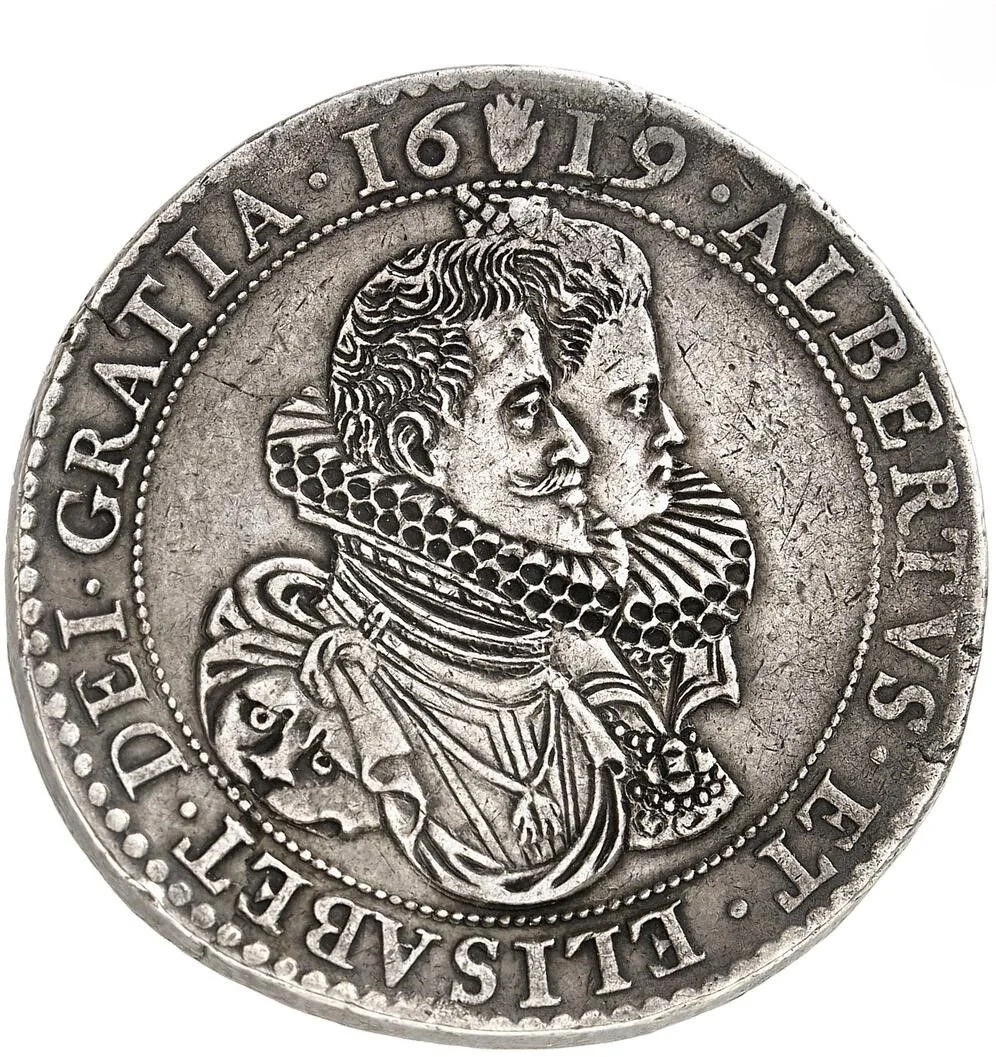
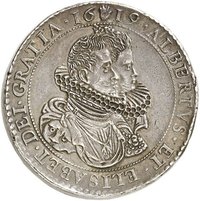
Conjoined busts of Albert and Isabella right, mint mark above date.
Inscription:
ALBERTVS · ET · ELISABET · DEI·GRATIA
Script: Latin
Reverse
Description:
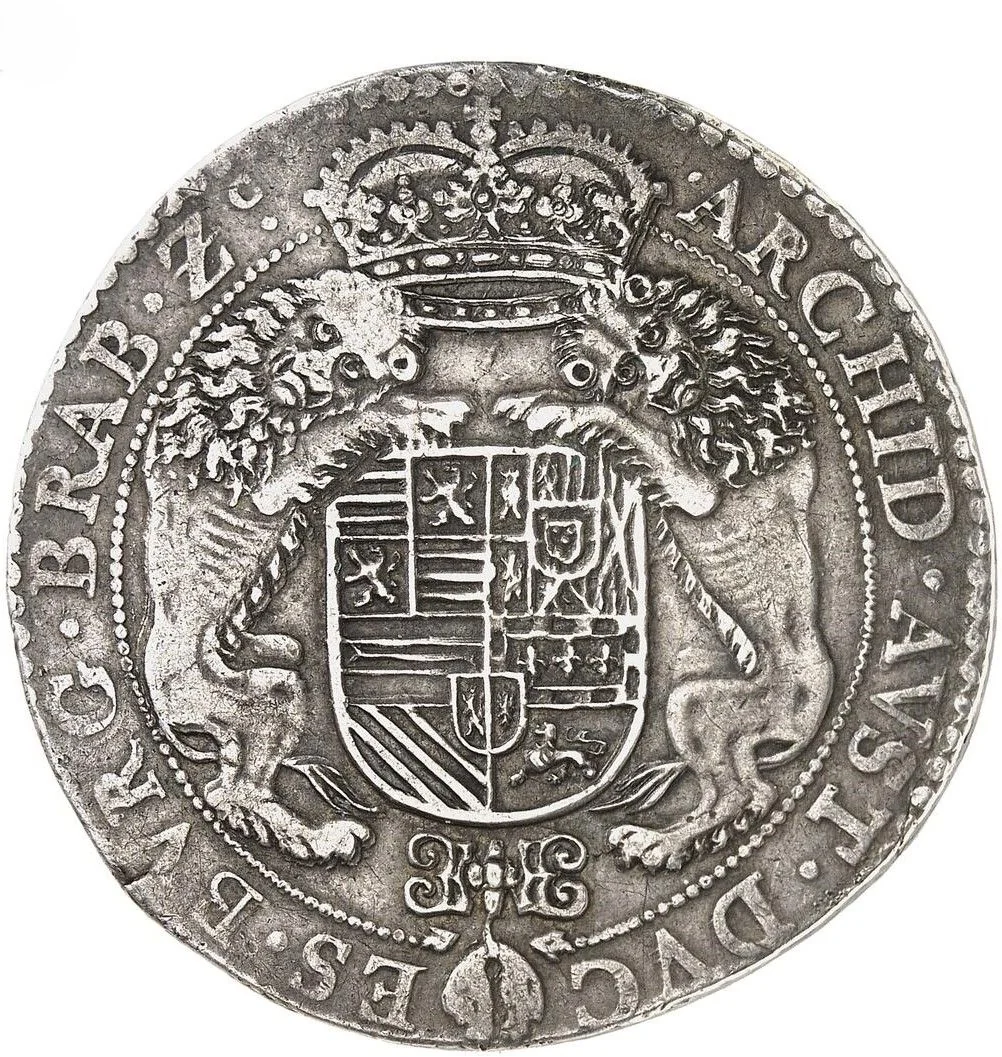
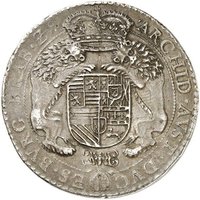
Crowned lion-supported coat of arms with the Golden Fleece jewel below.
Inscription:
ARCHID · AVST · DVCES · BVRG · BRAB · Z.ᶜ
Script: Latin
Edge
Categories
| Animal> Feline |
| Symbols> Coat of Arms |
Mints
| Name | Mark |
|---|---|
| Antwerp | — |
| Royal Mint of Belgium | — |
Mintings
| Year | Mint Mark | Mintage | Quality | Collection |
|---|---|---|---|---|
| 1618 | — | — | ||
| 1619 | — | — | ||
| 1620 | — | — |
Historical background
In 1618, the Spanish Netherlands (roughly modern-day Belgium and Luxembourg) faced a profound and chronic monetary crisis, a direct consequence of the ongoing Eighty Years' War (1568–1648). The region, a wealthy economic hub, was caught between the military and financial demands of the Spanish Crown and the disruptive economic warfare of the Dutch Republic. To fund its massive military expenditures, Spain frequently resorted to debasing its coinage, flooding the Netherlands with low-quality, overvalued currency. Simultaneously, the Dutch strategically minted and exported inferior coins, known as klippe money, into the southern provinces to extract silver and sow economic chaos.
This led to a disastrous situation of "bad money driving out good," as described by Gresham's Law. High-quality, full-weight coins were hoarded, melted down for their bullion, or exported, while the debased and foreign imitations circulated freely. The result was a severe loss of confidence in the currency, rampant inflation, and crippling uncertainty in daily commerce. Merchants and ordinary citizens struggled with constantly fluctuating exchange rates between a bewildering array of coins, both domestic and foreign, each with its own suspect intrinsic value.
The authorities in Brussels, recognizing the threat to economic stability and tax revenues, attempted to legislate solutions. They issued repeated ordinances setting official values for coins and forbidding the circulation of specific debased issues. However, these measures were largely ineffective against market forces and the sheer scale of the problem. Thus, in 1618, the currency situation remained a turbulent and unresolved core vulnerability, undermining the region's economy and exacerbating the social strain of prolonged conflict.
This led to a disastrous situation of "bad money driving out good," as described by Gresham's Law. High-quality, full-weight coins were hoarded, melted down for their bullion, or exported, while the debased and foreign imitations circulated freely. The result was a severe loss of confidence in the currency, rampant inflation, and crippling uncertainty in daily commerce. Merchants and ordinary citizens struggled with constantly fluctuating exchange rates between a bewildering array of coins, both domestic and foreign, each with its own suspect intrinsic value.
The authorities in Brussels, recognizing the threat to economic stability and tax revenues, attempted to legislate solutions. They issued repeated ordinances setting official values for coins and forbidding the circulation of specific debased issues. However, these measures were largely ineffective against market forces and the sheer scale of the problem. Thus, in 1618, the currency situation remained a turbulent and unresolved core vulnerability, undermining the region's economy and exacerbating the social strain of prolonged conflict.
✨ Legendary