

½ Thaler – Reuss-Gera
Circulating commemorative coins
Commemoration: Peace of Hubertusburg
Germany

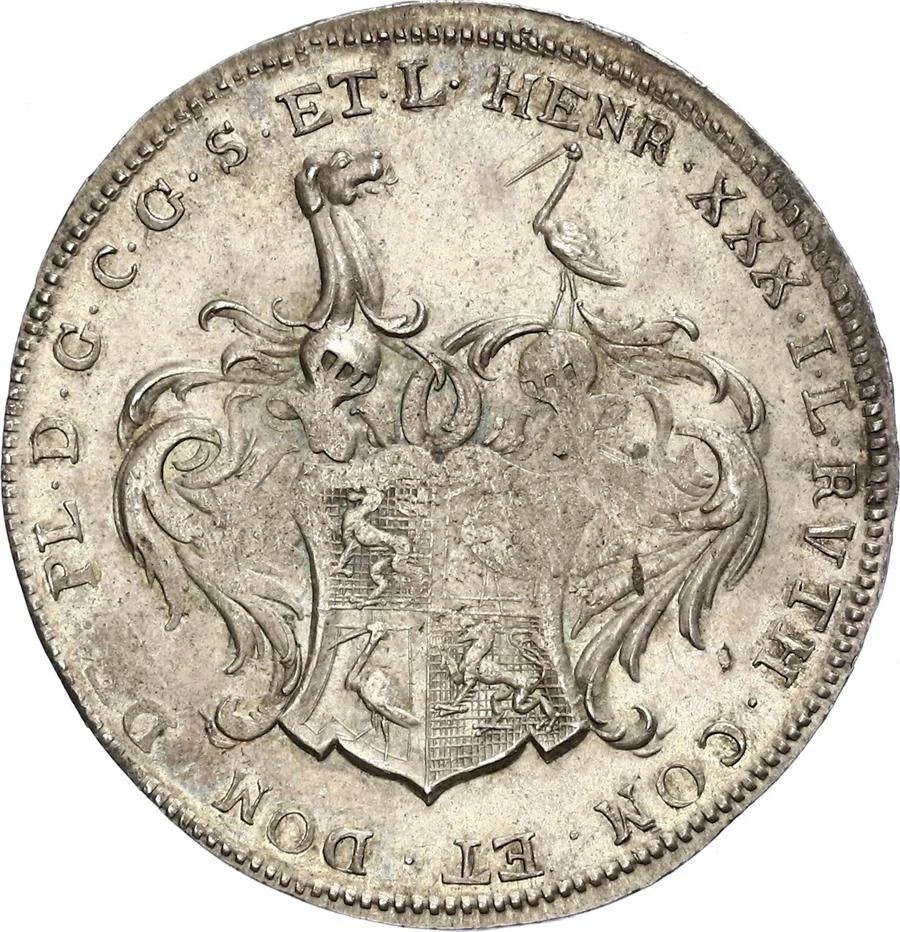
Obverse
Description:
Armed and helmeted.
Inscription:
HENR XXX I L RVTH COM ET DOM DE PL D G C G S ET L
Script: Latin
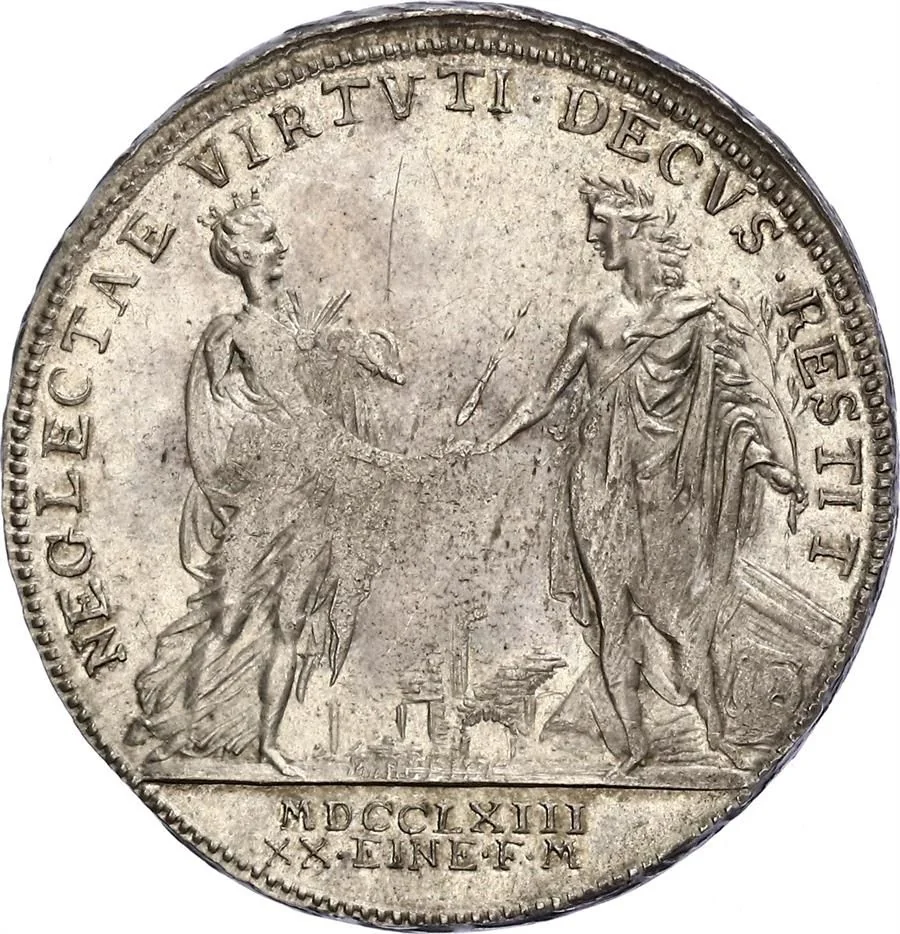
Reverse
Description:
Freedom giving scepter to Virtue.
Inscription:
NEGLECTAE VIRTVTI DECVS RESTIT
MDCCLXIII
XX EINE F M
MDCCLXIII
XX EINE F M
Script: Latin
Edge
Mints
| Name | Mark |
|---|---|
| Saalfeld | — |
Mintings
| Year | Mint Mark | Mintage | Quality | Collection |
|---|---|---|---|---|
| 1763 | — | — |
Historical background
In 1763, the currency situation in the Principality of Reuss-Gera, like much of the Holy Roman Empire, was one of profound instability and complexity. The territory was entangled in the wider monetary chaos of the Kipper- und Wipperzeit, a period of rampant coin debasement and currency manipulation that peaked during the Thirty Years' War and left a legacy of fragmented monetary systems. Reuss-Gera did not possess its own central mint but relied on a patchwork of circulating coins from neighboring Saxon, Prussian, and other regional mints, each with fluctuating intrinsic values and exchange rates. This created a commercial environment rife with confusion and susceptibility to exploitation by money changers.
The immediate catalyst for the situation in 1763 was the conclusion of the Seven Years' War (1756-1763). The conflict had been financed heavily through the issuance of debased coinage and paper money, leading to severe inflation and a loss of public trust in currency. While the Peace of Hubertusburg ended the fighting, it did not resolve the monetary crisis. Reuss-Gera, though a minor player, was deeply affected by the economic aftermath sweeping through the German states. The principality faced a pressing need to stabilize its economy, which required navigating a landscape cluttered with overvalued, underweight, and counterfeit coins from across the region.
Consequently, 1763 marked a potential turning point, as the post-war period forced a reckoning with monetary disorder. There was growing pressure, both internally and from the mercantile class, to adopt clearer standards and possibly align with the more stable currency systems emerging in larger states like Prussia or Saxony. The year thus represents a moment of transition for Reuss-Gera, caught between the legacy of a chaotic, fragmented past and the necessity of moving toward a more orderly and unified monetary regime to facilitate recovery and trade.
The immediate catalyst for the situation in 1763 was the conclusion of the Seven Years' War (1756-1763). The conflict had been financed heavily through the issuance of debased coinage and paper money, leading to severe inflation and a loss of public trust in currency. While the Peace of Hubertusburg ended the fighting, it did not resolve the monetary crisis. Reuss-Gera, though a minor player, was deeply affected by the economic aftermath sweeping through the German states. The principality faced a pressing need to stabilize its economy, which required navigating a landscape cluttered with overvalued, underweight, and counterfeit coins from across the region.
Consequently, 1763 marked a potential turning point, as the post-war period forced a reckoning with monetary disorder. There was growing pressure, both internally and from the mercantile class, to adopt clearer standards and possibly align with the more stable currency systems emerging in larger states like Prussia or Saxony. The year thus represents a moment of transition for Reuss-Gera, caught between the legacy of a chaotic, fragmented past and the necessity of moving toward a more orderly and unified monetary regime to facilitate recovery and trade.
✨ Legendary