

25 Soldi – Castiglione Delle Stiviere
Italy
Context
Years: 1682–1683
Country: Italy 
Issuer: Castiglione Delle Stiviere
Ruler: Ferdinando II
Currency:
Demonetized: Yes
Material
Diameter: 29 mm
Weight: 4.49 g
Silver weight: 4.49 g
Shape: Irregular round
Composition: Silver
Magnetic: No
Alignment: Medal alignment
flip
References
KM: #Click to copy to clipboard83
Numista: #396716
Value
Bullion value: $13.02
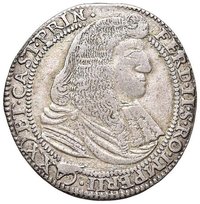
Obverse
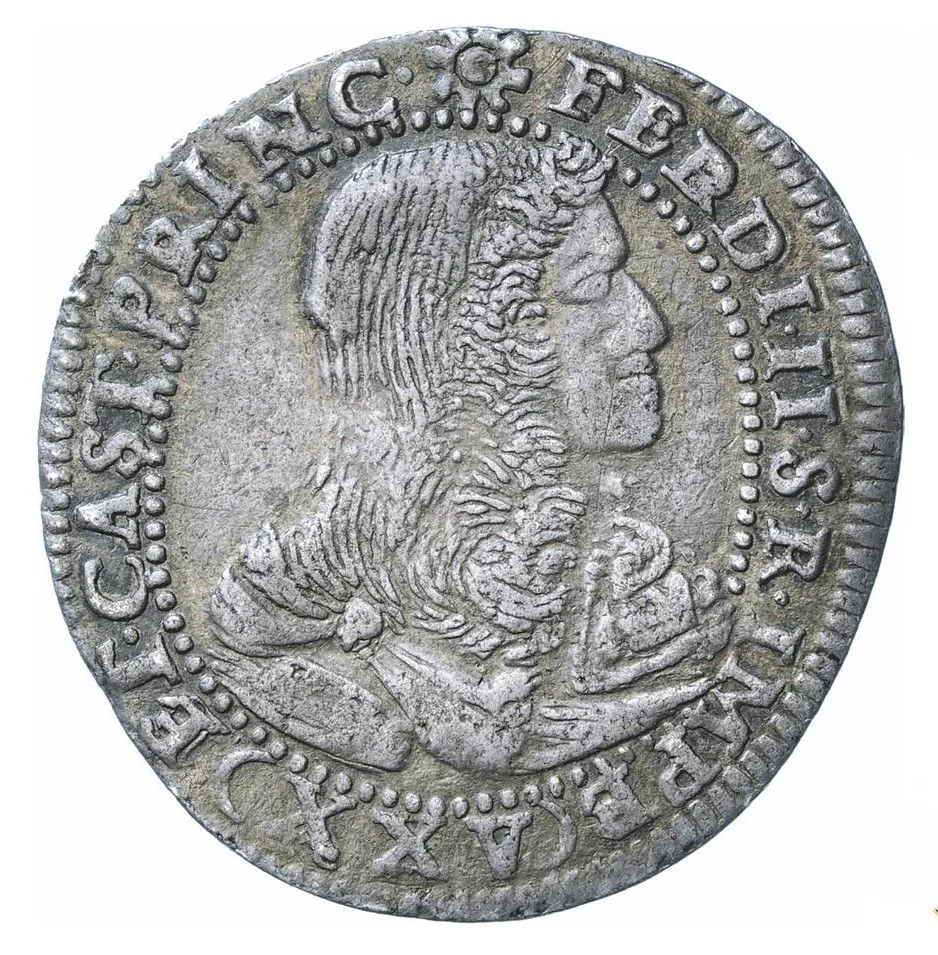
Description:
Bust right in beaded circle. Value in Roman numerals splits legend.
Inscription:
🏵 FERDI · II · S · R · IMPER · ET · CAST · PRINC ·
(XXV)
(XXV)
Script: Latin
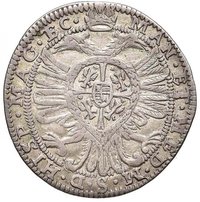
Reverse
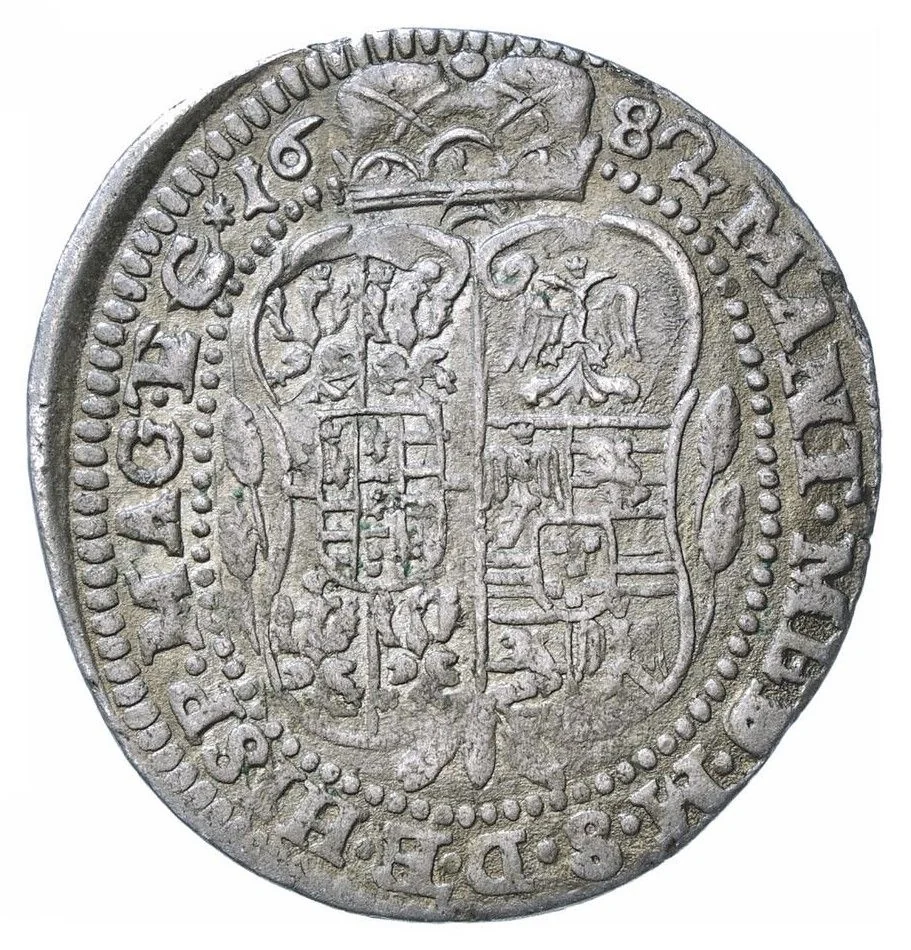
Description:
Crowned Gonzaga arms in a leaf-adorned shield, with the date split by the crown.
Inscription:
MANT · MED · M · S · D · E · HISP · MAG · ETC ⋆ 1682
Script: Latin
Edge
Categories
| Object> Armour |
| Symbols> Coat of Arms |
Mints
| Name | Mark |
|---|---|
| Castiglione delle Stiviere | — |
Mintings
| Year | Mint Mark | Mintage | Quality | Collection |
|---|---|---|---|---|
| 1682 | — | — | ||
| 1683 | — | — |
Historical background
In 1682, Castiglione delle Stiviere, a small but significant town in the Duchy of Mantua, operated within a complex and fragmented monetary landscape typical of the Italian peninsula. The official currency was the Mantuan lira, subdivided into soldi and denari, issued under the authority of Duke Ferdinando Carlo Gonzaga. However, the town's practical economy was dominated by a plethora of foreign coins, reflecting its position on trade routes and the weakness of central minting authority. Spanish reales, Venetian ducats and lire, and even French écus and German thalers circulated widely, their value determined by their precious metal content and subject to constant negotiation and local decree.
This monetary plurality created significant challenges for merchants and officials. Exchange rates between these coins were unstable, leading to frequent public announcements (grida) from the ducal government to fix their legal value in an attempt to prevent fraud and stabilize local commerce. The system was inherently cumbersome, requiring money-changers (campsores) at markets to facilitate everyday transactions. Furthermore, the widespread clipping and debasement of coins were chronic problems, as the Gonzaga state, often in financial straits, periodically reduced the silver content of its own currency to raise short-term funds, eroding public trust.
For the residents of Castiglione, this meant daily economic life was fraught with uncertainty. The value of a payment could depend heavily on the specific mix of coins offered, and savings were vulnerable to sudden devaluation. While the town was not in a state of monetary crisis in 1682, it existed in a persistent condition of complexity and mild instability, where local authorities struggled to impose order on a monetary system intrinsically tied to the ebb and flow of international trade and the fiscal policies of a financially precarious duchy.
This monetary plurality created significant challenges for merchants and officials. Exchange rates between these coins were unstable, leading to frequent public announcements (grida) from the ducal government to fix their legal value in an attempt to prevent fraud and stabilize local commerce. The system was inherently cumbersome, requiring money-changers (campsores) at markets to facilitate everyday transactions. Furthermore, the widespread clipping and debasement of coins were chronic problems, as the Gonzaga state, often in financial straits, periodically reduced the silver content of its own currency to raise short-term funds, eroding public trust.
For the residents of Castiglione, this meant daily economic life was fraught with uncertainty. The value of a payment could depend heavily on the specific mix of coins offered, and savings were vulnerable to sudden devaluation. While the town was not in a state of monetary crisis in 1682, it existed in a persistent condition of complexity and mild instability, where local authorities struggled to impose order on a monetary system intrinsically tied to the ebb and flow of international trade and the fiscal policies of a financially precarious duchy.
✨ Legendary