

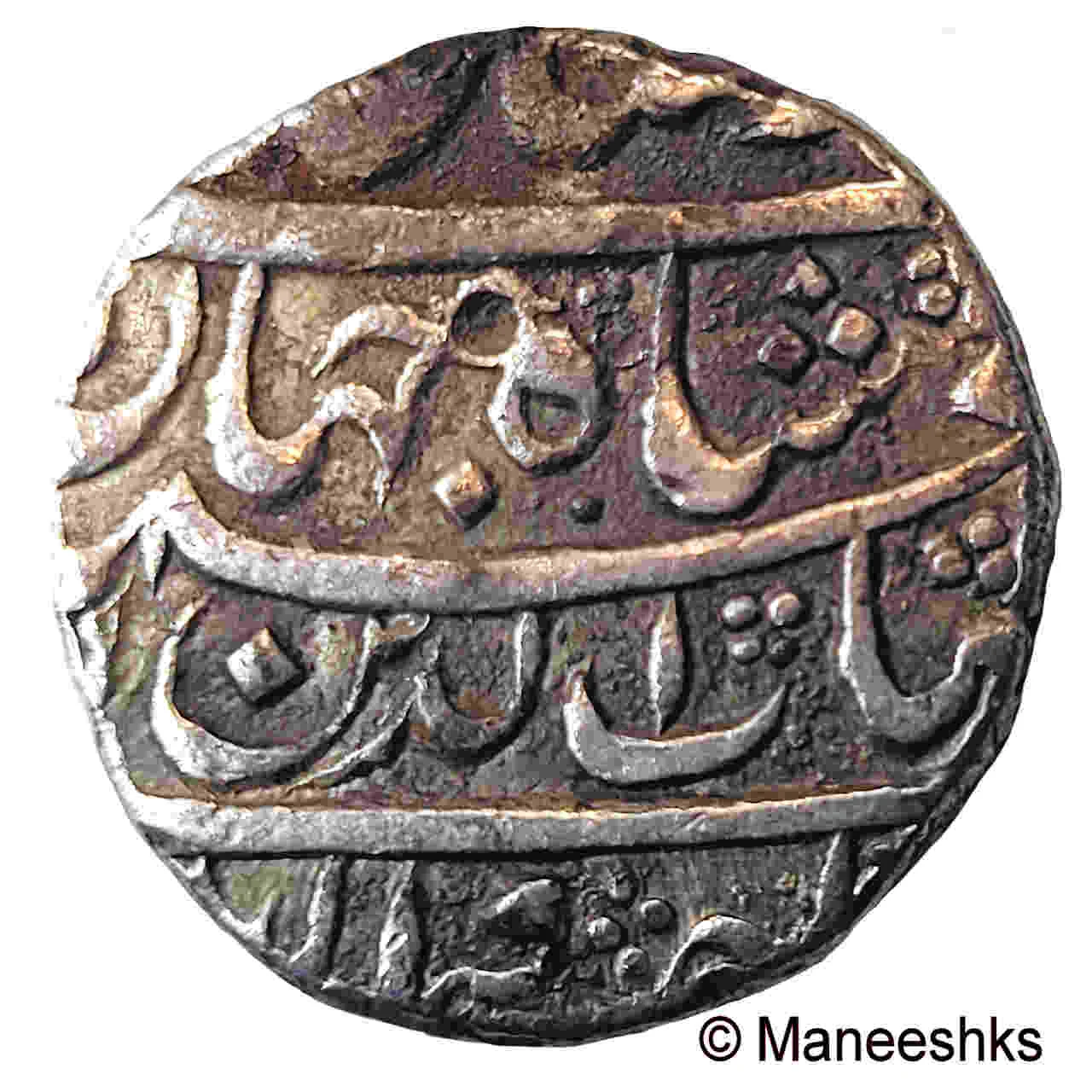
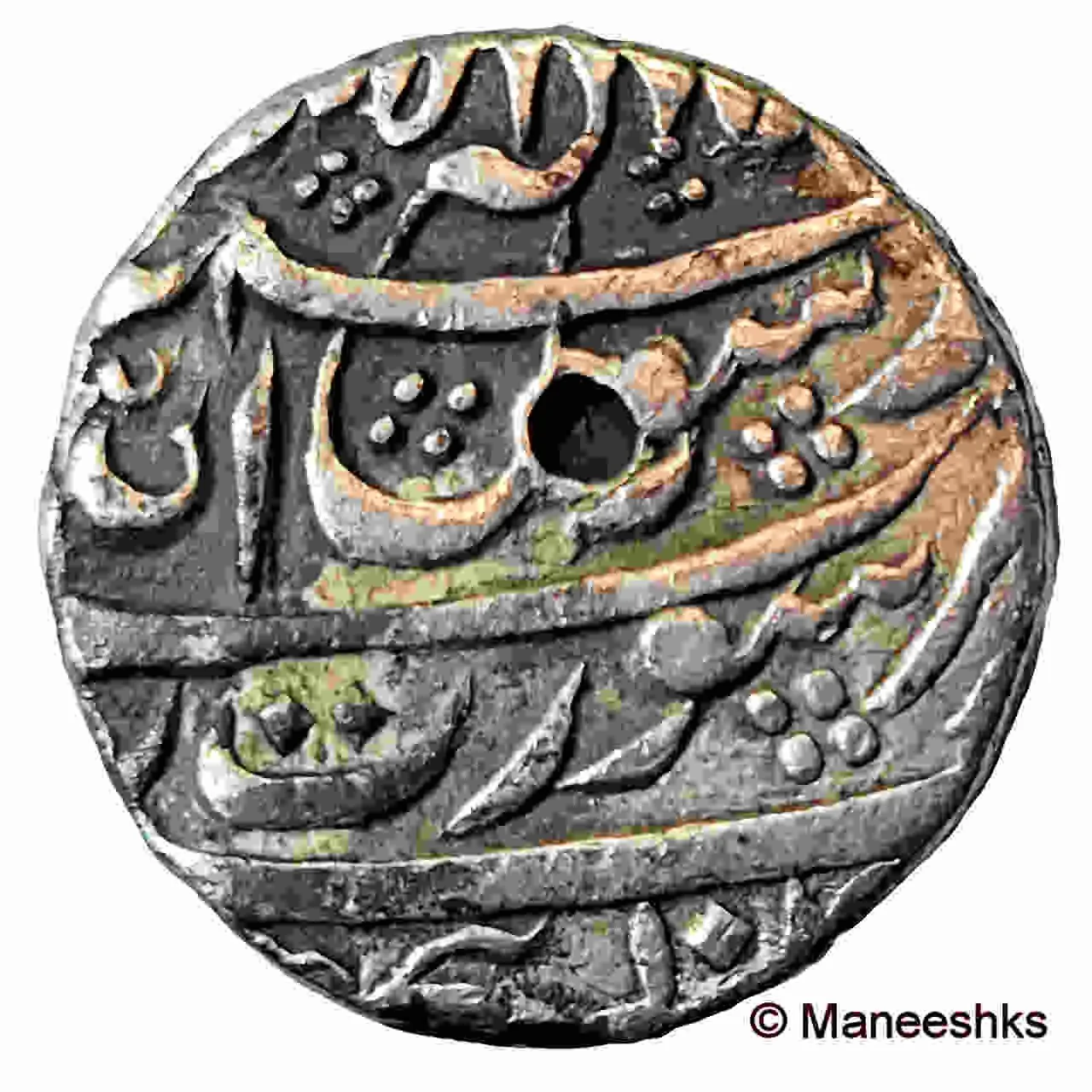
½ Rupee – Mughal Empire
India
Context
Years: 1627–1633
Country: India 
Issuer: Mughal Empire
Ruler: Shah Jahan
Currency:
(1540—1842)
Demonetized: Yes
Material
References
KM: #Click to copy to clipboard213.2
Numista: #393303
Value
Bullion value: $16.57
Obverse
Description:
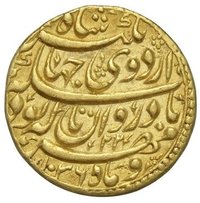
Shahada above, mint and date below.
Reverse
Description:
Shah Jahan, the second "Lord of the Conjunction," a warrior emperor.
Edge
Plain
Mintings
| Year | Mint Mark | Mintage | Quality | Collection |
|---|---|---|---|---|
| — | — | — | ||
| 1628 | — | — | ||
| 1629 | — | — | ||
| 1631 | — | — | ||
| 1632 | — | — |
Historical background
In 1627, the Mughal Empire's currency system was a sophisticated and highly standardized bimetallic structure, firmly established by the administrative reforms of Emperor Akbar (r. 1556–1605). The system revolved around two primary coins: the silver rupee (rupya) and the gold mohur. The rupee, containing nearly pure silver, served as the principal currency for land revenue, large-scale trade, and state finance. The gold mohur, while in circulation, was more a store of value and a unit for hoarding or high-value gifts than a common transactional coin. For everyday use, a smaller copper coin, the dam (worth 1/40th of a rupee), facilitated local bazaar transactions, creating a functional tiered monetary economy.
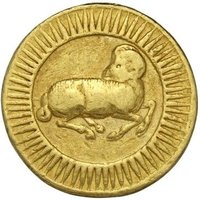
This period, under Emperor Jahangir (r. 1605–1627), was marked by exceptional artistic expression in coinage, but also by underlying strains. Jahangir was famous for his ornate and sometimes whimsical coin designs, including the celebrated "zodiac mohurs" and portrait rupees, which showcased imperial prestige. However, the year 1627 itself was one of transition and uncertainty, as Jahangir died in October, leading to a brief succession struggle before Shah Jahan's accession in 1628. Economically, the empire faced pressure from a steady drain of silver bullion to pay for imports like luxury goods and horses, which could potentially strain the silver-based system, though not yet critically.
The currency's integrity was upheld by a centralized network of imperial mints (sikkas) across major cities like Surat, Ahmedabad, Lahore, and Delhi. These mints maintained strict weight and purity standards, ensuring the rupee's wide acceptance not just within the empire but also in international trade across the Indian Ocean. Thus, in 1627, the Mughal currency was a pillar of imperial authority and economic integration, artistically distinctive under Jahangir's late rule, and fundamentally stable, though on the cusp of a new reign that would demand vast expenditures for monumental projects and military campaigns.
This period, under Emperor Jahangir (r. 1605–1627), was marked by exceptional artistic expression in coinage, but also by underlying strains. Jahangir was famous for his ornate and sometimes whimsical coin designs, including the celebrated "zodiac mohurs" and portrait rupees, which showcased imperial prestige. However, the year 1627 itself was one of transition and uncertainty, as Jahangir died in October, leading to a brief succession struggle before Shah Jahan's accession in 1628. Economically, the empire faced pressure from a steady drain of silver bullion to pay for imports like luxury goods and horses, which could potentially strain the silver-based system, though not yet critically.
The currency's integrity was upheld by a centralized network of imperial mints (sikkas) across major cities like Surat, Ahmedabad, Lahore, and Delhi. These mints maintained strict weight and purity standards, ensuring the rupee's wide acceptance not just within the empire but also in international trade across the Indian Ocean. Thus, in 1627, the Mughal currency was a pillar of imperial authority and economic integration, artistically distinctive under Jahangir's late rule, and fundamentally stable, though on the cusp of a new reign that would demand vast expenditures for monumental projects and military campaigns.
✨ Legendary