

1 fanon – Puducherry
Add to wishlist
India
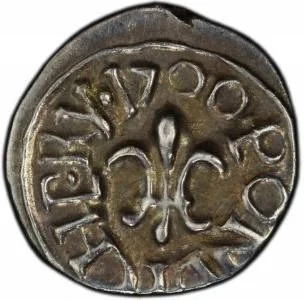
Obverse
Description:
Lis.
Inscription:
PONDICHERY
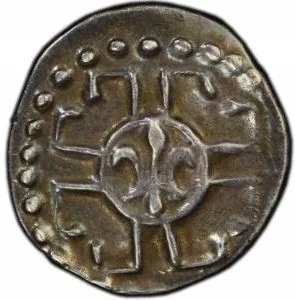
Reverse
Description:
Lis at cross center.
Edge
Mintings
| Year | Mint Mark | Mintage | Quality | Collection |
|---|---|---|---|---|
| 1700 | — | — |
Historical background
In the early 18th century, the currency situation in Puducherry was a complex tapestry reflecting its status as a French colonial enclave amidst a predominantly Indian economic landscape. Following its establishment as a French settlement in 1674, the French East India Company sought to integrate the port into both regional trade networks and the broader French imperial system. Consequently, the monetary environment was characterized by a dual system. Official French colonial transactions, salaries, and trade with other French territories were conducted using French currency, primarily livres tournois and écus, whose value was decreed by the Company administration.
However, the day-to-day economy of the bazaar and regional commerce was dominated by a multitude of Indian currencies. The most significant of these were the gold pagoda and the silver rupee, which circulated widely across South India alongside a variety of smaller copper coins. The Mughal rupee, along with issues from regional powers like the Nawabs of Arcot and the Marathas, were all accepted, their values fluctuating based on weight, purity, and the political fortunes of their issuers. This created a dynamic and often chaotic marketplace where money changers (shroffs) played a critical role in assessing and exchanging this heterogeneous mix of coins.
The French administration attempted to impose order by periodically minting its own coins in Puducherry, such as copper "cash" for small transactions, and by officially fixing exchange rates between French and Indian currencies. These efforts were only partially successful, as the economic gravity of the surrounding subcontinent was overwhelming. Thus, by 1700, Puducherry's currency situation was one of de facto pluralism, where French legal tender coexisted—and often competed—with a fluid and deeply entrenched system of indigenous coinage, a direct reflection of its hybrid identity as a European outpost embedded in the Indian economy.
However, the day-to-day economy of the bazaar and regional commerce was dominated by a multitude of Indian currencies. The most significant of these were the gold pagoda and the silver rupee, which circulated widely across South India alongside a variety of smaller copper coins. The Mughal rupee, along with issues from regional powers like the Nawabs of Arcot and the Marathas, were all accepted, their values fluctuating based on weight, purity, and the political fortunes of their issuers. This created a dynamic and often chaotic marketplace where money changers (shroffs) played a critical role in assessing and exchanging this heterogeneous mix of coins.
The French administration attempted to impose order by periodically minting its own coins in Puducherry, such as copper "cash" for small transactions, and by officially fixing exchange rates between French and Indian currencies. These efforts were only partially successful, as the economic gravity of the surrounding subcontinent was overwhelming. Thus, by 1700, Puducherry's currency situation was one of de facto pluralism, where French legal tender coexisted—and often competed—with a fluid and deeply entrenched system of indigenous coinage, a direct reflection of its hybrid identity as a European outpost embedded in the Indian economy.
✨ Legendary