

1 Akce – Eyalet of Tunis
Tunisia
Context
Year: 1595
Islamic (Hijri) Year: 1003
Country: Tunisia 
Issuer: Eyalet of Tunis
Ruler: Mehmed III
Currency:
(1567—1891)
Demonetized: Yes
Material
References
KM: #Click to copy to clipboard2
Numista: #113051
Value
Bullion value: $0.69
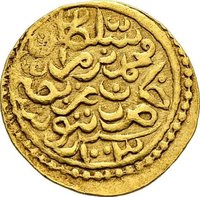
Obverse
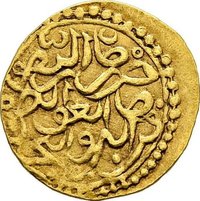
Reverse
Edge
Mintings
| Year | Mint Mark | Mintage | Quality | Collection |
|---|---|---|---|---|
| 1595 | — | — |
Historical background
In 1595, the Eyalet of Tunis operated within a complex and strained monetary system, characteristic of the wider Ottoman Empire during a period of significant fiscal stress. The province, under the rule of the Ottoman-appointed Pasha but with growing autonomy for the local Janissary corps and deys, relied on a multi-currency economy. The official Ottoman akçe, a small silver coin, served as the base unit of account, but its value was severely degraded due to the empire's chronic currency debasements, a practice used to finance prolonged wars and administrative costs. This devaluation created widespread economic instability and complicated both local trade and remittances to Istanbul.
Alongside the debased Ottoman coinage, a variety of foreign silver currencies circulated freely and were often preferred for their reliability. Spanish pieces of eight, Venetian ducats, and other European silver coins flowed into Tunis through maritime trade, piracy, and commerce, forming a more trusted medium for larger transactions. This created a dual system where official accounts were kept in a theoretical unit (akçe) whose real-world value was falling, while actual commerce and state finances increasingly depended on foreign specie. The local authorities also minted some copper mangır for small, everyday transactions, but their value was equally subject to fluctuation and distrust.
The currency situation directly reflected and exacerbated the political tensions within the eyalet. The struggle for control between the Pasha, the Janissary deys, and the corsair community extended to the monetary realm. Effective control over the minting of coinage or the valuation of foreign specie was a key lever of financial power and patronage. The unreliable currency hindered efficient tax collection, complicated the payment of troops—a constant concern for the Janissary rulers—and ultimately placed a burden on the peasantry and artisans, who bore the brunt of price inflation and arbitrary revaluations. Thus, in 1595, the monetary chaos was both a symptom and a cause of the province's fragile political and economic state.
Alongside the debased Ottoman coinage, a variety of foreign silver currencies circulated freely and were often preferred for their reliability. Spanish pieces of eight, Venetian ducats, and other European silver coins flowed into Tunis through maritime trade, piracy, and commerce, forming a more trusted medium for larger transactions. This created a dual system where official accounts were kept in a theoretical unit (akçe) whose real-world value was falling, while actual commerce and state finances increasingly depended on foreign specie. The local authorities also minted some copper mangır for small, everyday transactions, but their value was equally subject to fluctuation and distrust.
The currency situation directly reflected and exacerbated the political tensions within the eyalet. The struggle for control between the Pasha, the Janissary deys, and the corsair community extended to the monetary realm. Effective control over the minting of coinage or the valuation of foreign specie was a key lever of financial power and patronage. The unreliable currency hindered efficient tax collection, complicated the payment of troops—a constant concern for the Janissary rulers—and ultimately placed a burden on the peasantry and artisans, who bore the brunt of price inflation and arbitrary revaluations. Thus, in 1595, the monetary chaos was both a symptom and a cause of the province's fragile political and economic state.
✨ Legendary