

2 Giuli – Papal States
Circulating commemorative coins
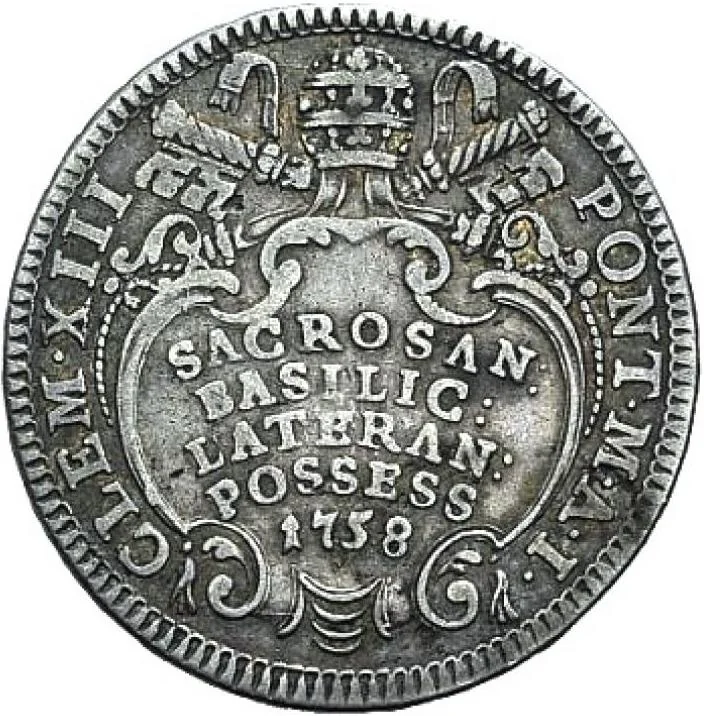
Commemoration: Taking possession of the Lateran, 12th November 1758
Vatican City
Context
Year: 1758
Country: Vatican City 
Issuer: Papal States
Ruler: Clement XIII
Currency:
(1534—1835)
Demonetized: Yes
Material
References
KM: #Click to copy to clipboard980
Numista: #113032
Value
Bullion value: $13.21
Obverse
Description:
Crowned crossed keys above inscription, date in cartouche.
Inscription:
CLEM·XIII PONT·M·A·I·
SACROSAN:
BASILIC:
LATERAN:
POSSESS
1758
SACROSAN:
BASILIC:
LATERAN:
POSSESS
1758
Script: Latin
Reverse
Description:
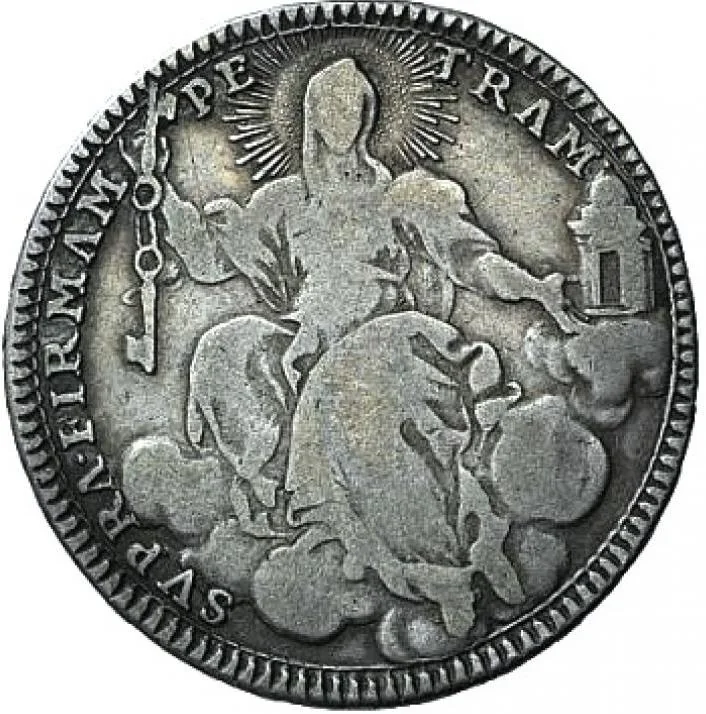
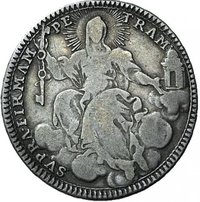
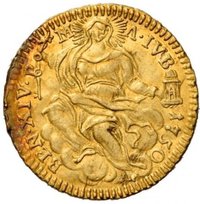
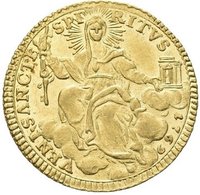
Holy Mother Church enthroned with keys and door.
Inscription:
SVPRA·FIRMAM PE TRAM
Script: Latin
Edge
Embossed leaves
Mints
| Name | Mark |
|---|---|
| Rome | — |
Mintings
| Year | Mint Mark | Mintage | Quality | Collection |
|---|---|---|---|---|
| 1758 | — | — |
Historical background
In 1758, the Papal States, a patchwork of territories in central Italy under the temporal rule of the Pope, operated within a complex and often chaotic monetary system. The situation was characterized by a proliferation of different coins, both domestic and foreign, circulating simultaneously. The official currency was the Papal scudo, divided into 100 baiochi, each of which was further divided into 10 quattrini. However, the actual monetary landscape was dominated by silver coins from other Italian states, Spanish pieces of eight, and various regional issues, leading to constant difficulties in exchange rates and valuation in daily commerce.
This monetary fragmentation was a direct result of weak central minting authority and the economic influence of the Papal States' more powerful neighbors, such as the Kingdom of Naples and the Grand Duchy of Tuscany. Furthermore, the papal government itself frequently resorted to debasement—reducing the precious metal content in coins—to finance its expenditures and address budget shortfalls. This practice, while providing short-term revenue, eroded public trust in the currency, encouraged hoarding of older, purer coins (Gresham's Law in action), and fueled price inflation, placing a burden on the local economy and the populace.
Pope Benedict XIV, reigning in 1758, was aware of these monetary disorders and had undertaken some reform efforts earlier in his pontificate, including an attempt to standardize weights and measures. However, a comprehensive and effective reform of the currency system remained elusive. The fundamental structural issues—political fragmentation, fiscal pressure on the papal treasury, and the sheer volume of foreign coin—persisted. Thus, the monetary situation in 1758 was one of entrenched instability, reflecting the broader administrative and economic challenges facing the Papal States in the mid-18th century.
This monetary fragmentation was a direct result of weak central minting authority and the economic influence of the Papal States' more powerful neighbors, such as the Kingdom of Naples and the Grand Duchy of Tuscany. Furthermore, the papal government itself frequently resorted to debasement—reducing the precious metal content in coins—to finance its expenditures and address budget shortfalls. This practice, while providing short-term revenue, eroded public trust in the currency, encouraged hoarding of older, purer coins (Gresham's Law in action), and fueled price inflation, placing a burden on the local economy and the populace.
Pope Benedict XIV, reigning in 1758, was aware of these monetary disorders and had undertaken some reform efforts earlier in his pontificate, including an attempt to standardize weights and measures. However, a comprehensive and effective reform of the currency system remained elusive. The fundamental structural issues—political fragmentation, fiscal pressure on the papal treasury, and the sheer volume of foreign coin—persisted. Thus, the monetary situation in 1758 was one of entrenched instability, reflecting the broader administrative and economic challenges facing the Papal States in the mid-18th century.
✨ Legendary