

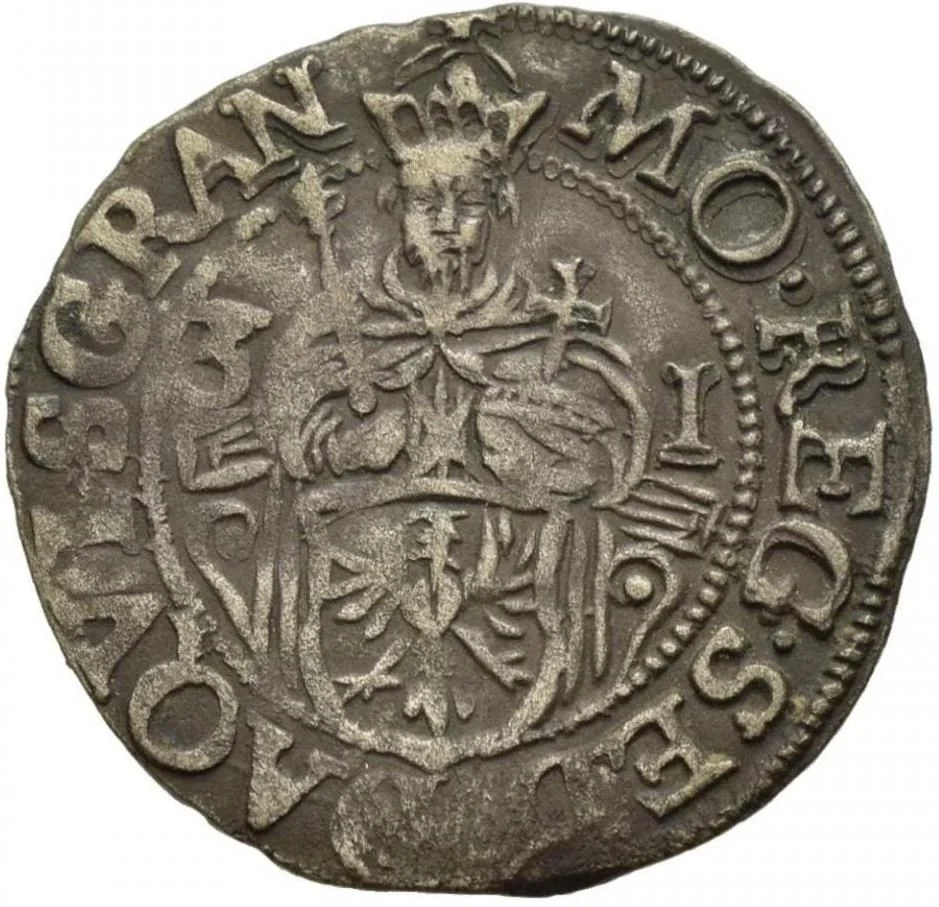

Obverse
Description:
Charlemagne half-figure above arms, date.
Inscription:
MO REG SED DAQVISGRAN
3 1
3 1
Script: Latin
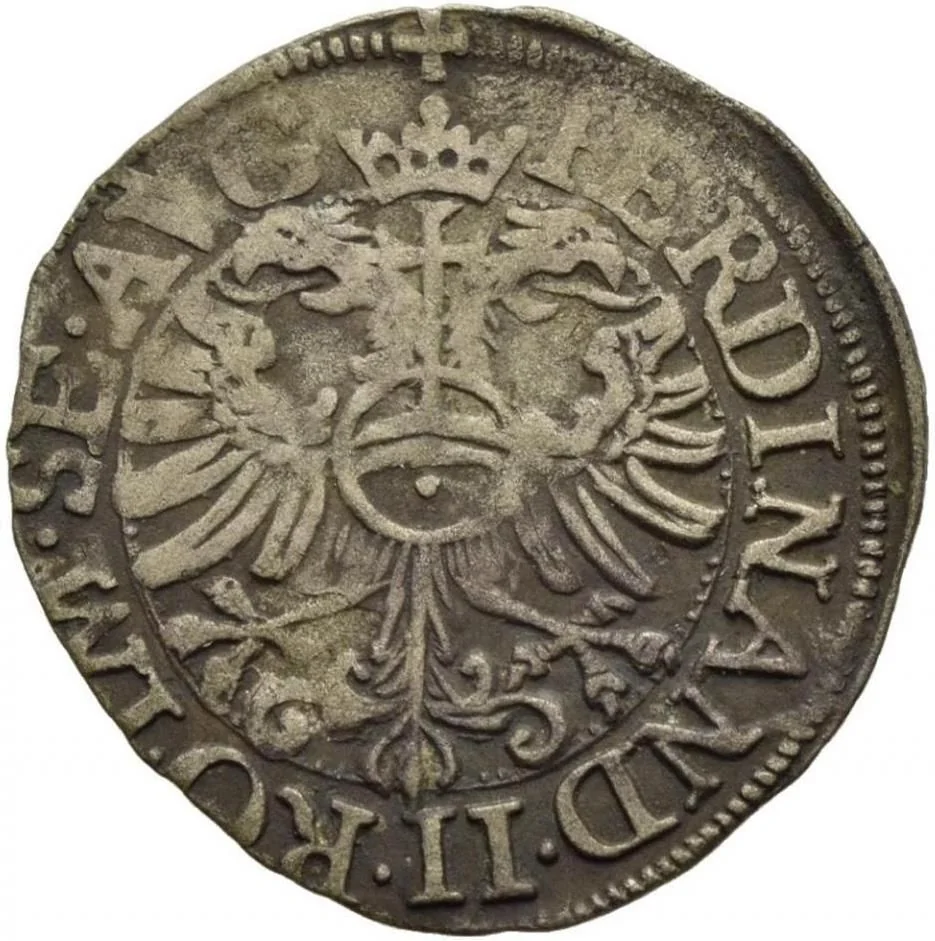
Reverse
Description:
Ferdinand II's imperial eagle.
Inscription:
FERDINAND II RO IM SE AVG
Edge
Mintings
| Year | Mint Mark | Mintage | Quality | Collection |
|---|---|---|---|---|
| 1631 | — | — | ||
| 1633 | — | — |
Historical background
In 1631, the Free Imperial City of Aachen was entangled in the profound monetary chaos of the Thirty Years' War. As a key trading centre within the Holy Roman Empire, Aachen's economy was acutely vulnerable to the region's widespread financial instability. The city's official currency, the Reichsthaler, was theoretically governed by imperial monetary ordinances, but in practice, its value and availability were severely disrupted. The war had fractured the imperial monetary system, leading to a flood of debased coinage from various warring princes and territories circulating alongside Aachen's own issues, causing rampant inflation and a loss of public trust in coinage.
This period saw Aachen's mint, like many others, engaging in Kipper- und Wipperzeit practices—the clipping and debasement of coins to create short-term revenue for the city's defence and obligations. While providing immediate funds, this strategy eroded the intrinsic silver content of coins, accelerating a vicious cycle where newer coins were worth less than older ones. Merchants and citizens became wary, often hoarding older, higher-value coins or demanding payment in weighed silver bullion, which further stifled everyday commerce and the city’s famed trade fairs.
Consequently, Aachen's authorities faced the immense challenge of maintaining fiscal sovereignty and economic stability. They had to balance the urgent need for war finances with the long-term necessity of preserving the credibility of their currency to protect both the city's treasury and its commercial livelihood. The situation in 1631 was thus a microcosm of the Empire's wider crisis: a struggle to uphold a stable monetary order amidst the corrosive pressures of war, where the value of money was as contested as the battlefield itself.
This period saw Aachen's mint, like many others, engaging in Kipper- und Wipperzeit practices—the clipping and debasement of coins to create short-term revenue for the city's defence and obligations. While providing immediate funds, this strategy eroded the intrinsic silver content of coins, accelerating a vicious cycle where newer coins were worth less than older ones. Merchants and citizens became wary, often hoarding older, higher-value coins or demanding payment in weighed silver bullion, which further stifled everyday commerce and the city’s famed trade fairs.
Consequently, Aachen's authorities faced the immense challenge of maintaining fiscal sovereignty and economic stability. They had to balance the urgent need for war finances with the long-term necessity of preserving the credibility of their currency to protect both the city's treasury and its commercial livelihood. The situation in 1631 was thus a microcosm of the Empire's wider crisis: a struggle to uphold a stable monetary order amidst the corrosive pressures of war, where the value of money was as contested as the battlefield itself.

✨ Legendary