

½ Thaler – Teutonic Order
Germany
Context
Material
Weight: 11 g
Silver weight: 9.35 g
Shape: Irregular round
Composition: 85% Silver
Magnetic: No
Technique: Hammered
References
KM: #Click to copy to clipboard17
Numista: #376748
Value
Bullion value: $27.04
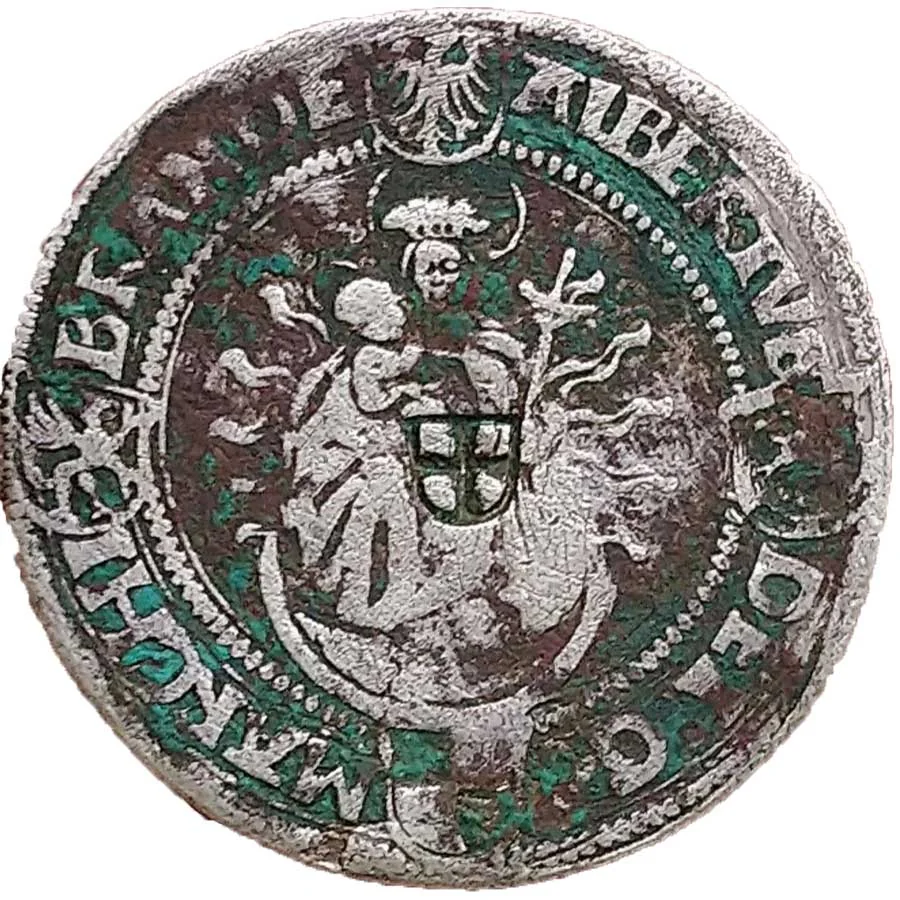
Obverse
Description:
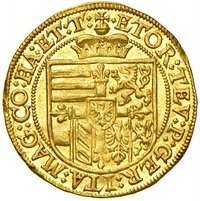
Madonna and Child, radiant, with four small shields (Brandenburg, Nürnberg, Hohenzollern, Pomerania) and Albrecht's titles in the margin.
Reverse
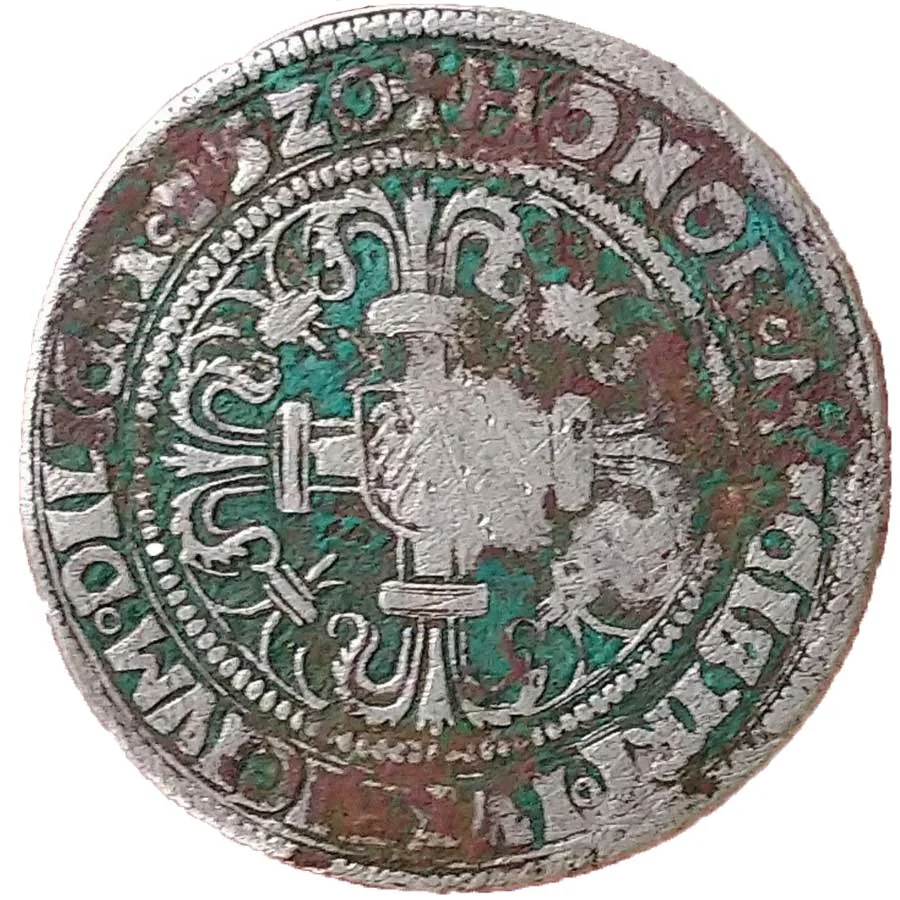
Description:
Ornate cross with central eagle arms and marginal date.
Edge
Mintings
| Year | Mint Mark | Mintage | Quality | Collection |
|---|---|---|---|---|
| 1520 | — | — | ||
| 1521 | — | — |
Historical background
By 1520, the Teutonic Order's Prussian state faced a severe and multifaceted currency crisis, a direct symptom of its broader political and economic decline. The state's finances were crippled by the massive indemnity payments imposed after its catastrophic defeat by Poland-Lithuania in the Thirteen Years' War (1454-1466). To meet these obligations and fund its ongoing administrative costs, the Order's Grand Masters, notably Albert of Brandenburg-Ansbach (elected in 1511), resorted to repeated debasement of the coinage. This meant reducing the precious metal content in coins like the Schilling while maintaining their face value, a short-term measure that eroded public trust and sparked rampant inflation.
The monetary landscape was further complicated by the widespread circulation of foreign and superior-quality coins, particularly Polish and Hungarian gold ducats and silver groschen. These stable currencies were preferred in trade, leading to Gresham's Law in practice: "bad money drives out good." The debased Teutonic coins remained in local circulation, while "good" foreign and hoarded sound money flowed out of the state, exacerbating the scarcity of reliable currency. This situation disrupted commerce, harmed creditors, and created significant uncertainty for both the urban merchant class in cities like Königsberg and the rural peasantry.
This financial instability was inextricably linked to Grand Master Albert's desperate political maneuvering. His attempts to centralize power and raise funds for a potential conflict with Poland alienated the Order's own Prussian estates (the nobility and towns). The currency crisis thus became a key point of contention, fueling the growing discontent that would soon culminate in the decisive break from the Order's rule. Within a few years, Albert, recognizing the state's insolvency and seeking a political solution, would secularize the Prussian territory and adopt Lutheranism, becoming the first Duke of Prussia as a vassal of the Polish Crown in 1525. The monetary chaos of 1520 was, therefore, a critical financial precursor to the Order's political dissolution.
The monetary landscape was further complicated by the widespread circulation of foreign and superior-quality coins, particularly Polish and Hungarian gold ducats and silver groschen. These stable currencies were preferred in trade, leading to Gresham's Law in practice: "bad money drives out good." The debased Teutonic coins remained in local circulation, while "good" foreign and hoarded sound money flowed out of the state, exacerbating the scarcity of reliable currency. This situation disrupted commerce, harmed creditors, and created significant uncertainty for both the urban merchant class in cities like Königsberg and the rural peasantry.
This financial instability was inextricably linked to Grand Master Albert's desperate political maneuvering. His attempts to centralize power and raise funds for a potential conflict with Poland alienated the Order's own Prussian estates (the nobility and towns). The currency crisis thus became a key point of contention, fueling the growing discontent that would soon culminate in the decisive break from the Order's rule. Within a few years, Albert, recognizing the state's insolvency and seeking a political solution, would secularize the Prussian territory and adopt Lutheranism, becoming the first Duke of Prussia as a vassal of the Polish Crown in 1525. The monetary chaos of 1520 was, therefore, a critical financial precursor to the Order's political dissolution.
✨ Legendary