

1 Ducat – Sweden
Sweden
Context
Years: 1677–1695
Issuer: Sweden 
Ruler: Charles XI
Currency:
(1665—1715)
Demonetized: Yes
Total mintage: 132,720
Material
References
KM: #Click to copy to clipboard283
Numista: #37562
Value
Bullion value: $563.98
Obverse
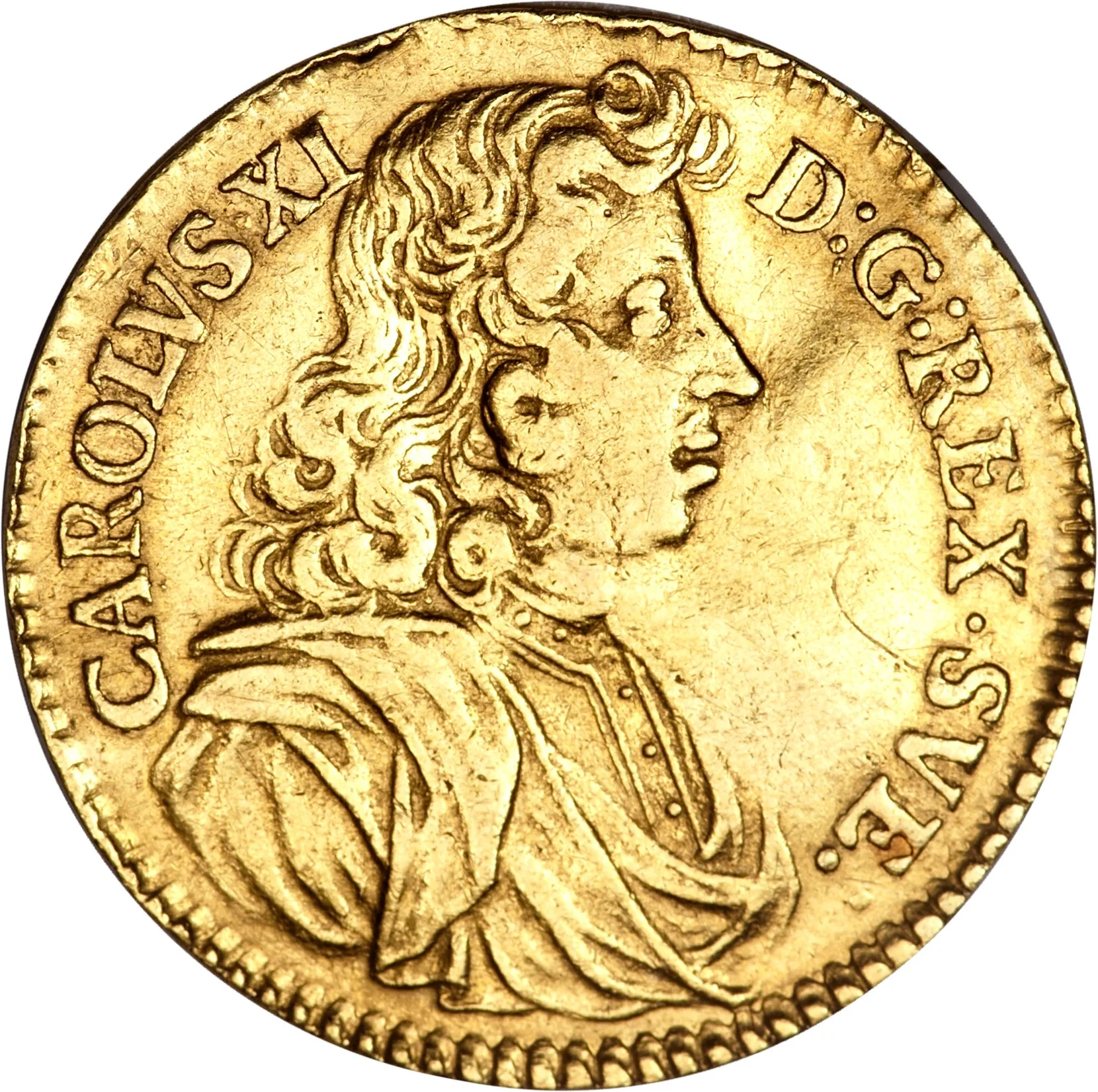
Description:
Carl XI bust facing right. Many varieties exist.
Inscription:
CAROLVS XI D:G:REX·SVE.
Script: Latin
Reverse
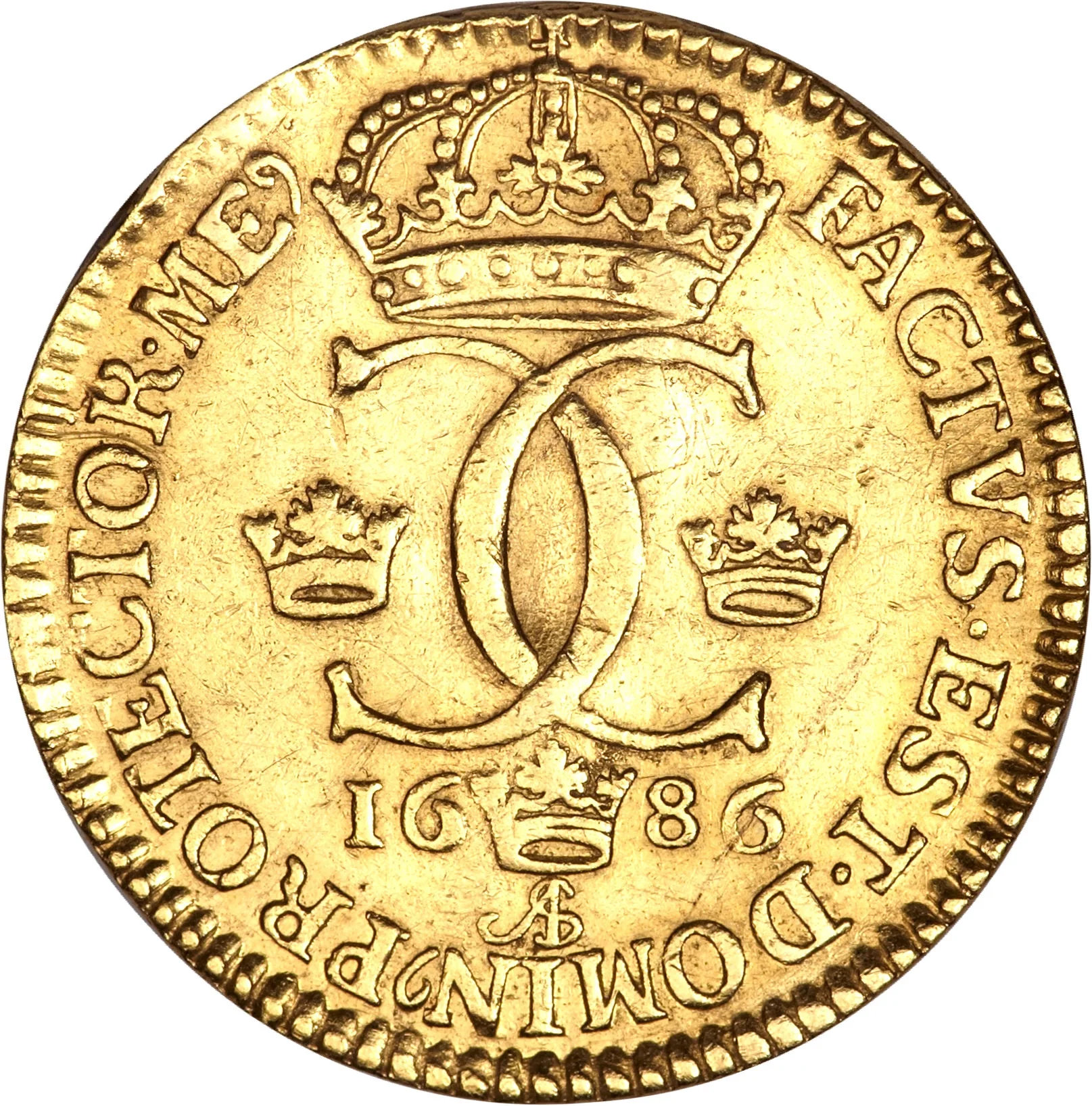
Description:
Crowned double C monogram, three crowns, date below.
Inscription:
FACTVS·EST·DOMIN PROTECTOR·ME
CC
16 86
CC
16 86
Script: Latin
Edge
Mintings
| Year | Mint Mark | Mintage | Quality | Collection |
|---|---|---|---|---|
| 1677 | — | 13,879 | ||
| 1678 | — | 9,001 | ||
| 1679 | — | 16,341 | ||
| 1680 | — | 12,567 | ||
| 1681 | — | 12,315 | ||
| 1682 | — | 2,617 | ||
| 1683 | — | 10,913 | ||
| 1684 | — | 3,943 | ||
| 1685 | — | 11,917 | ||
| 1686 | AS | 6,312 | ||
| 1687 | — | 9,473 | ||
| 1688 | — | 5,513 | ||
| 1689 | — | 3,809 | ||
| 1690 | — | — | ||
| 1691 | — | 5,897 | ||
| 1692 | — | 2,785 | ||
| 1694 | — | 3,755 | ||
| 1695 | — | 1,683 |
Historical background
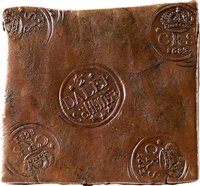
In 1677, Sweden was embroiled in the Scanian War (1675–1679), a costly conflict primarily against Denmark-Norway that placed immense strain on the state treasury. To finance the war effort, the Swedish government, under the young King Charles XI, resorted to the repeated debasement of the already troubled copper currency. The Swedish monetary system was uniquely based on a cumbersome copper standard, where large plate money (plåtmynt) circulated alongside silver coins. The war necessitated the minting of vast quantities of these copper coins, but with a steadily reduced copper content, leading to rapid inflation and a severe loss of public confidence in the currency.
The economic situation was dire. As the intrinsic value of the coinage fell, prices for essential goods like grain soared, causing widespread hardship among the population and complicating the logistics of supplying the army. The disparity between the official face value of the coins and their actual metal worth created a chaotic monetary environment. This period highlighted the critical weaknesses of Sweden's copper-based system, which was ill-suited for the financial demands of protracted warfare and contributed to a deepening economic crisis on the home front.
This currency instability of 1677 became a pivotal catalyst for future reform. The experience of wartime finance and its inflationary consequences directly informed the major monetary and fiscal overhaul that would follow after the war’s conclusion. The reduktion (reclamation) of alienated crown lands and the establishment of a stronger royal autocracy under Charles XI were, in part, solutions born from the financial chaos of this period, ultimately leading to the shift toward a more stable silver standard later in his reign.
The economic situation was dire. As the intrinsic value of the coinage fell, prices for essential goods like grain soared, causing widespread hardship among the population and complicating the logistics of supplying the army. The disparity between the official face value of the coins and their actual metal worth created a chaotic monetary environment. This period highlighted the critical weaknesses of Sweden's copper-based system, which was ill-suited for the financial demands of protracted warfare and contributed to a deepening economic crisis on the home front.
This currency instability of 1677 became a pivotal catalyst for future reform. The experience of wartime finance and its inflationary consequences directly informed the major monetary and fiscal overhaul that would follow after the war’s conclusion. The reduktion (reclamation) of alienated crown lands and the establishment of a stronger royal autocracy under Charles XI were, in part, solutions born from the financial chaos of this period, ultimately leading to the shift toward a more stable silver standard later in his reign.
✨ Legendary