

8 Mark – Sweden
Sweden
Context
Year: 1670
Issuer: Sweden 
Ruler: Charles XI
Currency:
(1665—1715)
Demonetized: Yes
Total mintage: 4,223
Material
Diameter: 42 mm
Weight: 31.35 g
Silver weight: 28.90 g
Shape: Round
Composition: 92.2% Silver
Standard: Silver ounce
Magnetic: No
References
KM: #Click to copy to clipboard275
Numista: #37559
Value
Bullion value: $82.68
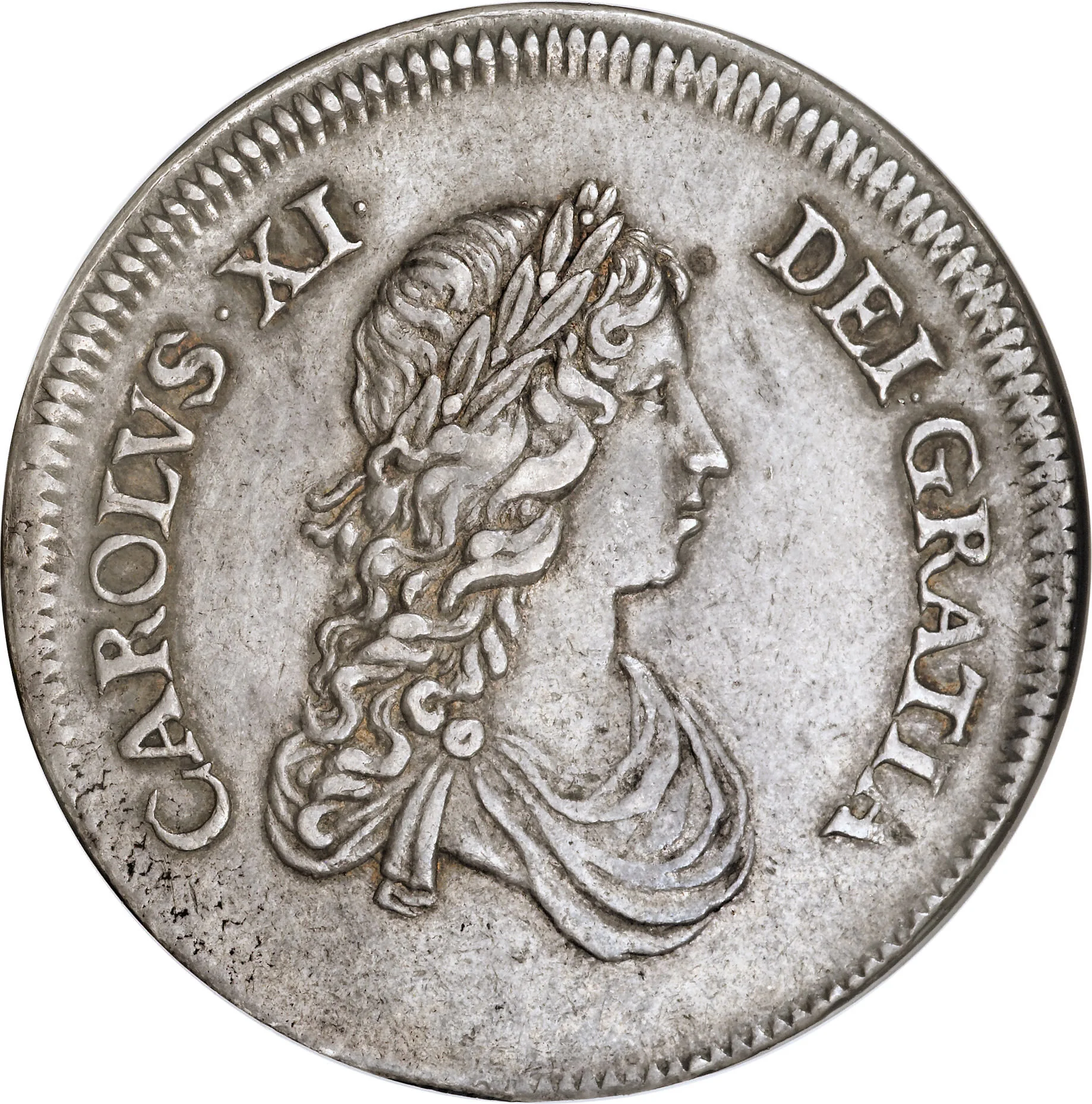
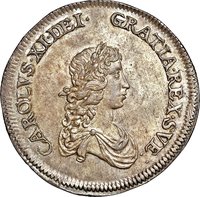
Obverse
Description:
Carl XI laureate bust right divides legend.
Inscription:
CAROLVS.XI. DEI.GRATIA
Script: Latin
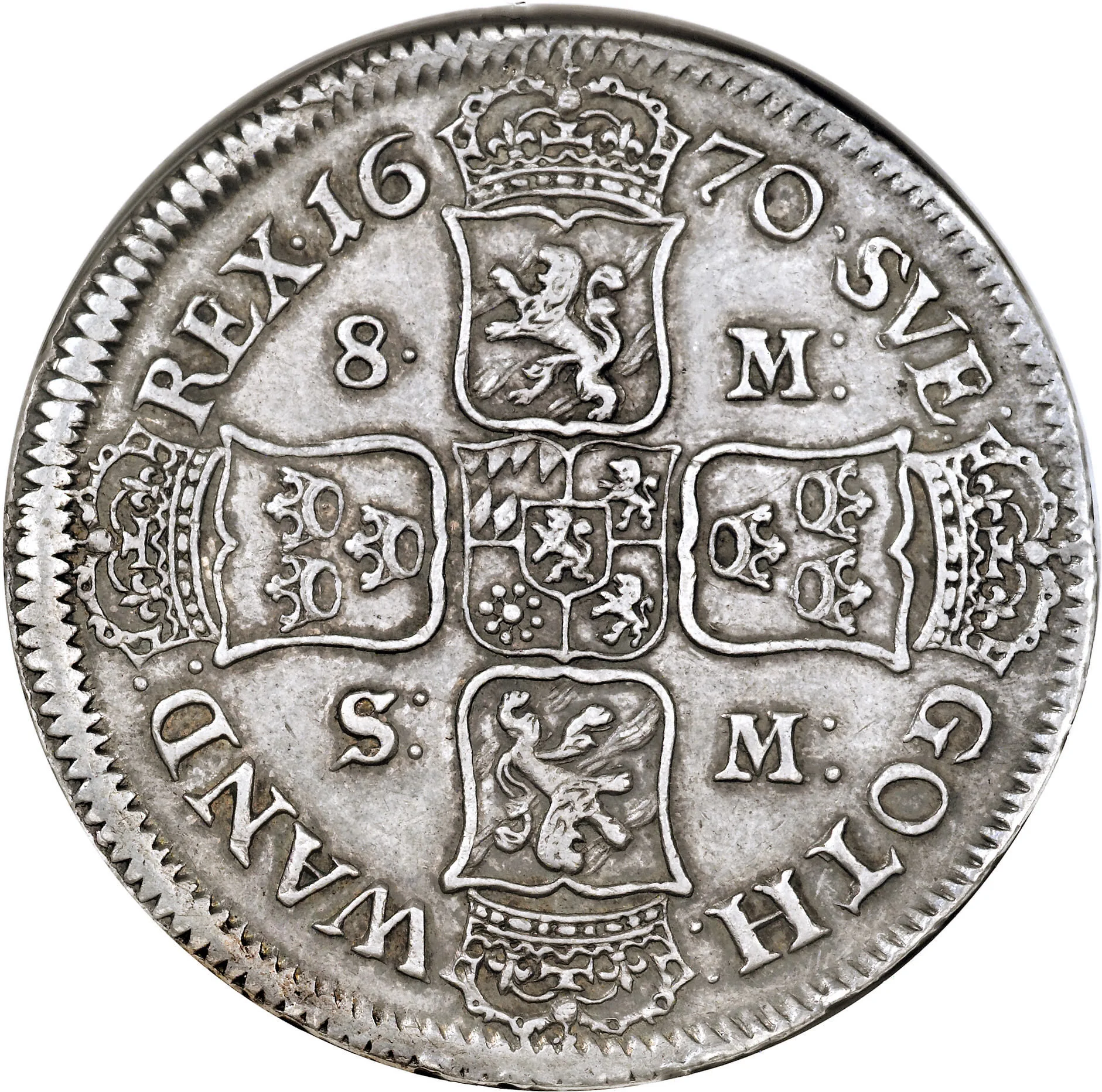
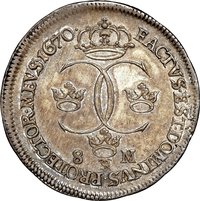
Reverse
Description:
Crowned shields crosswise, Swedish shield central, value in field.
Inscription:
1670
.SVE: GOTH: WAND: REX.
8. M:
S: M:
.SVE: GOTH: WAND: REX.
8. M:
S: M:
Script: Latin
Edge
Mintings
| Year | Mint Mark | Mintage | Quality | Collection |
|---|---|---|---|---|
| 1670 | — | 4,223 |
Historical background
In 1670, Sweden was grappling with the severe economic and monetary consequences of its period as a European great power. The kingdom’s finances had been drained by decades of warfare, most recently the expensive and damaging Scanian War (1675–1679). To fund these military ambitions, the state had repeatedly debased the copper coinage, which formed the backbone of Sweden’s unique bi-metallic system alongside silver. This resulted in a chronic oversupply of heavy copper daler plates, causing inflation, logistical headaches, and a deep loss of public confidence in the currency.
The situation was defined by a complex and dysfunctional exchange rate between the copper daler and the silver daler. Officially, a silver daler was worth two copper daler, but in practice, the market rate was far worse, with silver coins commanding a high premium. This created a dual circulation where good silver coins were hoarded or used for foreign trade, while bulky copper coins dominated domestic transactions. The government, under the regency for the young King Charles XI, faced a collapsing credit system and struggled to meet its obligations, as the real value of its copper-based revenue was plummeting.
Consequently, the year 1670 fell within a period of intense financial crisis and precursor to major reform. The state attempted stopgap measures, including issuing yet more debased coinage, but these only worsened the inflationary spiral. The profound monetary instability of this era would ultimately force a dramatic solution: the Great Coinage Recession of 1674–1675, where the state would call in all old currency and issue new, stabilized coins, a painful but necessary step to restore fiscal order in the aftermath of Sweden’s imperial overreach.
The situation was defined by a complex and dysfunctional exchange rate between the copper daler and the silver daler. Officially, a silver daler was worth two copper daler, but in practice, the market rate was far worse, with silver coins commanding a high premium. This created a dual circulation where good silver coins were hoarded or used for foreign trade, while bulky copper coins dominated domestic transactions. The government, under the regency for the young King Charles XI, faced a collapsing credit system and struggled to meet its obligations, as the real value of its copper-based revenue was plummeting.
Consequently, the year 1670 fell within a period of intense financial crisis and precursor to major reform. The state attempted stopgap measures, including issuing yet more debased coinage, but these only worsened the inflationary spiral. The profound monetary instability of this era would ultimately force a dramatic solution: the Great Coinage Recession of 1674–1675, where the state would call in all old currency and issue new, stabilized coins, a painful but necessary step to restore fiscal order in the aftermath of Sweden’s imperial overreach.
✨ Legendary