

1⁄12 silver ecu – France
Add to wishlist
France
Context
Material
References
KM: #
Numista: #37549
Value
Bullion value: $5.16
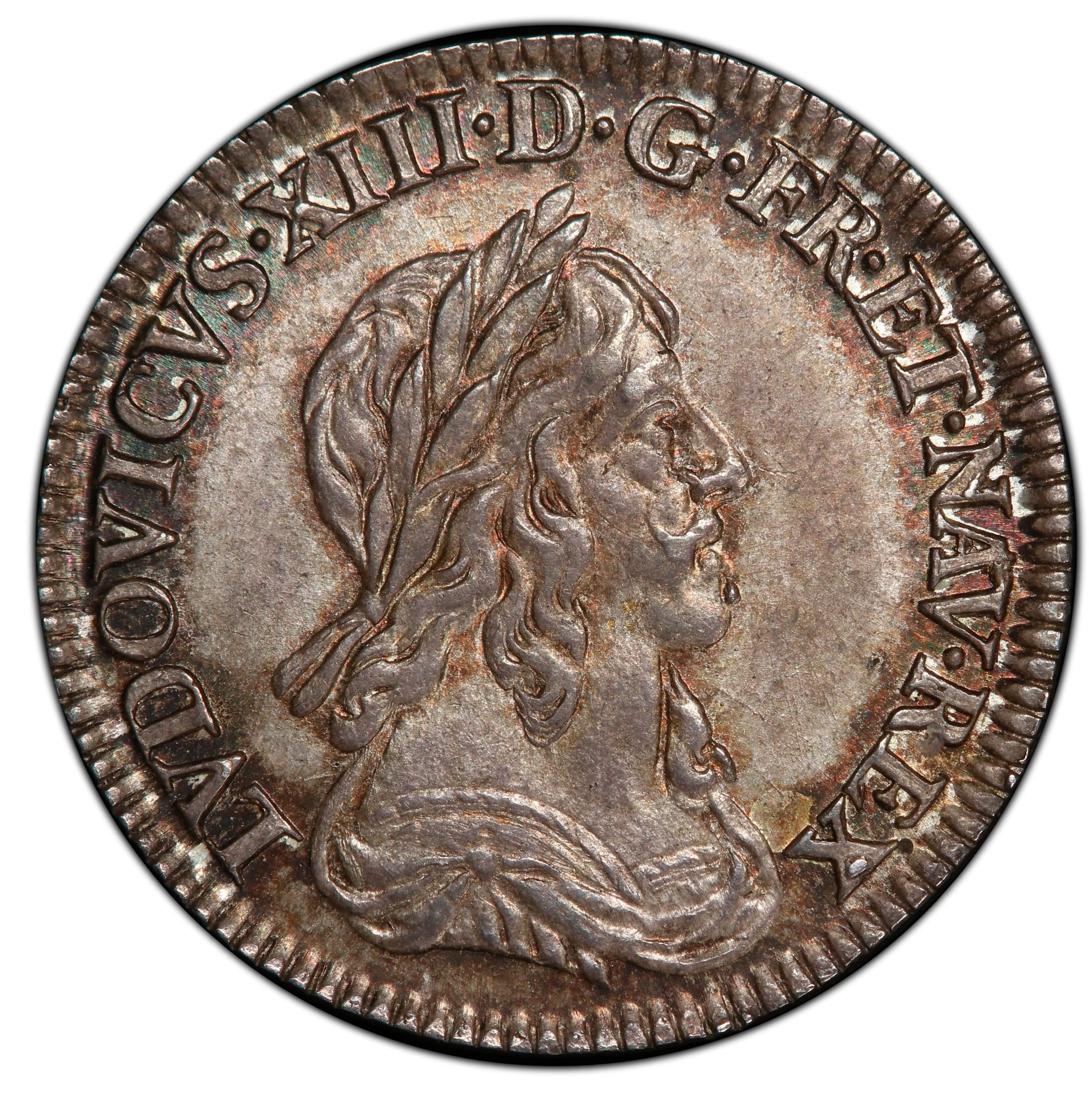
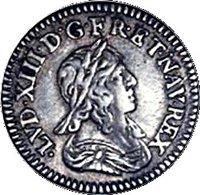
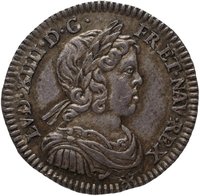
Obverse
Description:
Laureate draped bust right.
Inscription:
LVDOVICVS•XIII•D•G• FR•ET•NAV•REX
Script: Latin
Engraver: Jean Warin
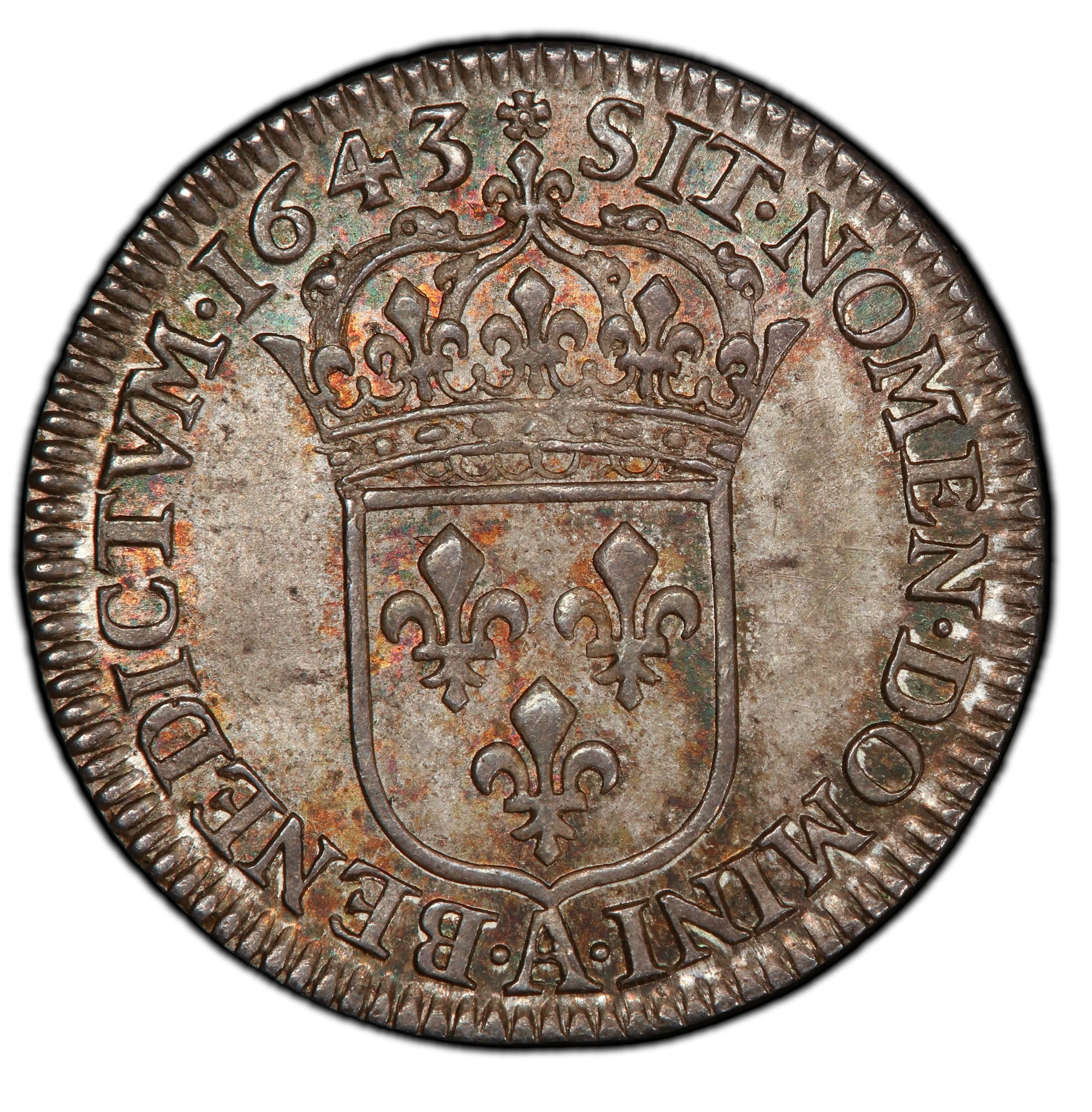
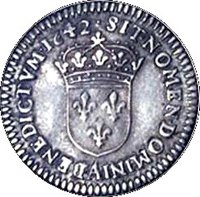
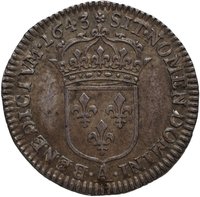
Reverse
Description:
Crowned coat of arms.
Inscription:
SIT•NOMEN•DOMINI• A •BENEDICTVM•1643
Script: Latin
Engraver: Jean Warin
Edge
Plain
Categories
| Person> Monarch |
| Symbols> Coat of Arms |
Mintings
| Year | Mint Mark | Mintage | Quality | Collection |
|---|---|---|---|---|
| 1642 | A | — | ||
| 1643 | A | — | ||
| 1643 | D | — |
Historical background
In 1642, France was in the midst of the long and financially draining Thirty Years' War, placing immense strain on the royal treasury under King Louis XIII and his chief minister, Cardinal Richelieu. The primary currency system was based on the livre tournois (a unit of account), the écu (a silver coin), and the louis d'or (a gold coin, introduced in 1640). However, the state's desperate need for revenue led to repeated monetary manipulations. The Crown frequently engaged in the practice of augmentation—officially raising the face value of coins—and diminution—lowering their metal content, thereby debasing the currency to create short-term profit from seigniorage.
This period was marked by significant instability and inflation. Richelieu's policies, while aimed at centralizing power and funding the war, often resulted in erratic changes to coin values, confusing markets and eroding public trust. The introduction of the new, purer louis d'or in 1640 was an attempt to restore confidence and establish a stable gold standard, but its benefits were undermined by the ongoing fiscal pressures. Merchants and peasants alike suffered, as the real value of money fluctuated unpredictably, disrupting trade, increasing prices, and effectively acting as a hidden tax on the population.
Consequently, the currency situation of 1642 was a paradox of reform and degradation. While France possessed technically advanced and beautiful coins from its Paris mint, the state's fiscal policy was one of expediency and manipulation. This financial turbulence contributed to widespread social discontent, which would later erupt in the civil wars of the Fronde (1648-1653) following the death of Louis XIII and Richelieu. Thus, the monetary chaos of this period was both a symptom and a cause of the profound political and economic challenges facing the French monarchy.
This period was marked by significant instability and inflation. Richelieu's policies, while aimed at centralizing power and funding the war, often resulted in erratic changes to coin values, confusing markets and eroding public trust. The introduction of the new, purer louis d'or in 1640 was an attempt to restore confidence and establish a stable gold standard, but its benefits were undermined by the ongoing fiscal pressures. Merchants and peasants alike suffered, as the real value of money fluctuated unpredictably, disrupting trade, increasing prices, and effectively acting as a hidden tax on the population.
Consequently, the currency situation of 1642 was a paradox of reform and degradation. While France possessed technically advanced and beautiful coins from its Paris mint, the state's fiscal policy was one of expediency and manipulation. This financial turbulence contributed to widespread social discontent, which would later erupt in the civil wars of the Fronde (1648-1653) following the death of Louis XIII and Richelieu. Thus, the monetary chaos of this period was both a symptom and a cause of the profound political and economic challenges facing the French monarchy.
🌟 Limited