

½ Franc – France
France
Context

Material
References
KM: #Click to copy to clipboard119
Numista: #37528
Value
Bullion value: $17.03
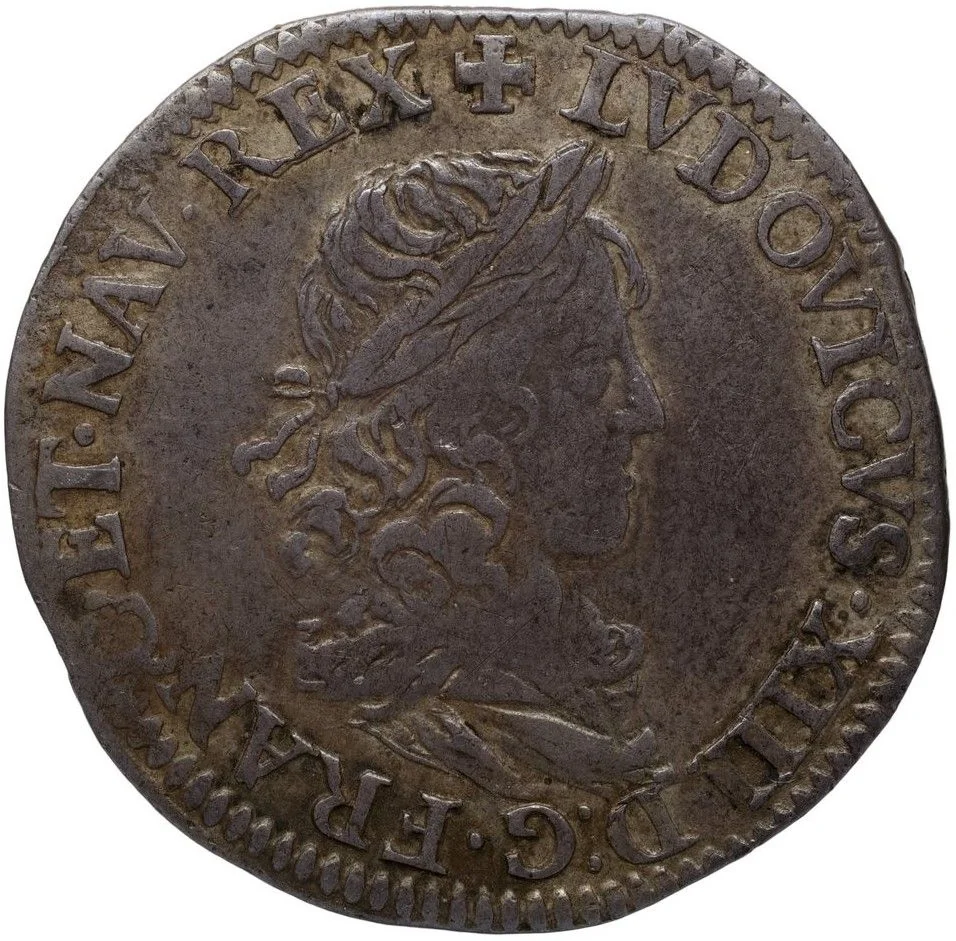
Obverse
Description:
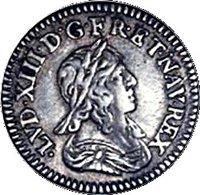
Laureate bust right.
Inscription:
+ LVDOVICVS. XIII. D: G. FRANC. ET. NAV. REX.
Script: Latin
Engraver: Darmand Lorfelin
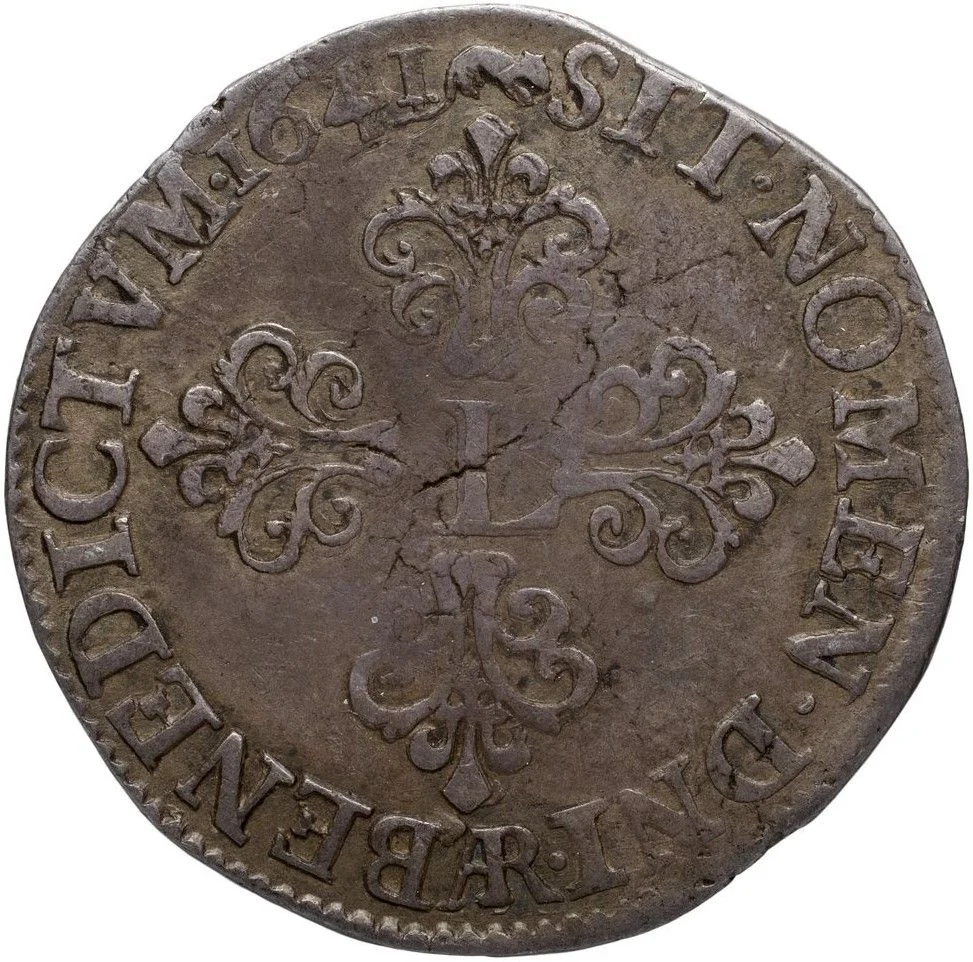
Reverse
Description:
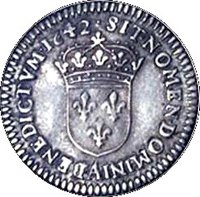
Cross fleury with centered L.
Inscription:
SIT. NOMEN. DNI. BENEDICTVM. 1641
L
AR
L
AR
Script: Latin
Engraver: Darmand Lorfelin
Edge
Plain
Historical background
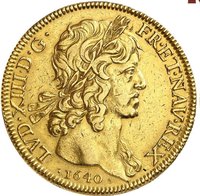
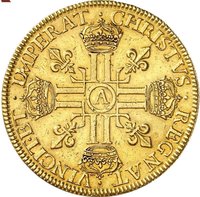
In 1641, France was in the midst of a profound monetary crisis, a direct consequence of the financial demands of the Thirty Years' War and the domestic conflicts of the Fronde. The French crown, under Louis XIII and his chief minister Cardinal Richelieu, was engaged in expensive military campaigns, leading to chronic budget deficits. To meet these obligations, the government repeatedly resorted to debasing the coinage—reducing the precious metal content in coins while maintaining their face value. This practice, known as "crying up" the coinage, created a chaotic system where new, inferior coins circulated alongside older, purer ones, causing widespread confusion, inflation, and a loss of public trust in the currency.
The situation was exacerbated by the actions of currency speculators and traitants (private financiers), who profited by manipulating exchange rates and hoarding older, valuable coins. This led to Gresham's Law in action, where "bad money drives out good," as people hoarded full-weight coins and spent the debased ones. The monetary instability disrupted trade, harmed artisans and wage-earners paid in devalued currency, and created significant social unrest. The crown's attempts to fix prices by royal decree proved ineffective against these powerful market forces.
Recognizing the destabilizing effects, the government attempted a major reform in 1640-1641. This involved the introduction of new, machine-struck gold louis d'or and silver écus to replace the hand-hammered coins. These new issues, minted with modern screw presses, had precise weights and milled edges to prevent clipping, representing a technological and conceptual advance. However, while these coins were of higher quality, the fundamental fiscal problems of the state remained unresolved. The reform could not instantly restore confidence or halt the underlying practice of manipulation to fund the war, meaning the currency situation remained fragile and volatile throughout the decade.
The situation was exacerbated by the actions of currency speculators and traitants (private financiers), who profited by manipulating exchange rates and hoarding older, valuable coins. This led to Gresham's Law in action, where "bad money drives out good," as people hoarded full-weight coins and spent the debased ones. The monetary instability disrupted trade, harmed artisans and wage-earners paid in devalued currency, and created significant social unrest. The crown's attempts to fix prices by royal decree proved ineffective against these powerful market forces.
Recognizing the destabilizing effects, the government attempted a major reform in 1640-1641. This involved the introduction of new, machine-struck gold louis d'or and silver écus to replace the hand-hammered coins. These new issues, minted with modern screw presses, had precise weights and milled edges to prevent clipping, representing a technological and conceptual advance. However, while these coins were of higher quality, the fundamental fiscal problems of the state remained unresolved. The reform could not instantly restore confidence or halt the underlying practice of manipulation to fund the war, meaning the currency situation remained fragile and volatile throughout the decade.
✨ Legendary